16 September 2026

Speak to one of our experts.

10 June 2026
Share:


Advice Blog
If you’re searching for:
Then you’re looking at one of the most common suspension problems found across modern Volkswagen Group vehicles.
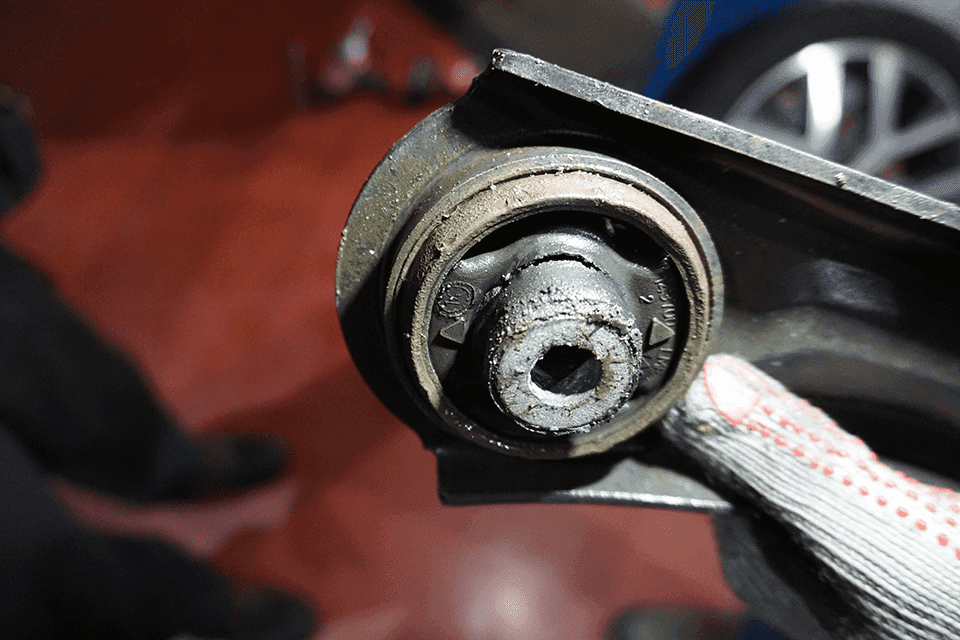
The front wishbone rear bush is a known wear item on many Audi, Volkswagen, Seat and Skoda models. As the original rubber bush ages and deteriorates, it can cause a surprising number of handling and suspension issues that many owners mistakenly diagnose as worn shock absorbers, track rod ends or wheel alignment problems.
The good news? It’s often a relatively straightforward repair that can completely transform the way the vehicle drives.
Most drivers notice the problem gradually.
The car doesn’t suddenly break down. Instead, it starts to feel less precise and less stable than it did when it was new.
Common symptoms include:
A dull knock or clunk when:
Because the rear bush controls the movement of the wishbone, excessive play often creates noises that seem to come from multiple areas of the suspension.
Does your car feel like it needs constant correction on the motorway?
A worn rear wishbone bush allows the wheel alignment to change slightly under load, making the steering feel less direct and predictable.
Many owners describe it as:
One of the clearest signs of rear wishbone bush wear is instability when braking.
As the bush softens or tears, the wheel can move rearwards under braking loads.
This can create:
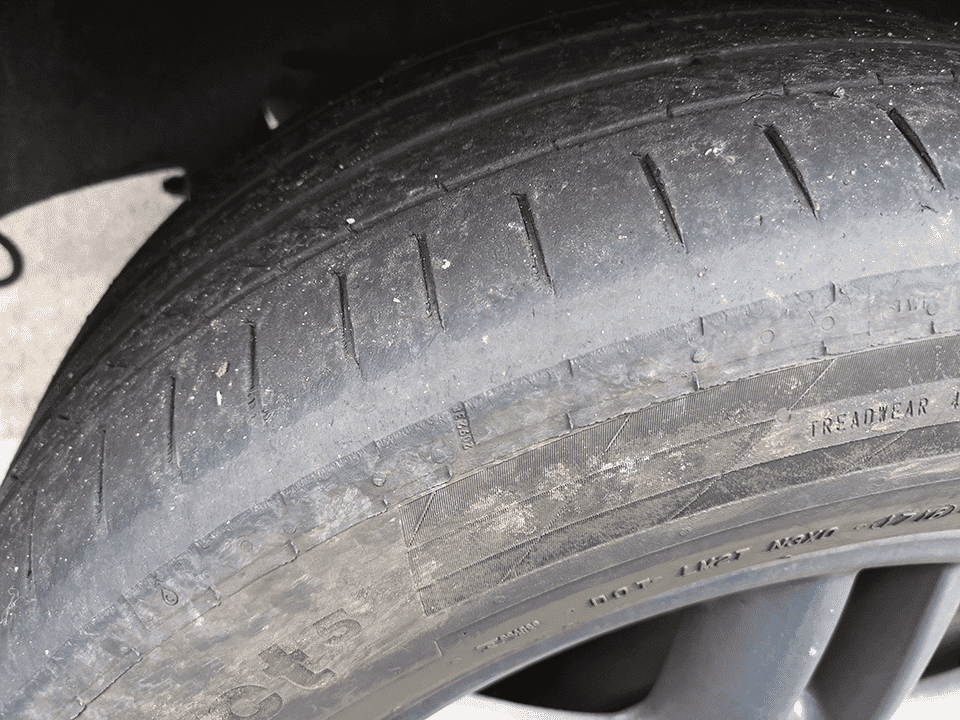
When suspension geometry is no longer held accurately, tyres often begin wearing unevenly.
Replacing tyres without fixing the worn bush usually means the problem returns.
The simple answer is that rubber wears out.
The original bush is designed to isolate vibration and provide comfort, but over time it is subjected to:
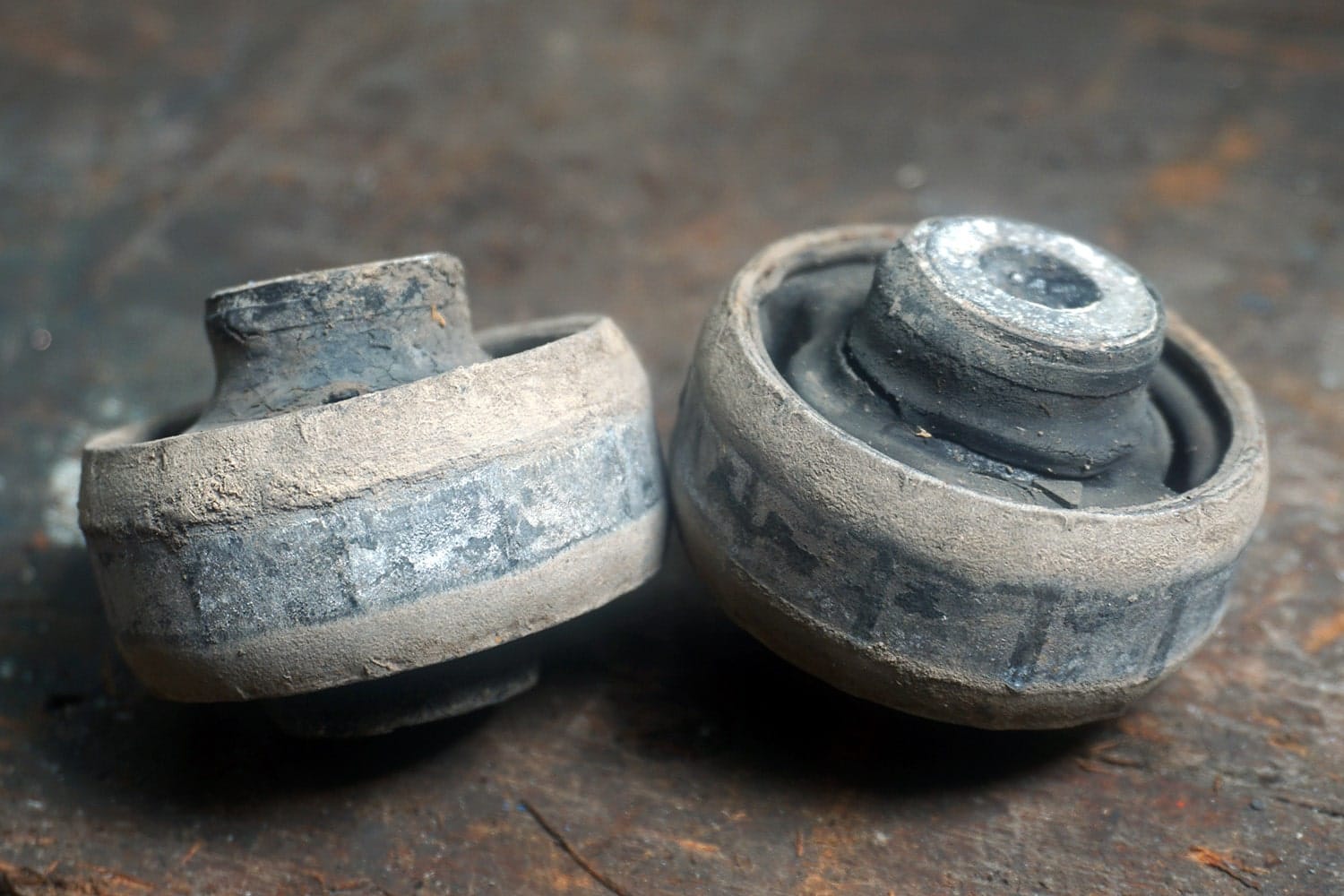
Eventually, the rubber begins to crack, soften or separate from its outer housing.
Once this happens, the wishbone can move more than it should.
That movement is what creates the knocking, instability and vague steering that many drivers experience.
Owners often search for the following OEM part numbers when diagnosing suspension problems:
These bushes are fitted across a huge range of Volkswagen Group vehicles and are one of the most frequently replaced suspension components as mileage increases.
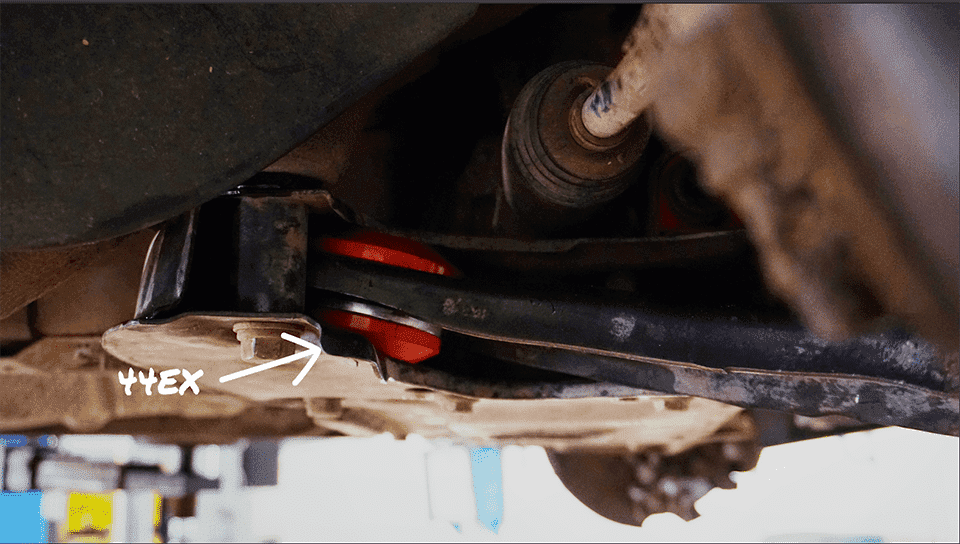
Many owners replace worn bushes with standard rubber replacements only to face the same failure again several years later.
The reality is that rubber remains vulnerable to:
For drivers intending to keep their vehicle long-term, a more durable material makes sense.
Polybush 44EX has been developed as a direct replacement for the original front wishbone rear bush used across many Audi, Volkswagen, Seat and Skoda models.
Manufactured in the UK using Polybush’s proven polyurethane formulation, it is designed to provide long service life whilst maintaining everyday ride comfort.
– Direct replacement for OEM bushes
– Longer lasting than traditional rubber
– Improved steering response
– Reduced suspension deflection under braking
– Resistant to oil, chemicals and road contamination
– No grease required
– No squeaking
– Manufactured in the UK
– ISO 9001 quality assured
Unlike conventional rubber bushes, polyurethane does not suffer from the same rapid age-related deterioration, making it an ideal upgrade for daily drivers, performance vehicles and high-mileage cars alike.
This bush fits a wide range of popular Volkswagen Group models, including:
If your vehicle has developed a front suspension knock, vague steering, instability under braking or uneven tyre wear, the front wishbone rear bush should be one of the first components inspected.
It’s one of the most common suspension failure points across the VW Golf, Audi A3, Skoda Octavia, Seat Leon, Tiguan and related models.
Replacing worn bushes with Polybush 44EX not only restores handling and stability but also helps prevent the same problem from returning in the future.
OEM References:
1K0407183P, 1K0407183M, 5C0407183A, 5Q0407183D, 5Q0407183E, 5Q0407183J
Kit Contents:
2 x Polyurethane Bushes
In Stock | Fast Dispatch | Manufactured in the UK
Upgrade one of the most common suspension failure points with a long-lasting Polybush solution.
16 September 2026
25 August 2026