25 August 2026

Speak to one of our experts.

13 October 2025
Share:


Commercial
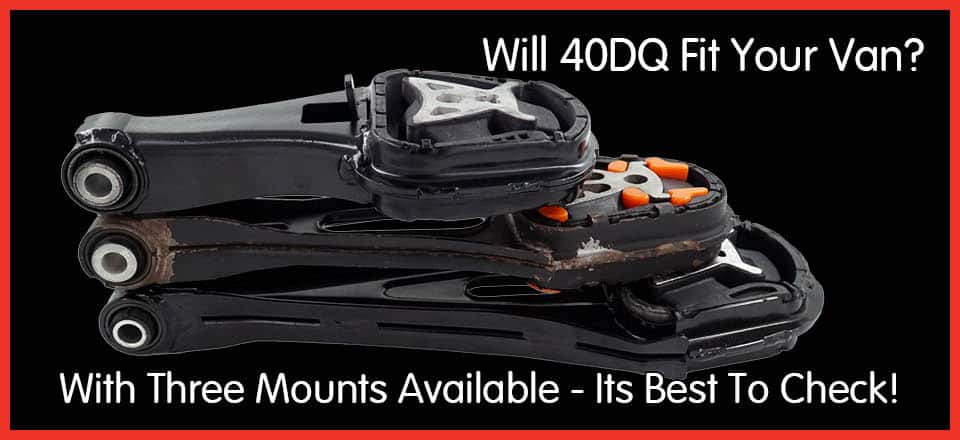
If you run a Transit, it earns its keep. Whether it’s carrying tools, materials, deliveries, a camper conversion or towing kit, it’s under load far more often than a typical car.
And that’s exactly why the standard lower torque mount — the “dogbone” mount — becomes a weak point.
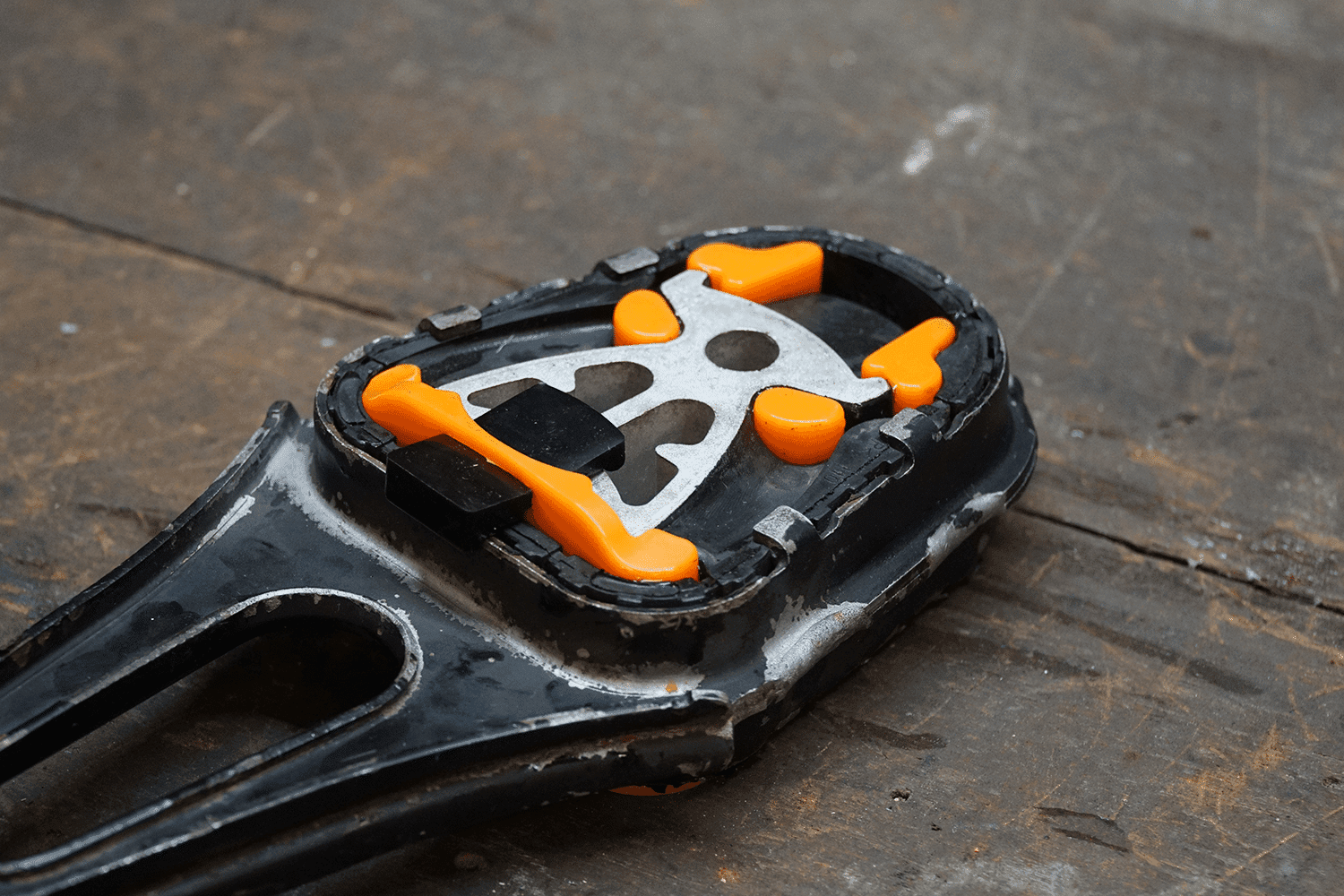
We’ve developed the 40DQ Lower Torque Mount Insert specifically to solve that problem properly.
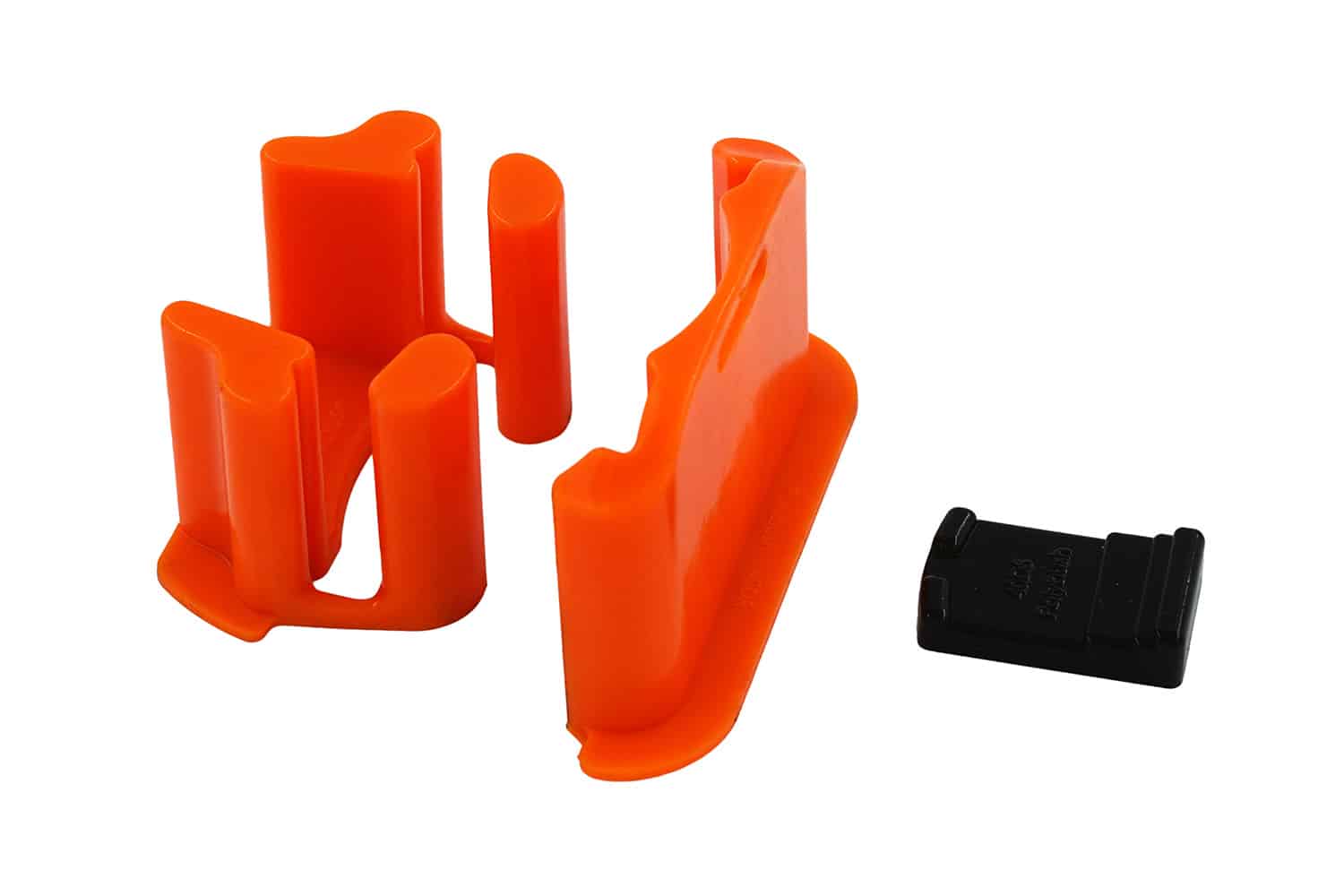
Designed to install into the original lower torque mount housing on:
On paper, the lower torque mount controls engine movement under acceleration and braking. In reality, in a working Transit, it’s dealing with:
Heavy payloads
Stop–start driving
Hill starts under load
Towing
Constant gear changes
Engine braking
The standard mount uses rubber. That’s fine on a lightly used passenger vehicle. But on a Transit that’s earning money every day, rubber simply doesn’t hold up.
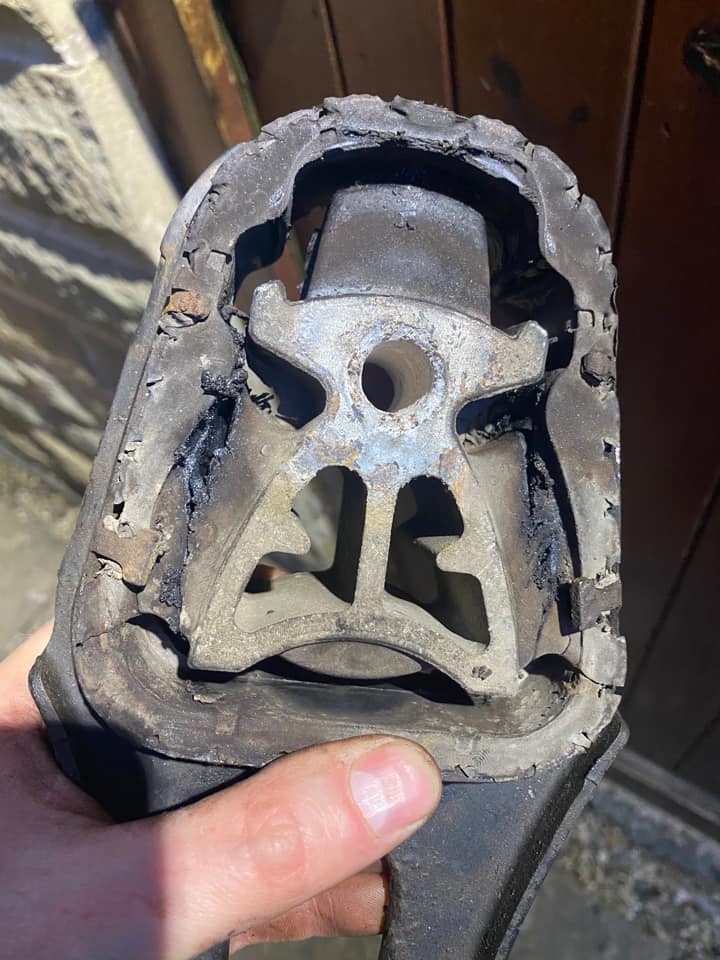
Over time the rubber:
Softens from engine heat
Degrades from oil contamination
Tears under repeated torque load
Compresses and loses shape
You’ll start to notice:
Clunks when pulling away
Excess engine movement
Harsh vibration through the cabin
Gear change movement feeling sloppy
A quick look through Transit owner groups and forums shows this isn’t rare. Owners regularly report “dogbone mount gone again” or engine movement issues returning within a short period after fitting another rubber replacement. The problem isn’t always the brand. It’s the material.
Here’s the important bit: the Transit platform is designed to carry weight. That means higher torque loading through the drivetrain compared with a typical passenger car.
So even if the original mount lasted reasonably well in a lighter vehicle, once you’re:
Running at 3.5 tonnes
Towing regularly
Running fleet mileage
Living in it as a camper
…the stress multiplies.
Rubber creeps under sustained load. It deforms. Once it starts moving excessively, it accelerates its own failure.
Rather than replacing the whole mount with another rubber unit that will eventually fail again, the 40DQ insert fits into the OEM housing and reinforces it with high-grade polyurethane.
That gives you:
Controlled engine movement
Reduced stress on surrounding components
Far greater resistance to oil and heat
Long-term dimensional stability
It’s not about making the van harsh or uncomfortable. It’s about restoring proper torque control without introducing unnecessary vibration.
For a working vehicle, that balance matters.
Rubber has one main advantage: it’s cheap and compliant when new.
Polyurethane, on the other hand, offers:
Superior load-bearing capability
Far greater resistance to oil and road contamination
Minimal long-term deformation
Stable performance across temperature changes
In a high-load application like a Transit lower torque mount, those properties matter more than ultra-soft initial compliance.
You don’t want the engine flopping around under load. You want it controlled.
Polyurethane maintains that control for years, not months.
This insert makes sense if you:
Run a trade van that’s always loaded
Manage a fleet and want fewer repeat failures
Use your Transit for towing
Have converted it to a camper and added weight
Are simply tired of replacing dogbone mounts
If your van works hard, the mount needs to be up to it.
1771506
1786184
2015369
BK21-6P082-AC
BK21-6P082-AD
BK21-6P082-AE
Febi 174862
The lower torque mount on the Ford Transit V362 and V363 is a known wear point under real-world working conditions. Replacing rubber with more rubber doesn’t solve the underlying weakness.
The Polybush 40DQ Lower Torque Mount Insert reinforces the original mount with a material designed to withstand sustained torque and contamination.
Less movement. Less repeat failure. More confidence in a van that earns its keep.
If you rely on your Transit every day, it makes sense to fit a mount solution built for how these vans are actually used — not just how they’re tested in a lab.
25 August 2026
20 August 2026