28 September 2026

Speak to one of our experts.

22 June 2026
Share:


Advice Blog
If you own a modern Skoda Octavia, Superb, Karoq, Kodiaq, Scala or Yeti and you’ve started noticing knocks, vague steering, uneven tyre wear or an MOT advisory for suspension bushes, you’re not alone. One of the most common wear points across the VW Group range is the front wishbone rear bush — the large bush that controls fore-aft movement of the lower arm.
The challenge for owners is that suspension bush problems rarely announce themselves clearly. A worn bush can feel like a drop link, top mount, wheel bearing or even a tyre issue. This guide pulls together the real-world symptoms, common failures and upgrade options across the Skoda range so you can diagnose problems properly and choose the right replacement.
The 44EX Front Wishbone Rear Bush fits a wide range of Skoda models, including:
Skoda Octavia Mk3 (5E) – 2012–2019 – Multi-Link & Rear Axle Models.
Skoda Octavia Mk4 – 2019–on – Multi-Link & Rear Axle Models.
Skoda Karoq (NU7/ND7) – 2017–on – Multi-Link & Rear Axle Models.
These cars share either the MQB platform architecture used across VW, Audi and SEAT models, which is why the same bush appears in so many applications.
The rear bush on the front wishbone controls how the lower arm moves under braking, acceleration and cornering. It absorbs vibration and allows controlled movement while keeping the wheel aligned.
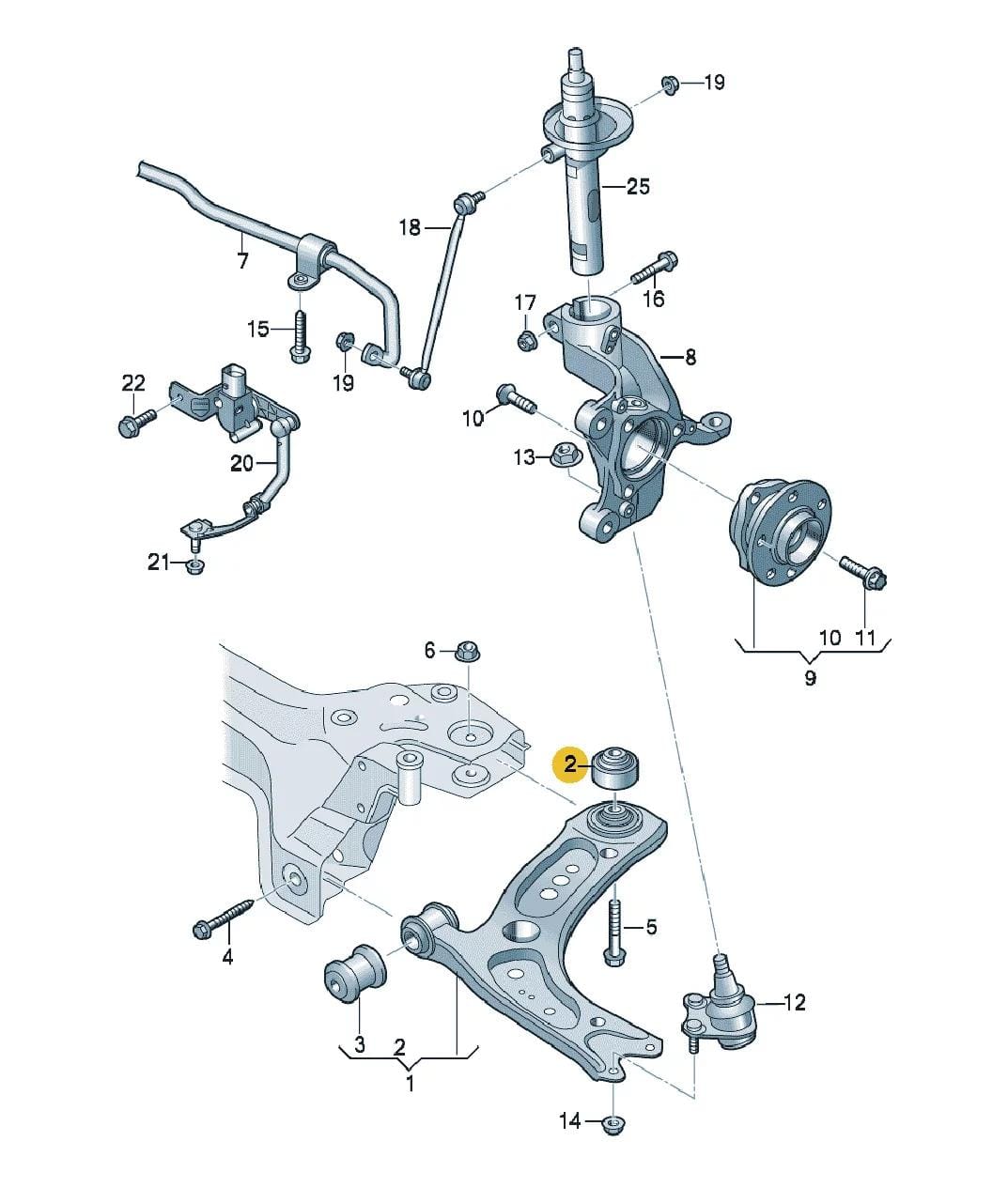
When the bush starts to split or soften, the wheel can move excessively. That leads to:
Knocking or clunking over bumps
Vague or wandering steering
Instability under braking
Uneven tyre wear
Steering wheel vibration
MOT advisories for excessive movement or deterioration
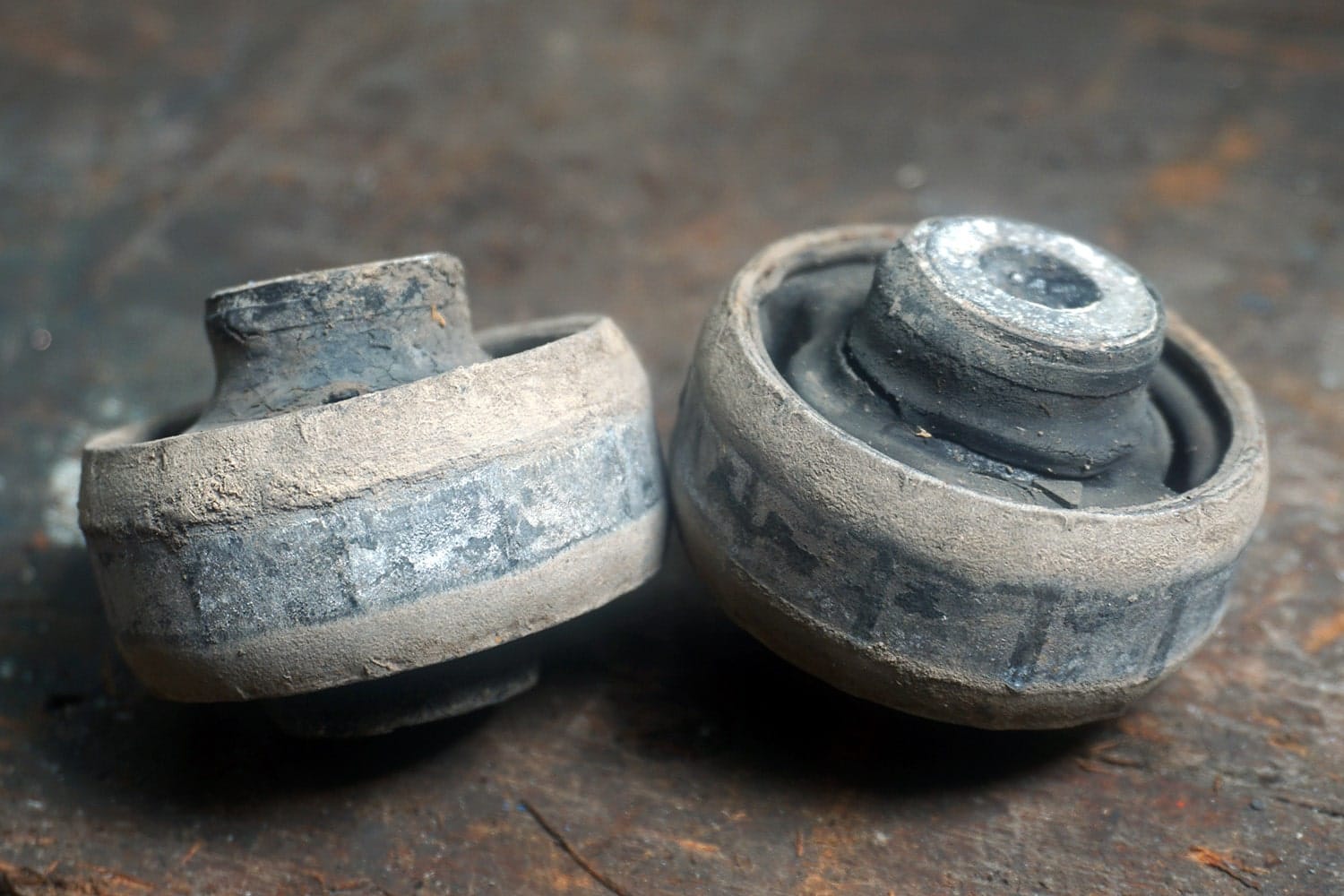
These are the searches owners make before they realise a bush (Generally: the OEM part number – 1K0-407-183-P, 1K0-407-183-M, 5C0-407-183-A, 5Q0-407-183-D, 5Q0-407-183-E, 5Q0-407-183-j) is the culprit.
Usually heard at low speed on rough roads, over speed humps or potholes. A worn rear wishbone bush allows the arm to shift backwards and forwards, creating a dull thud rather than a sharp metallic knock. Common searches: “Skoda knocking noise front suspension”, “Octavia clunking over bumps”, “Superb front suspension knock”
If the car feels like it needs constant correction on the motorway, or the steering no longer feels precise, the rear wishbone bushes are a prime suspect. Common searches: “Wandering steering on my Skoda”, “Octavia vague steering”, “Karoq unstable at speed”
Excessive movement in the wishbone can dynamically alter the toe and caster while driving. You may see inner-edge tyre wear even after alignment. Common searches: “Skoda uneven tyre wear”, “Octavia inner tyre wear”, “wishbone bush alignment issue”
MOT testers often note:
At this point, replacement is the sensible option — and often cheaper than chasing repeated alignments or tyre wear problems.
The original rubber bushes do a good job of isolating vibration, but they’re exposed to:
Heat cycles
Road salt and water
Oil contamination
Heavy braking loads
Poor road surfaces and potholes
Vehicle weight increases on SUVs like the Kodiaq and Karoq
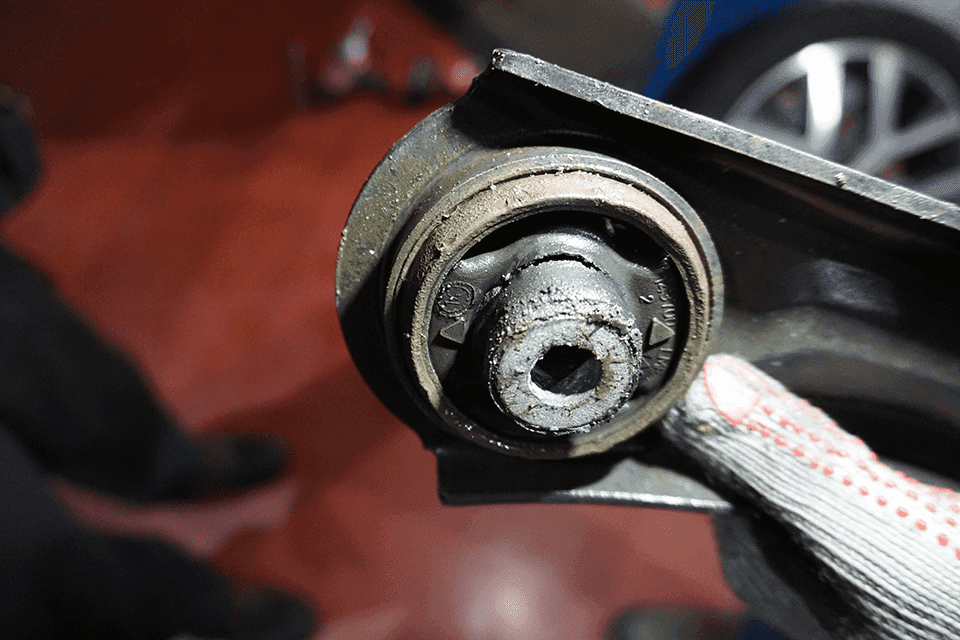
Over time, the rubber softens, cracks and separates / rips from the inner sleeve. On higher-mileage cars, this is entirely normal wear rather than a design fault.
Why SUVs Are Tough on Suspension – and How Polybush Can Help
Feature | OEM Rubber | Polybush Polyurethane |
|---|---|---|
| Ride comfort | Excellent | Very close to OEM |
| Steering precision | Good | Improved |
| Longevity | Moderate | 4-5 Times Longer Than Rubber |
| Oil/chemical resistance | Limited | Excellent |
| Maintenance | None | None (dry-fit design) |
| Handling under load | More Flex | More Controlled |
For a daily-driven Skoda, a quality polyurethane bush like the Polybush 44EX is one of the best “fit and forget” upgrades you can make. You get tighter steering and better stability without turning the car into a harsh track car.
Polybush staff member and writer of this blog Ellis has been driving Superbs since 2011 – Having driven his hundreds of thousands of miles all over Europe, even from our North Wales HQ to South East Bulgaria. He knows how changing the smallest thing can make the biggest difference.
“I was fed up with replacing my suspension bushes, i’m very much a do it once, do it right kinda guy; so when I started working for Polybush that was exactly what I did, replaced my front wishbone bushes with Polybush, it was the best thing I did for my Mk3”
A few practical points that help owners and mechanics alike:
Replace bushes in pairs
Always do both sides together – The design and material of the bushing is differnt to the original bushing. Replacing both bushes will provide correct and consistent handling.
Check the front bush too
The front wishbone rear bush is the common failure, but inspecting the front wishbone bush, ball joint, and drop links while the arm is off allows you to see an issue before it progresses
Wheel alignment is essential afterwards
Even if the alignment was fine before, removal of suspension arms and the installation of new bushes change the suspension geometry. A proper four-wheel alignment ensures the suspension is set up for the long term.
Polybush bushes are dry-fit
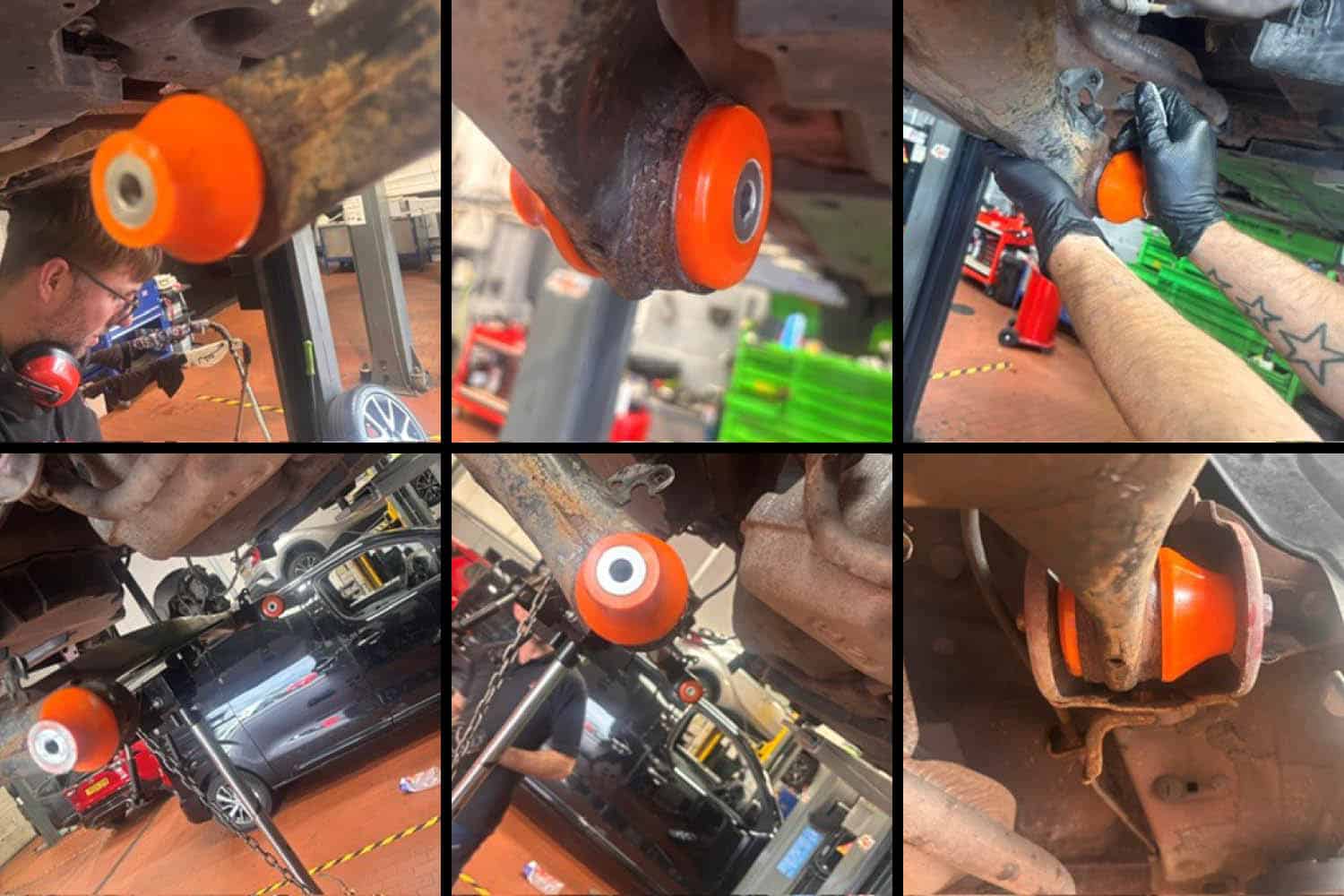
Unlike some polyurethane bushes, Polybush products do not require greasing. That means no messy installation and no squeaking later on.
For a competent DIYer with:
Axle stands
Torque wrench
Ball joint splitter
Bush press and other suitable tools
…it’s achievable. However, many owners choose to have a garage do the work because pressing bushes in and out can be awkward without the right equipment.
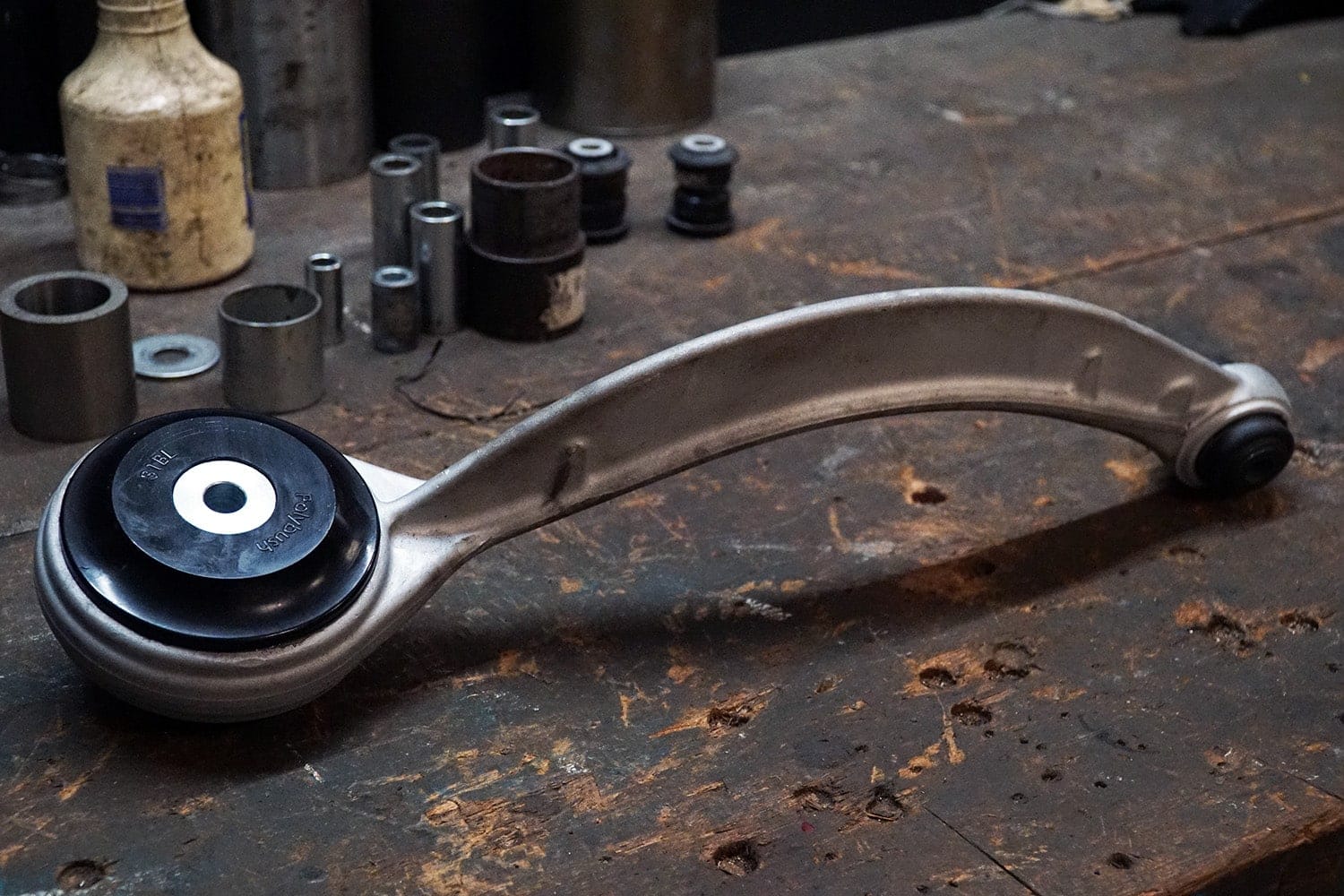
The Polybush 44EX Front Wishbone Rear Bush is designed as a direct replacement for the OE rubber bush used across the Skoda, VW, Audi and SEAT MQB range.

Key points:
Direct replacement for OE part numbers including 1K0 407 183 P and 5Q0 407 183 D/E/J
Improved steering response and stability
Maintains OE-level ride comfort
Resistant to oil, UV and weathering
UK-made polyurethane construction
Dry-fit design — no grease required
View the 44EX bush here:
Typically 40,000–80,000 miles depending on road conditions, driving style and vehicle weight.
Yes. Excess movement in the wishbone (bushing) can transmit vibration through the steering, especially under braking or on uneven roads.
A quality polyurethane bush like the Polybush 44EX is designed to retain near-OE comfort. You may notice slightly sharper steering response, but not a harsh ride.
Yes. An alignment is strongly recommended after any suspension bush replacement.
They’re the same thing in this context. “Wishbone”, “control arm” and “suspension arm” are different names for the same component.
Suspension bush wear is one of those problems that creeps up gradually. Owners adapt to the looser steering and occasional knock until the car suddenly feels transformed after replacement.
For the Skoda range — especially Octavia, Superb, Karoq, Kodiaq, Scala and Yeti models — the front wishbone rear bush is a known wear point. Replacing it with a durable polyurethane option is a sensible long-term fix that improves stability, steering feel and confidence without compromising comfort.
If your Skoda is knocking, wandering or carrying an MOT advisory for suspension bushes, it’s worth inspecting the rear wishbone bushes before chasing more expensive faults.
Buy now