For Range Rover Classic (1970–1994) & Discovery 1 (1989–1998)
Restoration shops working on Range Rover Classic and Discovery 1builds know that body removal is one of the most labour-intensive stages of any project. Replacing chassis outriggers, repairing mounts, and refinishing components represents a significant investment in time and customer budget.
Refitting low-cost rubber body mount bushes at this stage introduces avoidable risk.
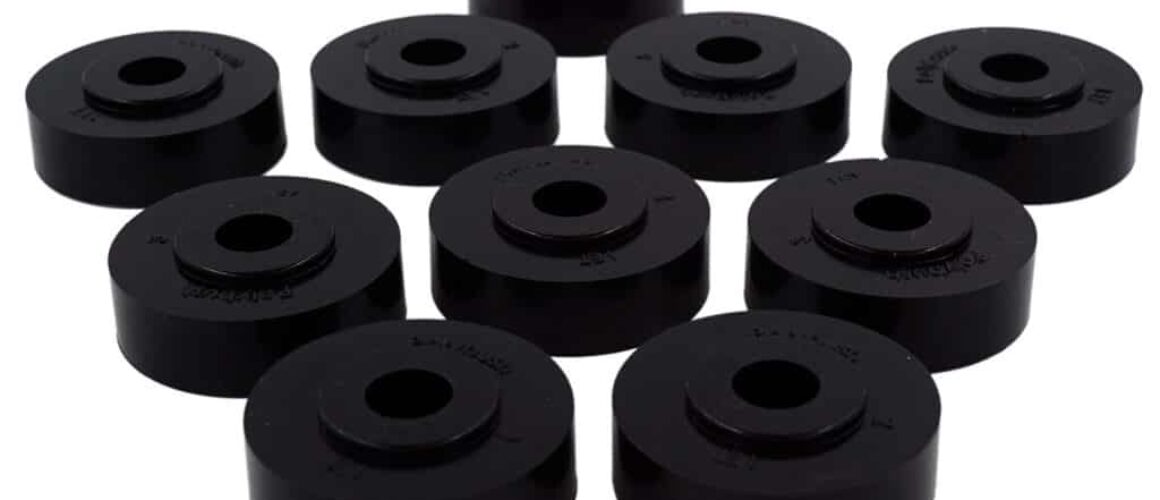
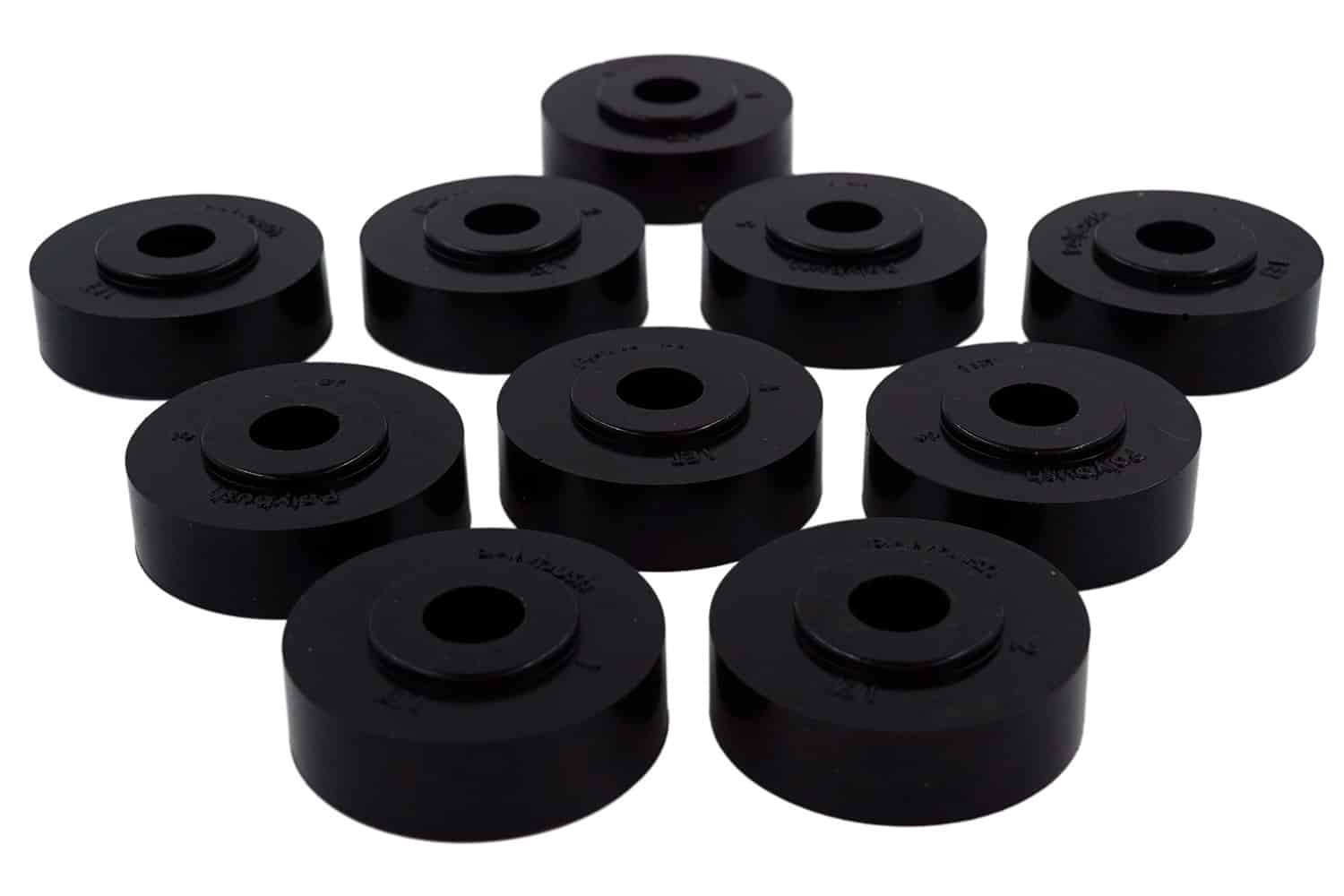
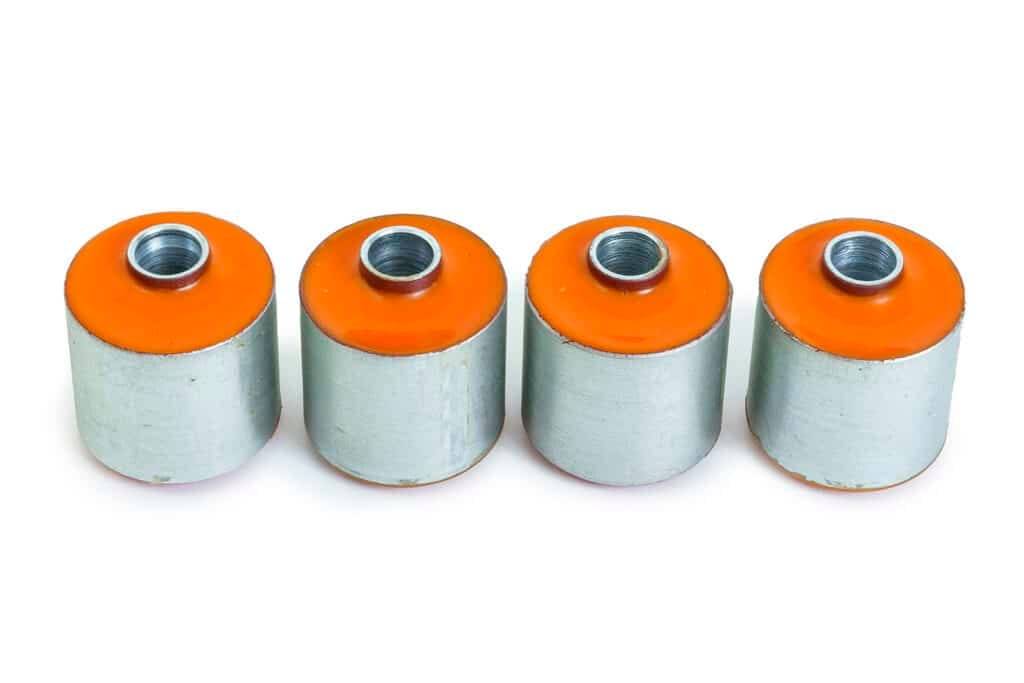
Polybush 1ET is a direct OEM replacement for ANR1504 and 572295, engineered specifically for:
Why Polybush 1ET Is the Correct Choice for Restoration Projects
Polybush 1ET Body Mount Bushes for Range Rover Classic & Discovery 1
1. No Compression Set Unlike modern rubber, Polybush material will not permanently deform under sustained load. This prevents body sag, misalignment, and premature deterioration.
2. OEM Ride Quality Compound tuning ensures compliance similar to the original 1970s rubber bushes. No increase in vibration or harshness.
3. Long-Term Stability Resistant to oil contamination, environmental degradation and material breakdown common in modern rubber alternatives.
4. Reduced Warranty Risk Avoid customer returns for premature bush failure by installing a lifetime solution during initial assembly.
Protect the Investment
Restorations often exceed tens of thousands of pounds in parts and labour. Using short-life rubber body mounts undermines the longevity of the entire project.
Polybush 1ET body mount bushes allow restoration specialists to deliver:
Factory-correct comfort
Improved long-term durability
Reduced repeat labour
Greater customer satisfaction
When the body is already removed, it makes commercial and technical sense to install a solution that will not require replacement in a few years.
For restoration workshops committed to doing the job once—and doing it properly, Polybush body mounts are the professional choice.
The anti-roll bar bush (ARB bush) is a small but essential component of your vehicle’s suspension system. It secures the anti roll bar to the chassis while allowing controlled movement during cornering and uneven road surfaces. When these bushes wear out, they can affect handling, ride comfort and overall vehicle stability.
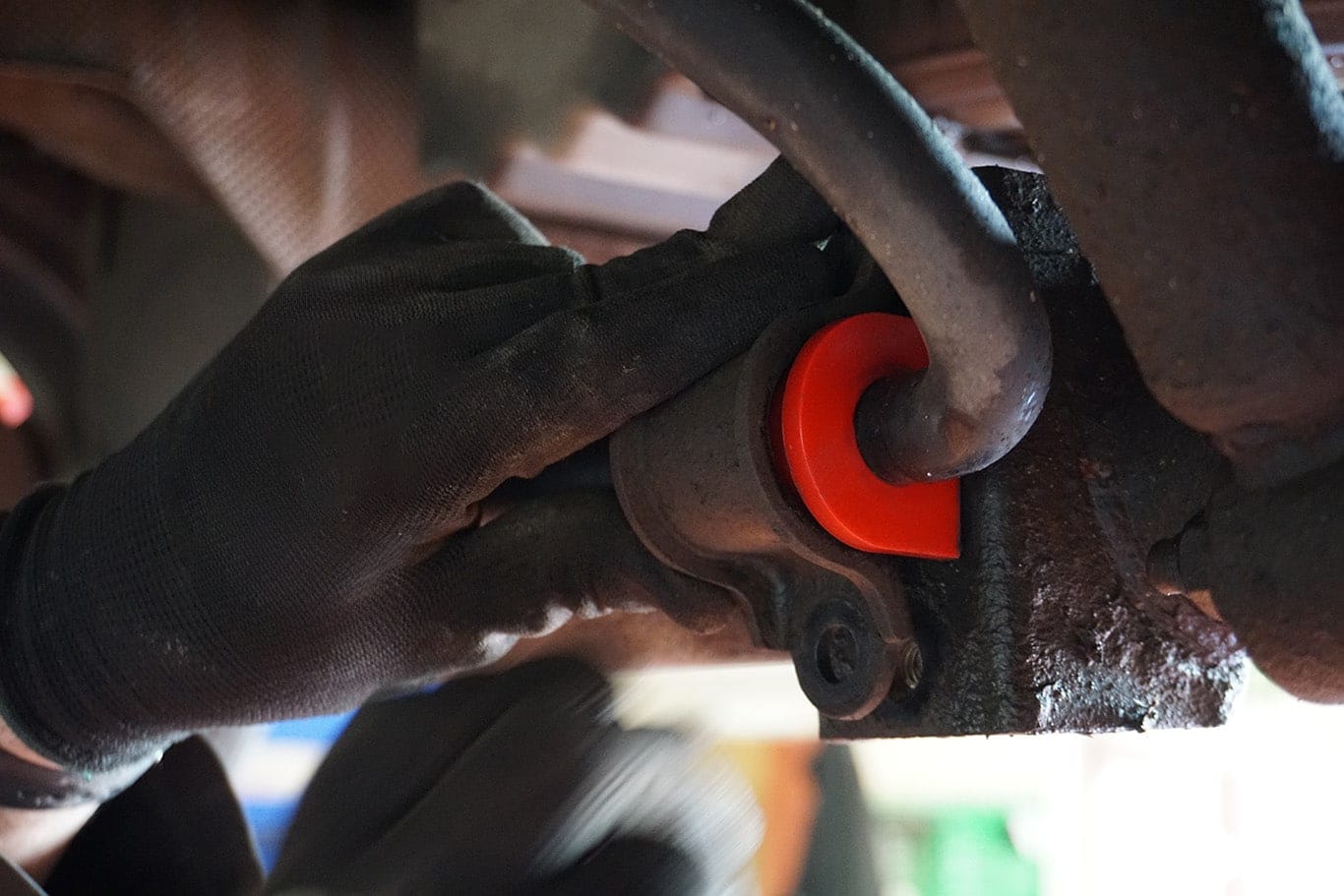
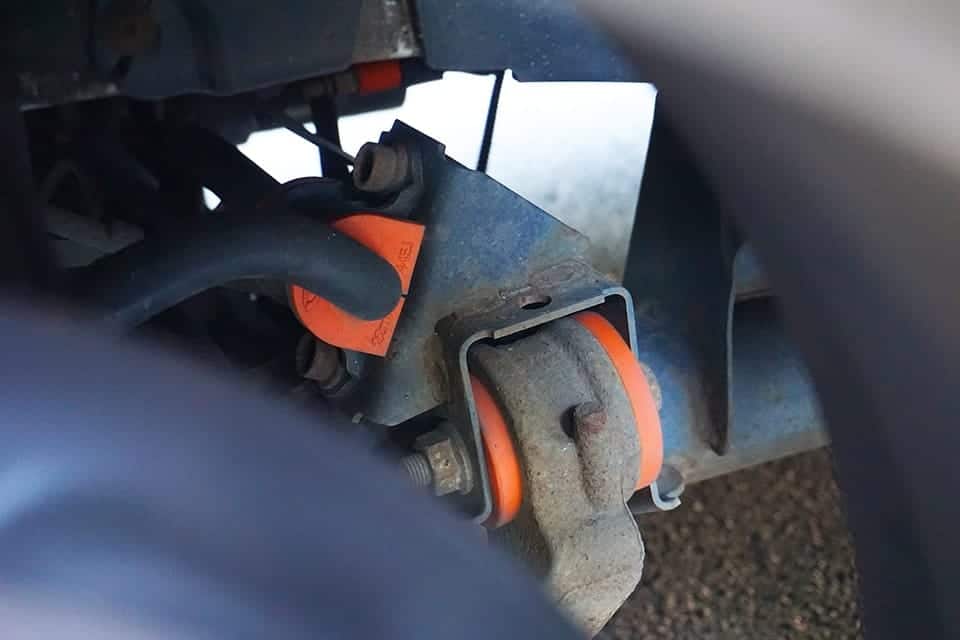
Installing Polybush Anti-Roll Bar Bushes To A VW Caddy
Although often overlooked, replacing worn anti roll bar bushes can dramatically improve your vehicle’s handling and driving confidence.
What Does an Anti Roll Bar Bush Do?
The anti-roll bar works to reduce body roll when a vehicle corners. The bushes sit between the anti-roll bar and the vehicle frame, acting as a cushion that:
Keeps the anti-roll bar securely mounted
Absorbs vibration and road shock
Allows controlled suspension movement
Without properly functioning bushes, the anti-roll bar cannot perform effectively, which can lead to increased body roll and reduced stability.
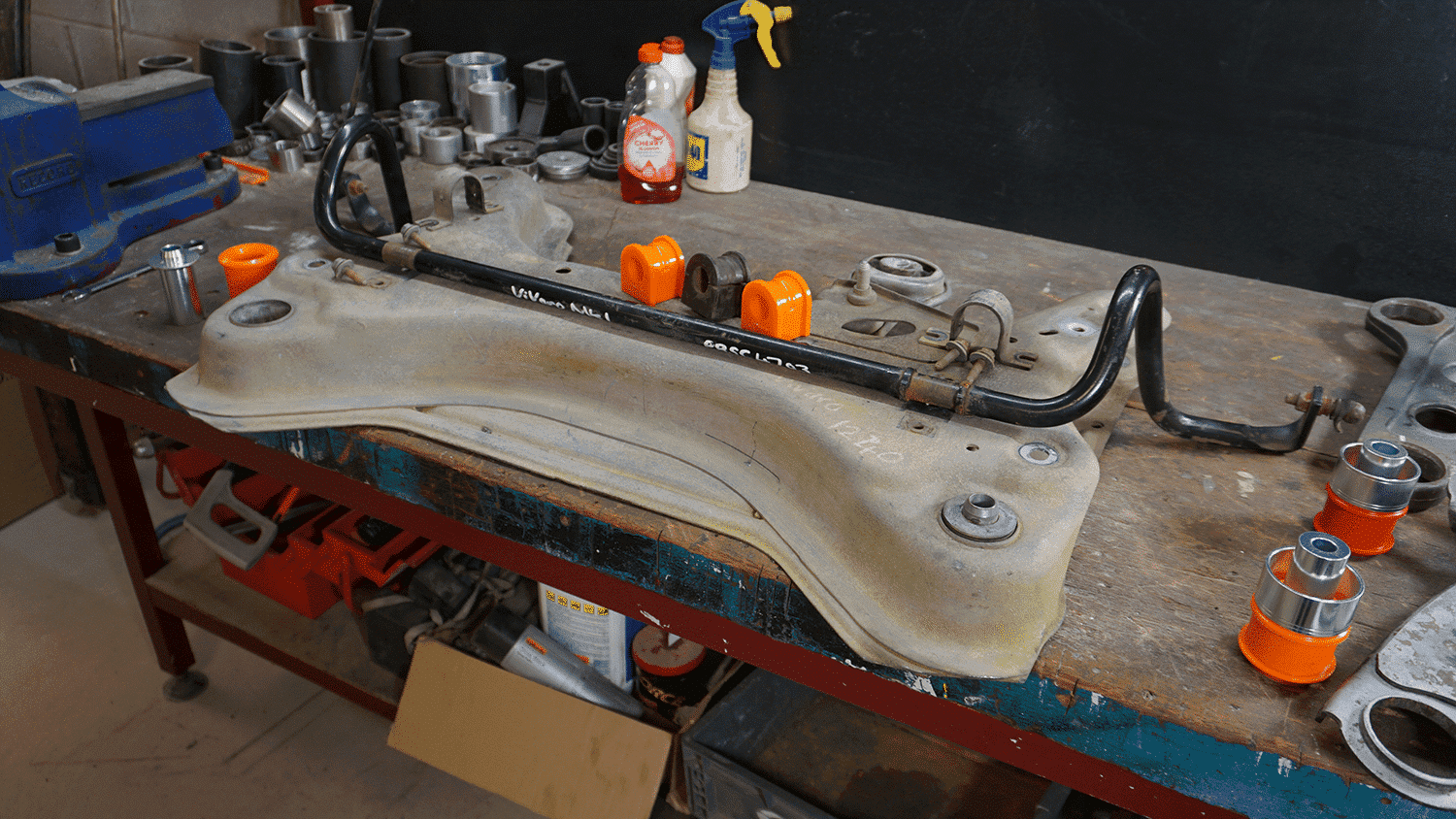
Vivaro Subframe With Replacment 47E Polybush’s and Anti-Roll Bar Bushes
Signs Your Anti Roll Bar Bushes Need Replacing
Over time, standard rubber bushes degrade due to road contaminants, heat and constant movement. If your bushes are worn or damaged, you may notice several symptoms.
Common signs include:
Rattling or squeaking noises from the suspension
A harsher ride over bumps or rough roads
Excessive body roll when cornering
Visible cracks or deterioration during inspection
If any of these issues occur, the anti-roll bar bushes should be inspected and replaced according to the manufacturer’s recommended procedure.
Why Upgrade to Polyurethane Anti Roll Bar Bushes?
Traditional rubber bushes are prone to cracking, compression and degradation. Polyurethane bushes, such as those manufactured by Polybush, offer a more durable alternative designed to withstand the demands of modern driving.
Key advantages of Polybush anti roll bar bushes
Longer lifespan – up to 4–5 times longer than rubber bushes
Improved handling – better control of suspension movement
Excellent noise damping for a smoother drive
Resistant to oil, fuel and road contaminants
Fit-and-forget reliability with minimal maintenance
Polyurethane bushes maintain their shape and performance over time, making them ideal for both daily drivers and performance vehicles.
VW T5 ‘Bulli’ Anti-Roll Bar Bushes
Choosing the Right Anti Roll Bar Bush
Polybush anti-roll bar bushes are available in different performance grades to suit your vehicle and driving style. Whether you’re restoring a classic car, maintaining a daily driver, or upgrading suspension performance, selecting the correct bush ensures optimal handling and longevity.
Improve Your Suspension Performance with Polybush
Upgrading worn anti-roll bar bushes is a simple yet effective way to restore suspension performance and driving comfort.
Polybush polyurethane suspension bushes are engineered to deliver:
Better control and handling
Increased durability
Long-term reliability
Need Help Choosing the Right Bush?
If you’d like help finding the correct anti-roll bar bush for your vehicle, our team is here to help.
Are you sick of the dreaded Transit dogbone mount failing on your Ford Transit & Tourneo Custom V362/V363 (2013–2023)? You’re not alone. At Polybush, we’ve been listening to Transit owners, van converters, tradespeople and fleet mechanics who keep seeing the same issue crop up again and again — the lower torque mount (often called the dogbone mount) simply doesn’t last when left in standard rubber form. That’s exactly why we developed the 40DQ Lower Torque Mount Insert.
40DQ – Ford Transit Custom Mk8 Lower Torque Mount
This isn’t just another “replacement part” — it’s a genuine performance and durability upgrade for a known weak point on these vans.
What This Fits (OEM Part Numbers)
Our 40DQ Lower Torque Mount Insert is engineered to be installed into the original mount housings for the following OEM part numbers:
Let’s break it down in simple terms: the lower torque mount (dogbone) is there to control engine and transmission movement under load — especially on acceleration, deceleration and gear changes. In a Transit carrying heavy payloads or towing regularly, that mount sees a lot of abuse.
The trouble is, the factory uses rubber in these mounts. While rubber is quiet and cheap, it has some critical weaknesses:
Rubber Weaknesses
Age hardening: Rubber hardens over time, especially when exposed to heat and engine bay oils.
Creep & distortion: Under constant torque loads, it stretches and deforms.
Water/oil contamination: Oil and road grime degrade rubber faster than you expect.
Loose feel: As it deteriorates, the engine moves more — leading to clunks, vibrations and stress elsewhere.
Search forums like TransitCenter or social groups on Facebook, and you’ll find countless owners complaining “dogbone mount snapped again”, “engine shifting under acceleration”, or “harsh vibration when pulling loads”. This is exactly the failure mode that cheap-as-chips rubber replacements can’t fix — because they’re the same material Ford originally used.
Maintains torque control without letting the engine flop about
Reduces harsh vibration without making it uncomfortable
Greatly extends life compared with OEM rubber
This isn’t “rock hard” street racer stiffness — it’s engineered to strike the right balance for a working van.
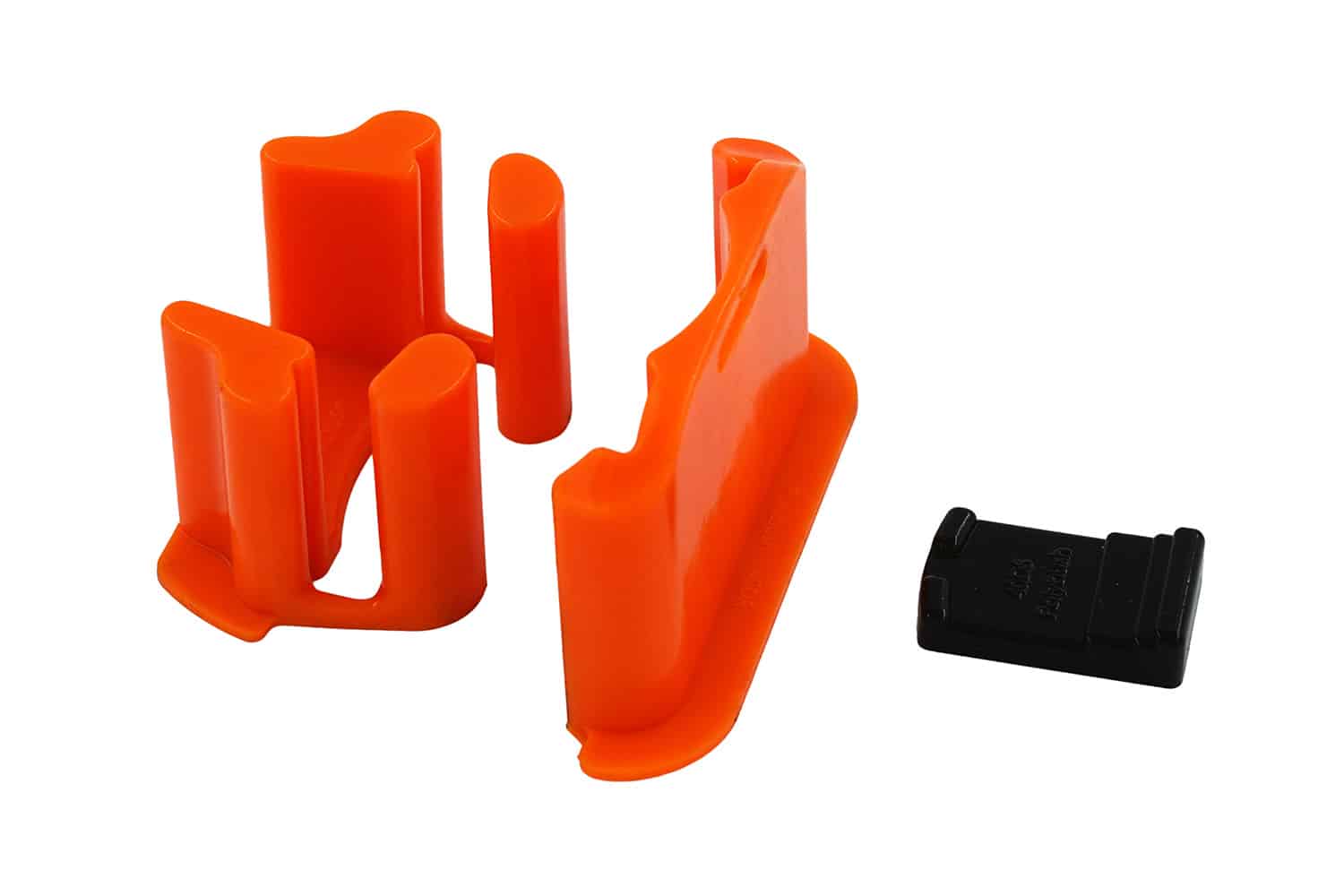
40DQ Installed in OEM Arm
Polyurethane vs Rubber — Why It Matters
Let’s chat materials for a moment — because this is where people either get it… or don’t.
Polyurethane Benefits
Feature
Polyurethane
Rubber
Load Bearing
Excellent
Moderate
Fatigue Resistance
Very high
Moderate
Oil/Contaminant Resistance
Very high
Poor
Hardness Stability
Stable over temperature
Softens/hardens with age
Noise/Vibration
Tunable
Tunable but degrades
Put simply: polyurethane does the job rubber was supposed to do — but better and for longer. It doesn’t sag or deform under load, it’s far more resistant to oil and heat, and it won’t turn into a brittle lump after a few years on the road.
So while rubber is comfortable when new, it’s a known failure point on high-stress parts like the Transit dogbone mount. Polyurethane keeps its shape, keeps your engine centred and keeps the van feeling tighter over more miles.
What This Means for You
Whether you’re a fleet manager tired of repeat failures, a van lifer prepping your Transit for a round-Europe tour, or a tradesperson relying on your van every day, the 40DQ Lower Torque Mount Insert is an upgrade that makes practical sense:
Less downtime
Reduced vibration/noise
Improved drivetrain control
Longer service life
No need for expensive aftermarket “heavy duty” rubber parts
Final Word
The Transit dogbone mount might be easy to overlook — until it fails. And when it does, you feel every gear change and hard acceleration. Our 40DQ insert isn’t about making your van feel “racey” — it’s about giving you confidence that the mount won’t be the next thing to let you down.
If you’re after a reliable, durable, engineered solution rather than a stop-gap rubber replacement, this is it.
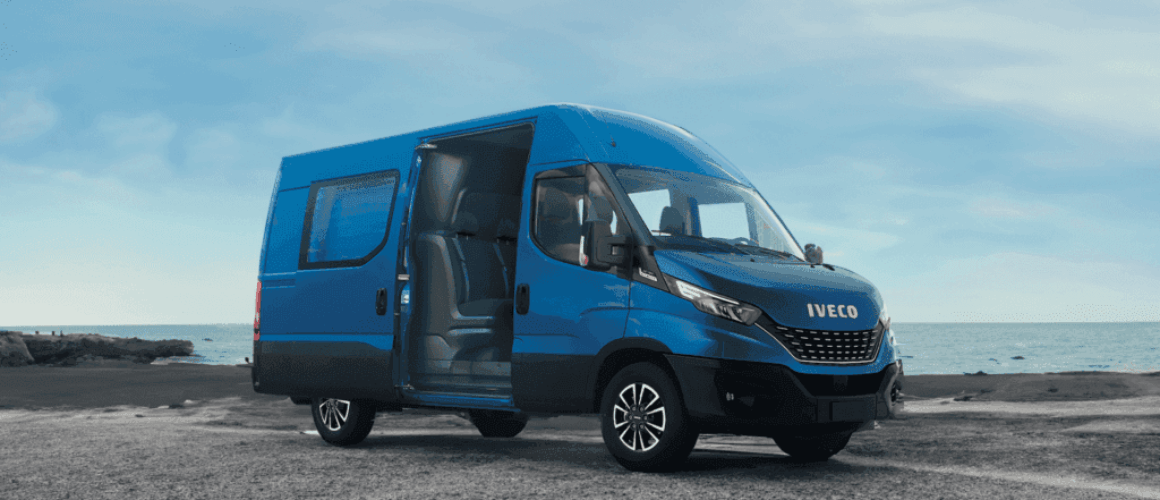
The Iveco Daily has long been one of the most widely used commercial vehicles across Europe. From school minibuses and council transport fleets to shuttle buses, delivery vans and specialist conversions, the Daily platform is trusted for its strength, reliability and heavy-duty ladder chassis design.
However, one area that consistently causes maintenance issues across multiple generations of the vehicle is suspension bush wear.
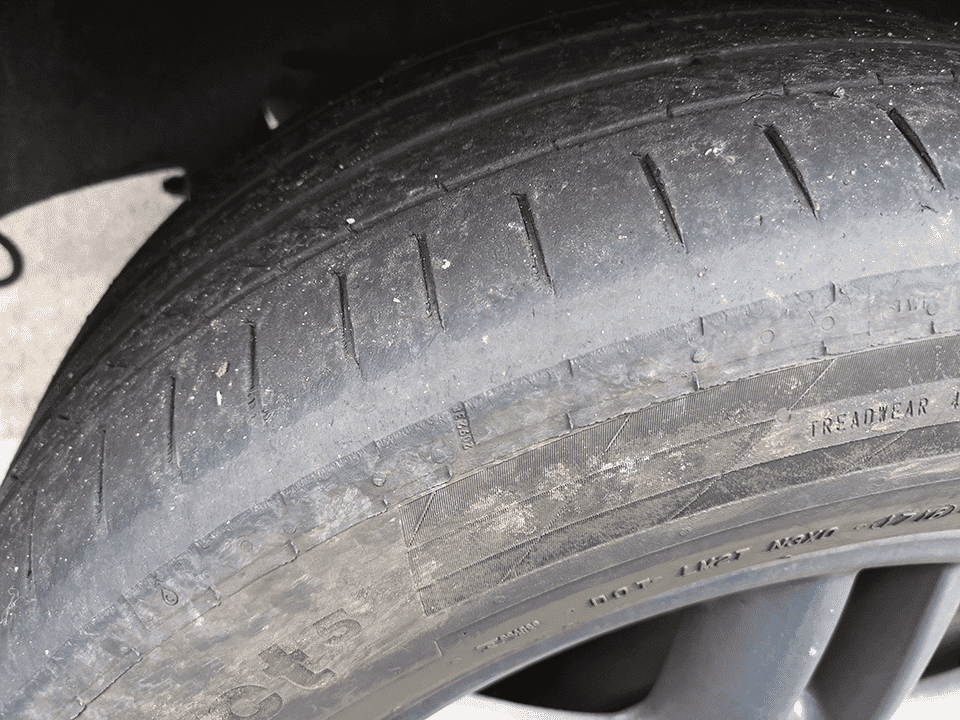
For operators running high-mileage vehicles carrying heavy passenger loads, the original rubber suspension bushes fitted by the manufacturer often deteriorate faster than expected. This can lead to handling issues, suspension noise, uneven tyre wear and increased maintenance costs.
This guide explains the most common suspension bush problems across the Iveco Daily range and why Polybush polyurethane suspension bushes have become the trusted upgrade for fleet operators, councils and minibus specialists.
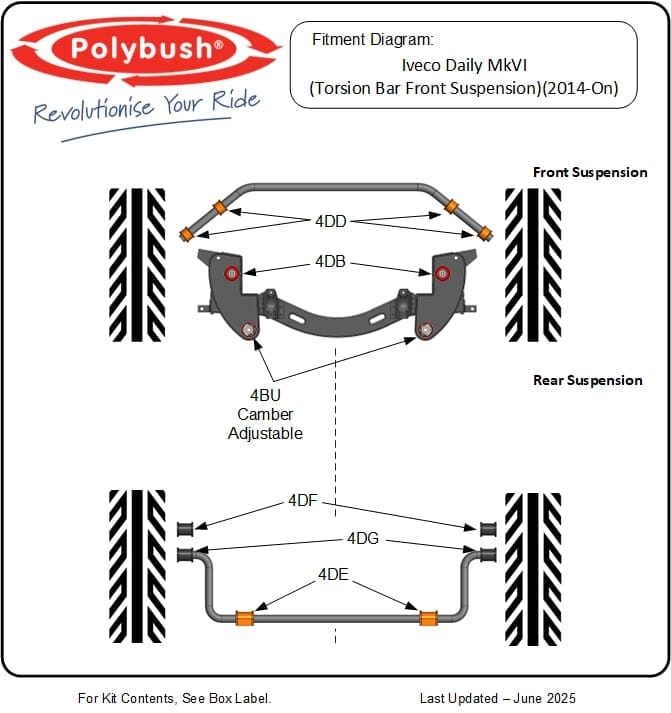
Polybush Your Iveco Daily MkVI (Torsion Bar Front Suspension) (2014-On)
Why Suspension Bushes Wear on Iveco Daily Vehicles
The Iveco Daily is designed to handle heavy loads and demanding driving conditions. Vehicles used for school transport, community minibuses and commercial fleets often operate in stop-start environments with constant passenger loading and unloading.
Over time, these conditions place significant strain on the rubber suspension bushes, which are responsible for isolating vibration and maintaining suspension alignment.
Common symptoms of worn bushes include:
• Knocking or clunking noises from the suspension
• Steering instability or vague handling
• Excessive body roll
• Uneven tyre wear
• Increased vibration through the chassis
These problems are particularly common on high-mileage minibus fleets, where vehicles may cover thousands of miles every month.
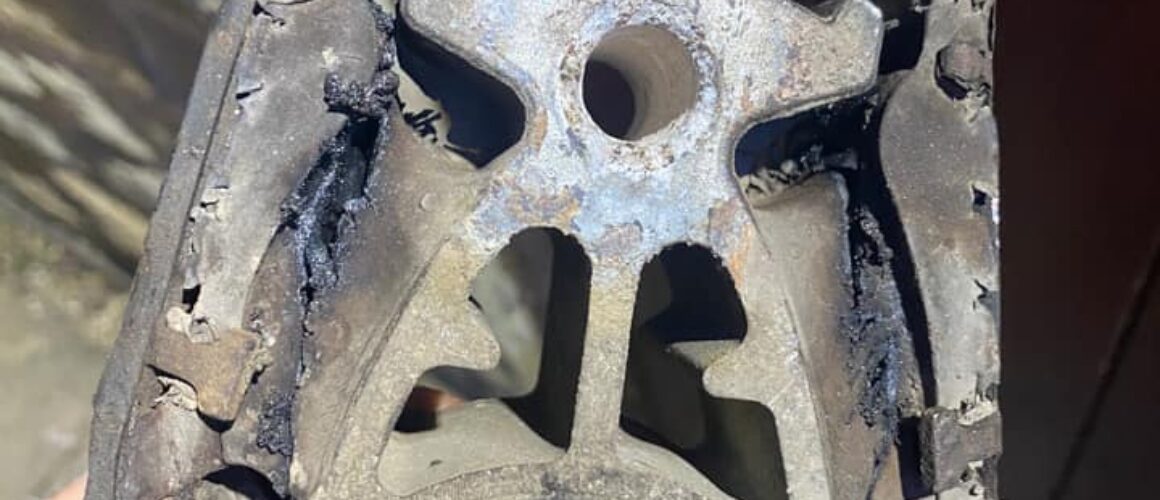
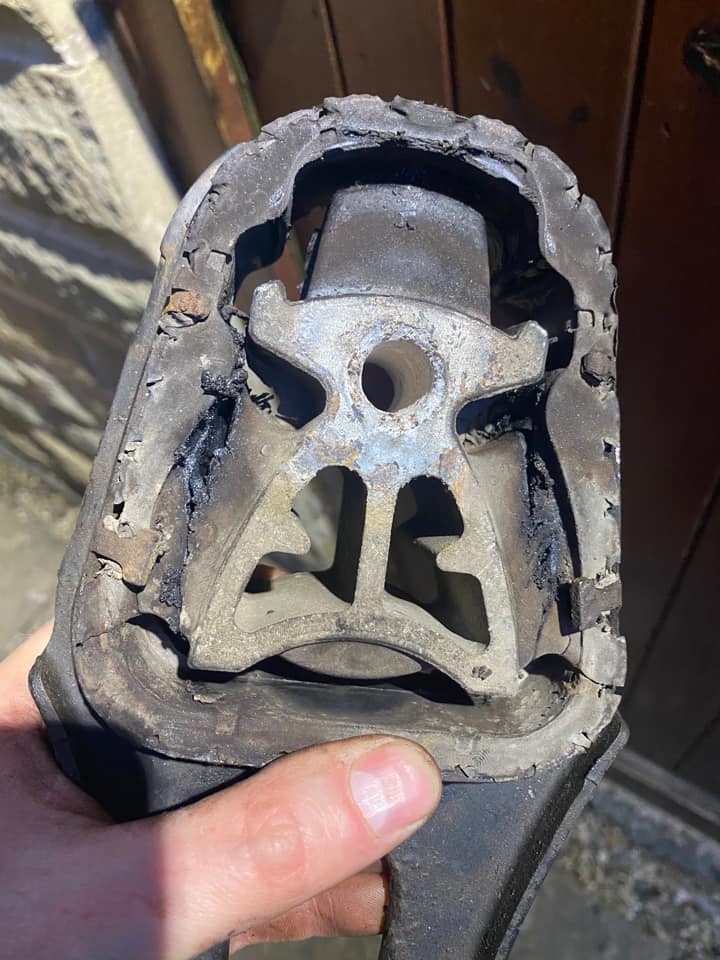
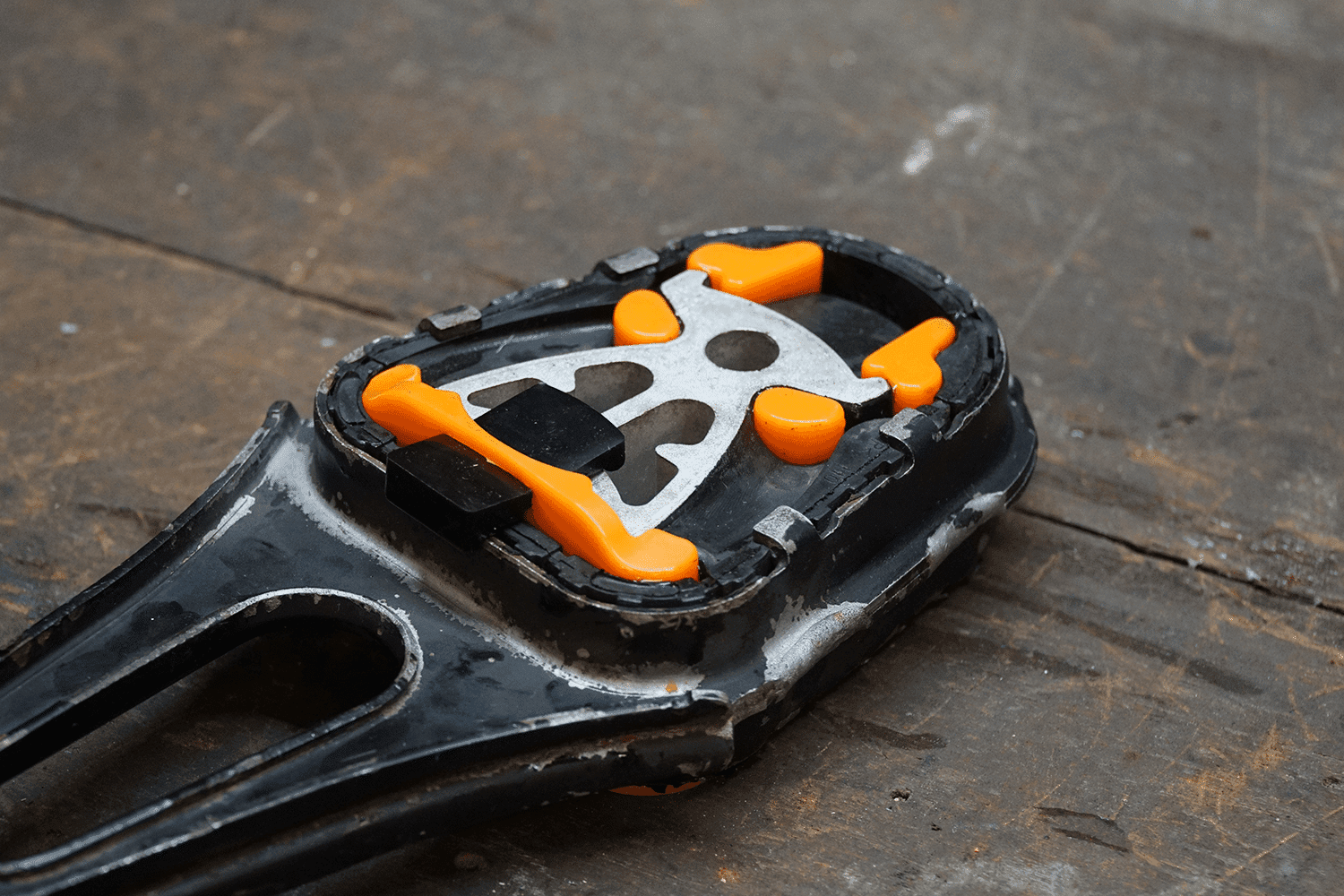
Iveco Daily Suspension Bushing Failure
Why Polybush Suspension Bushes Are the Preferred Upgrade
Standard rubber bushes can degrade due to heat, oil contamination, road salt and repeated load cycles. Once the rubber begins to soften or crack, suspension components start to move beyond their designed tolerances.
Polybush polyurethane suspension bushes are engineered to eliminate these weaknesses.
Key advantages include:
• Significantly longer service life than rubber bushes
• Improved resistance to compression and deformation
• Better control of suspension geometry under load
• Reduced maintenance frequency for fleet vehicles
• Improved steering stability and handling
Because of these benefits, Polybush bushes are widely used by fleet workshops, vehicle converters and transport operators who need durable suspension solutions.
Iveco Daily Models Covered by Polybush Suspension Bush Kits
Polybush manufactures suspension bushes for multiple generations of the Iveco Daily, covering vehicles commonly used in minibus transport, commercial fleets and specialist vehicles.
One of the earliest Daily platforms still in service today, particularly in specialist vehicles and camper conversions. Many high-mileage examples suffer from worn torsion bar suspension bushes and degraded rubber components.
A popular platform for minibus conversions and commercial transport, the MK3 Daily is known for its durability but can develop suspension movement as rubber bushes age.
Widely used by fleet operators and passenger transport services, MK4 models often exhibit bush wear in the front suspension arms and anti-roll bars, particularly on high-mileage vehicles.
The MK5 Daily became a popular base for school minibuses, welfare vehicles and community transport fleets. Suspension bush wear can affect steering precision and tyre life.
One of the most widely used platforms for modern minibus fleets, the MK6 Daily is available with torsion bar or transverse leaf spring front suspension. These vehicles frequently operate under heavy passenger loads, accelerating bush wear.
Camber Alignment Problems on Iveco Daily Torsion Bar Suspension
Many Iveco Daily models use a torsion bar front suspension setup, which can develop camber alignment issues over time. This is particularly common on vehicles used as minibuses or heavy passenger transport, where suspension components are under constant load.
When camber moves out of specification, operators may notice:
• Uneven tyre wear
• Reduced steering stability
• Poor handling when fully loaded
To address this issue, Polybush developed specialised Camber Correction Bushes, allowing technicians to adjust camber alignment and restore proper suspension geometry.
This innovation has become particularly valuable for fleet maintenance teams and minibus operators, helping extend tyre life and improve vehicle stability.
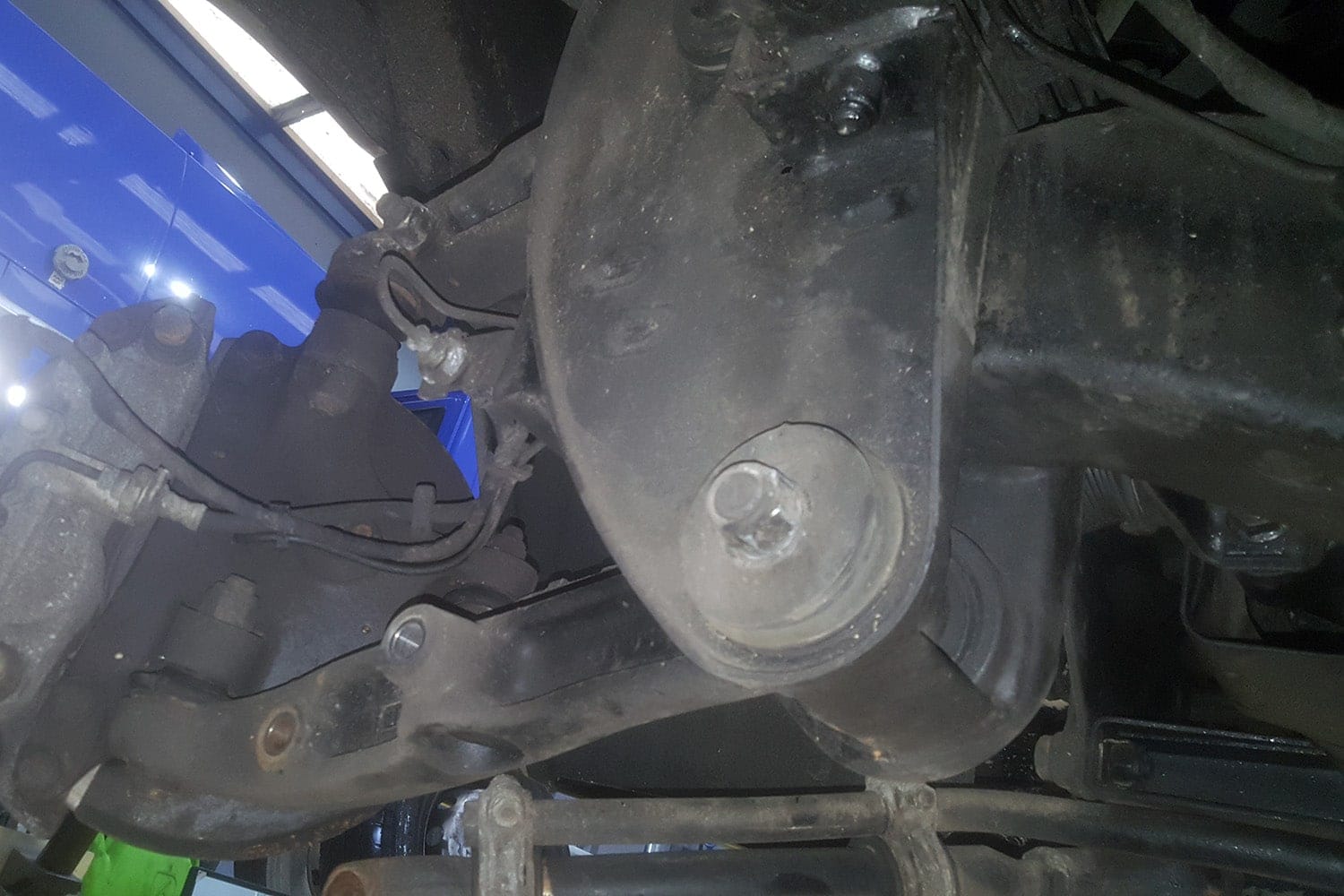
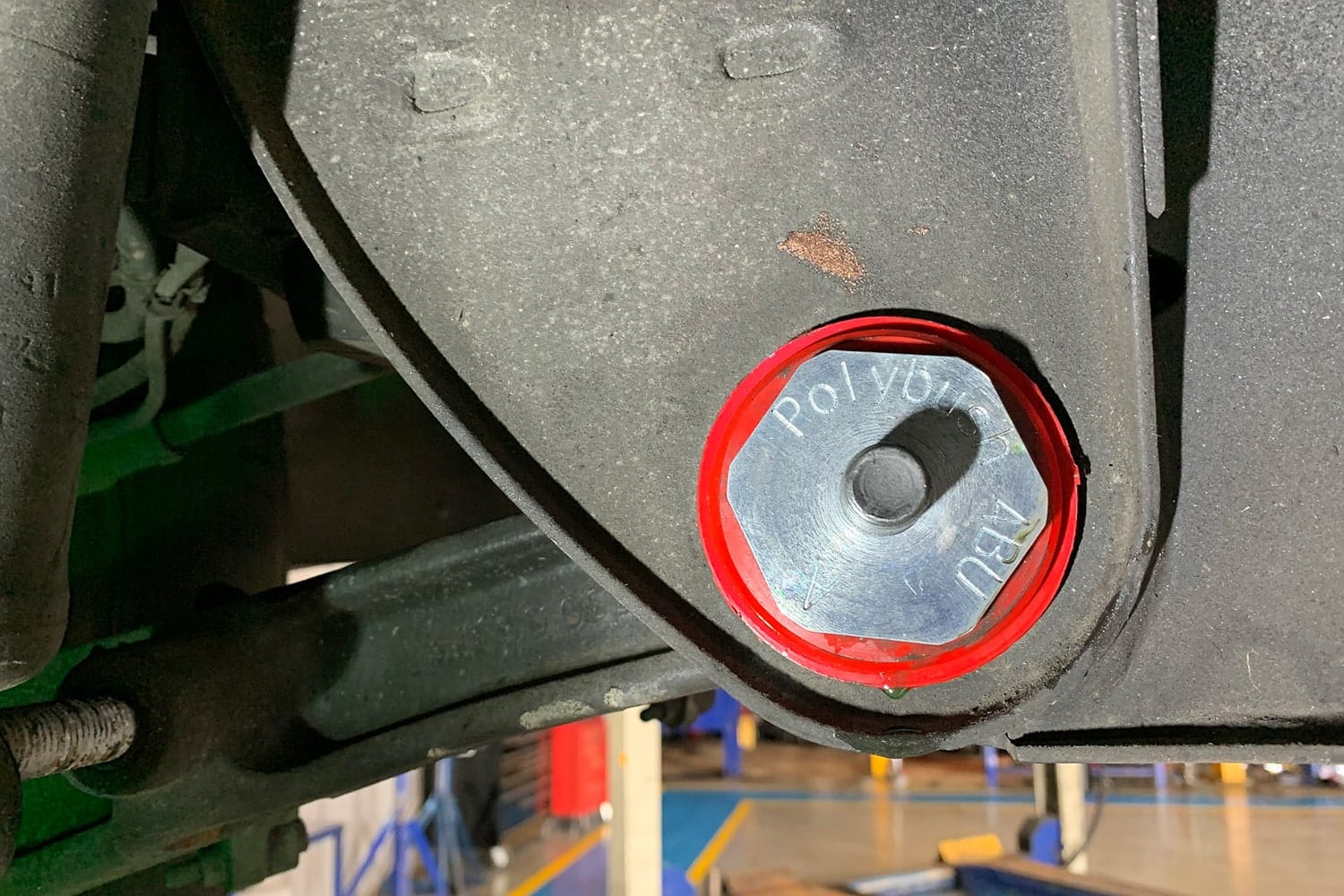
Polybush 4BU Lower Arm Camber Correction Bush – Fitted to Iveco Daily MK6 Torsion Bar
Why Fleet Operators Choose Polybush
Across the UK and Europe, Polybush has become a leading supplier of polyurethane suspension bushes for commercial vehicles.
Fleet operators choose Polybush because the products are:
• Designed and manufactured using advanced polyurethane materials
• Engineered specifically to replace factory rubber bushes
• Proven in high-mileage fleet environments
• Trusted by transport operators, workshops and vehicle specialists
For vehicles used in school transport, council fleets, airport shuttles and community transport services, upgrading to Polybush suspension bushes can significantly improve long-term reliability.
Maintaining Suspension Performance on High-Mileage Iveco Daily Vehicles
Many Iveco Daily vehicles remain in service for hundreds of thousands of miles, particularly when used in commercial transport roles. Replacing worn suspension bushes with durable alternatives is one of the most effective ways to maintain vehicle performance and reduce ongoing maintenance costs.
For fleet managers and workshops responsible for maintaining Iveco Daily minibuses, vans and passenger vehicles, Polybush polyurethane bushes provide a trusted, long-lasting suspension solution designed to handle the demands of heavy-duty transport applications.
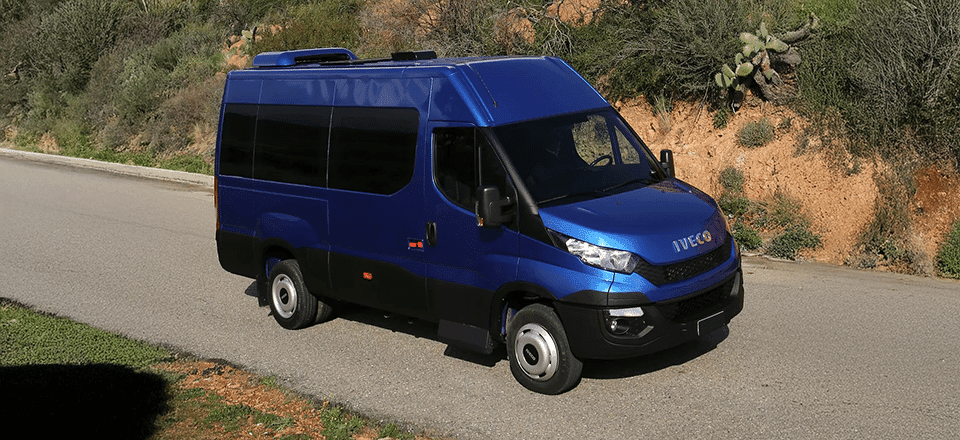
Iveco School Bus – Fitted With Polybush Suspension Bushes
Find the Right Polybush Suspension Bushes for Your Iveco Daily
Polybush manufactures suspension bushes for the following Iveco Daily models:
Each product is engineered to provide improved durability, better suspension control and longer service life compared with standard rubber bushes.
If you maintain or operate Iveco Daily fleet vehicles, minibuses or commercial vans, upgrading to Polybush bushes helps ensure consistent suspension performance and reduced maintenance downtime.
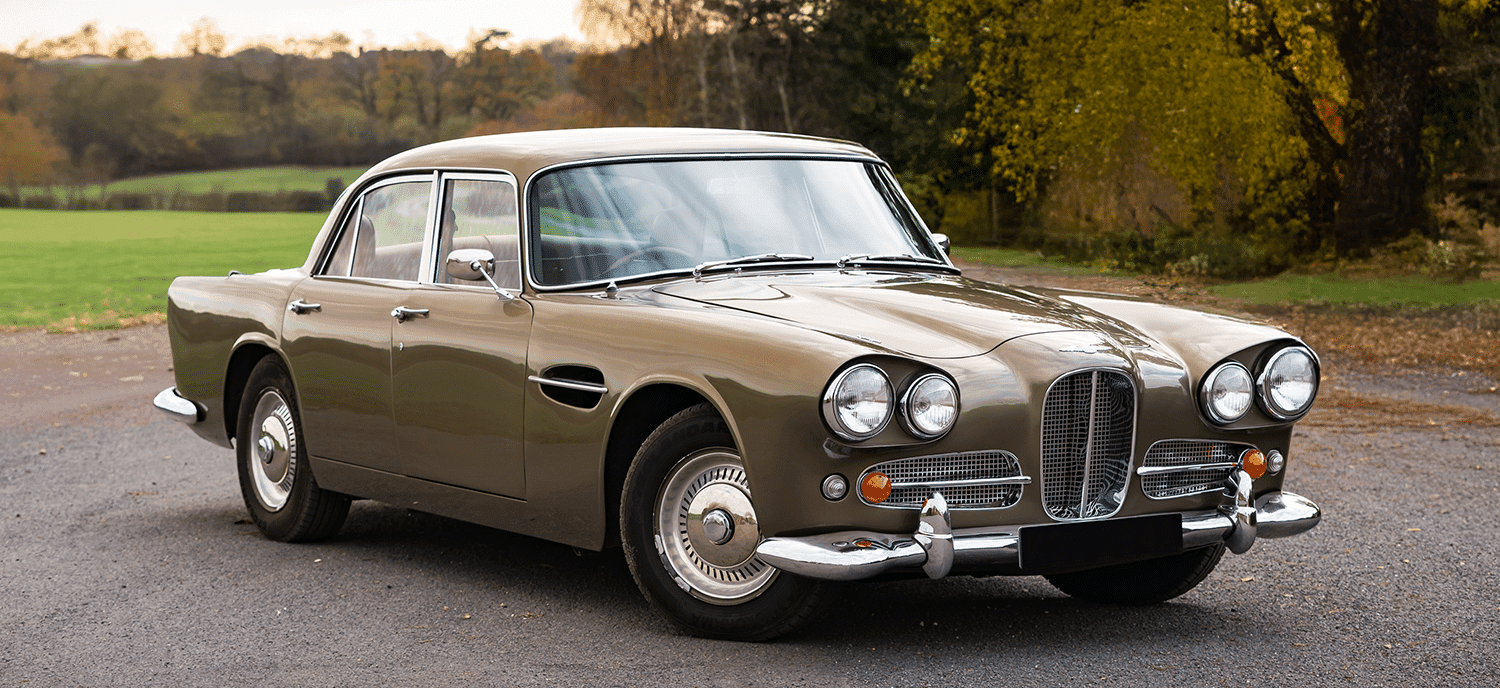
When Aston Martin Works Ltd get in touch, you know the brief won’t be about volume – it’ll be about getting things right.
That was exactly the case when Aston Martin Works contacted us to discuss custom-manufactured suspension bushes for one of the rarest cars ever to leave Newport Pagnell: the Lagonda Rapide.
Supporting One of the Rarest Aston Martins Ever Built
Only 55 Lagonda Rapides were ever made, and it’s believed that just 49 remain on the road today. This isn’t a car you experiment on, and it certainly isn’t one where “near enough” will do. Aston Martin weren’t looking for quantity. They were looking for quality, accuracy, and longevity – which is precisely why they came to Polybush.
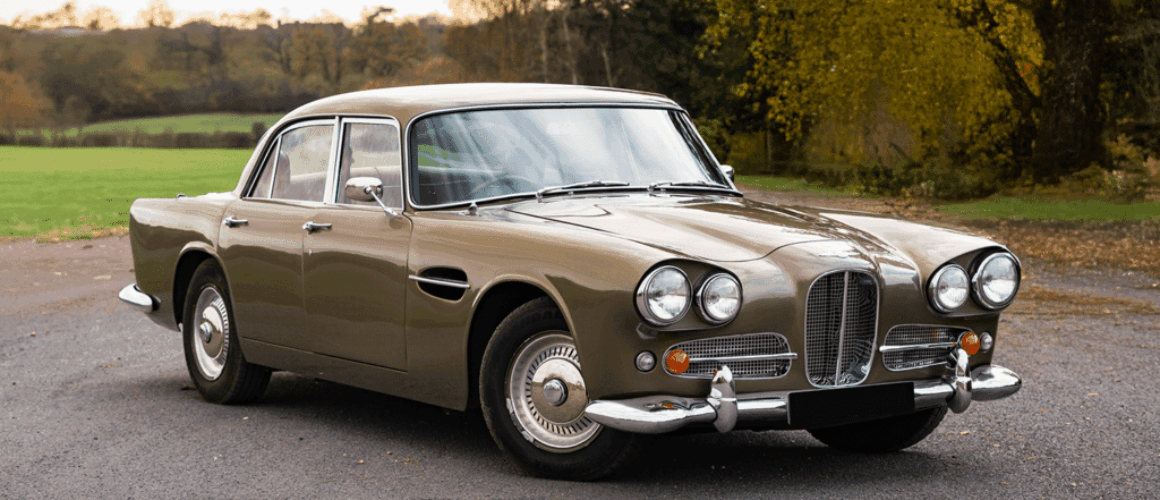
Aston Martin Lagonda Rapide – With Polybush Suspension Bushes
As a long-standing British manufacturer of polyurethane suspension bushes, we’ve been synonymous with polyurethane for over four decades. In fact, we believed in it so strongly that we trademarked the Polybush name over 40 years ago. It’s not just what we do – it’s what we’re known for.
Recreating OEM Performance – Properly
The goal from Aston Martin Works was clear: Produce bushes for the Lagonda Rapide that were as close to OEM specification as possible, while benefiting from the inherent advantages of modern polyurethane.
To achieve that, Aston Martin supplied us with original factory bushes and detailed dimensions. Working closely with their Chief Parts Advisor, our design engineer, Greg, meticulously benchmarked each original bush.
This process isn’t guesswork. Every critical dimension, void, bond and compliance characteristic was measured and analysed. The result was the ability to faithfully replicate the original behaviour of the suspension – not just how it fits, but how it feels on the road.
For a car like the Lagonda Rapide, that matters. Owners expect not only performance and stability, but also the comfort and refinement befitting an Aston Martin.
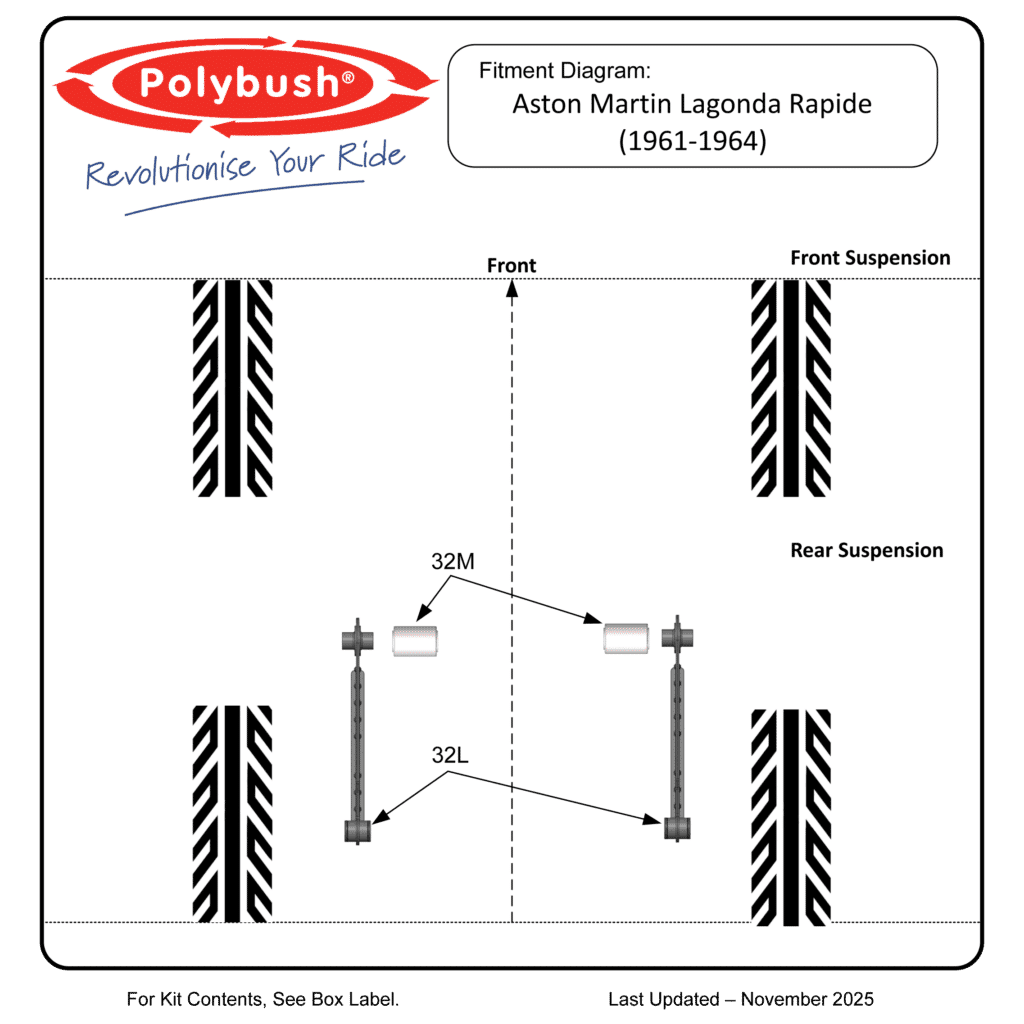
Diagram of Polybush made suspension bushes for the Aston Martin Lagonda Rapide (1961-1964)
Engineering a Low-Volume, High-End Solution
The project involved the development of:
A double-bonded suspension bush
A bespoke radius arm bush
Both were engineered specifically for this application and produced as a low-volume, high-end product, exclusively for Aston Martin Works Ltd. Once fitted, the feedback spoke for itself:
“Thank you for sending the bushes. I’m very pleased to report our technician has fitted them with no issues and the car is back on its wheels and mobile.”
That’s always what you want to hear – especially when dealing with something this rare.
Exclusive Supply, Shared Exposure
Given the uniqueness of the Lagonda Rapide and the bespoke nature of the bushes, we agreed that these parts would be:
Exclusively produced for Aston Martin Works Ltd
Unavailable for direct purchase from Polybush
Instead, Aston Martin Works are listed as the official supplier of these components. It’s a sensible arrangement that protects the integrity of the vehicle, while increasing exposure for both companies – and it ensures customers get the right part, from the right source. You can purchase these parts directly HERE
Custom Polyurethane Bushes for Low-Volume Vehicles
Projects like this perfectly demonstrate what Polybush does best.
Our development team can design and manufacture custom polyurethane bushes for:
Low-volume production vehicles
Classic and heritage models
Specialist and performance applications
Whether the priority is comfort, longevity, precision, or outright performance, polyurethane allows us to engineer those characteristics into the bush from the outset – rather than compromising with a one-size-fits-all solution.
Polyurethane vs Rubber: Why It Matters
Traditional rubber bushes have their place, but they also have limitations:
Rubber degrades with age, oil, heat and ozone
Compliance changes over time
Dimensional accuracy can be inconsistent
By contrast, polyurethane suspension bushes offer:
Far greater resistance to wear and environmental damage
Consistent performance over time
The ability to fine-tune stiffness and compliance for the application
Improved steering precision and suspension control
Crucially for cars like the Lagonda Rapide, polyurethane can be engineered to deliver comfort as well as control – it’s not just about stiffness.
Hand-Cast, Made in the UK – Why That Still Matters
All Polybush products are hand-cast in the UK, allowing us total control over materials, quality, and consistency. For specialist projects, this approach is invaluable.
It means:
Tighter tolerances
Better bonding
Proper quality control at every stage
The flexibility to manufacture genuinely bespoke components
It’s also why manufacturers like Aston Martin Works trust us with rare, irreplaceable vehicles.
A Partnership Built on Quality
Working with Aston Martin Works Ltd on the Lagonda Rapide has been a genuine privilege. It’s a perfect example of how traditional British engineering, modern materials, and careful development can come together to preserve some of the finest cars ever made.
If you’re responsible for maintaining or developing a low-volume, classic, or specialist vehicle, and need suspension bushes engineered properly – not just adapted – that’s exactly where Polybush excels. Contact us on 01978 664316
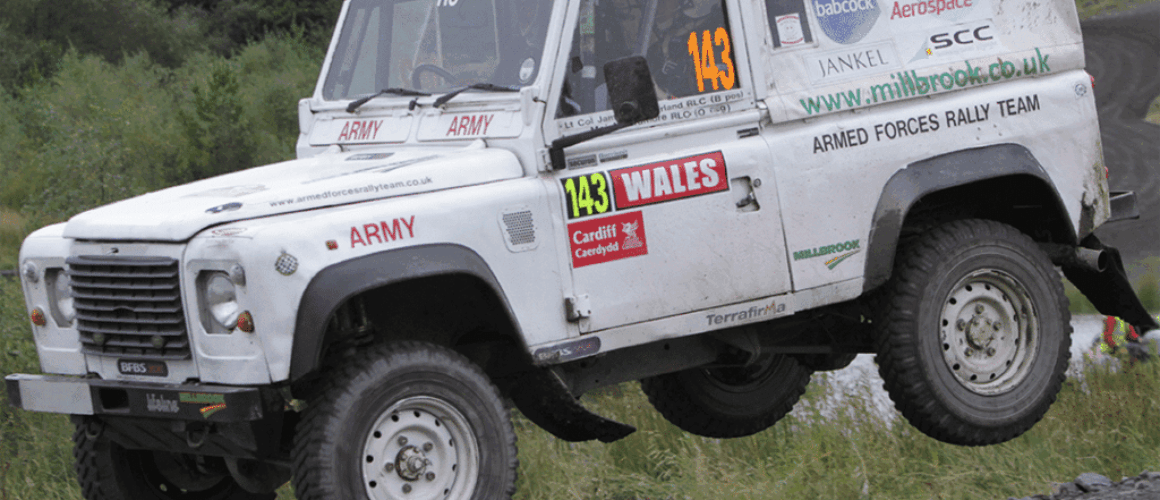
That’s where our new Polybush 1BD Caster Correction Bushes come in. Specifically designed to suit vehicles fitted with Radius Arm NTC2694, these polyurethane bushes are engineered to correct the caster angle for vehicles with 2–3″ lift kits. If your Landy is running standard ride height, we’ve still got you covered – that’s what our Polybush 1B bush is for.
What is Caster, and Why Does It Matter?
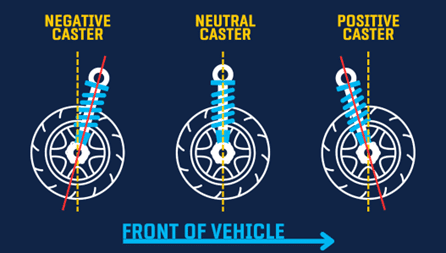
Caster is the angle between your steering axis and vertical, viewed from the side of the vehicle. In simple terms, it’s what helps your wheels return to centre after a turn and keeps your steering stable at speed.
Caster Explanation
When you lift a solid axle Land Rover, the fixed geometry of the radius arms shifts, effectively rotating the axle and reducing positive caster. And that reduced caster leads to:
Wandering on the road – poor straight-line tracking
Increased tyre wear – as the tyres scrub across the tarmac
Vague steering – you constantly correct the wheel
Speed wobbles – especially on uneven roads or at motorway speeds
Correcting the caster restores your handling, improves tyre life and puts you back in control – exactly what the 1BD Caster Correction Bush is designed to do.
1BD – Caster Corrected Bushes for 2-3″ Lift
Can They Be Fitted Easily?
Absolutely, they can! On purchase, we provide easy-to-read fitting instructions for all products that have to be fitted in a certain way.
You can also find them here – 1BD Fitting Instructions & on the vehicle page.
Though we always recommend a press, in the majority of cases, you can install our bushes by hand, or with simple hand tools. But due to the 1BD’s outer metal shell, you’ll need to make a tool with a threaded bar and some sockets. We created a video showing this HERE – Or, use a press/vice.
Why Polyurethane? Why Polybush?
Traditional rubber bushes can’t always cope with the demands of a lifted Land Rover – they flex more, degrade faster under load, and can allow the geometry to shift subtly under braking or cornering.
Polybush bushes, on the other hand, are:
Durable – they resist oil, fuel, weather and UV, lasting far longer than rubber
Consistent – they hold their shape under load, giving more predictable handling
Responsive – more positive road feel without harshness
No squeaks, no maintenance – thanks to our unique Polyurethane blend and precise fitment
In short, they’re built to handle everything from green lanes to gravel tracks to long hauls on the M6, towing plant machinery – and they do it with comfort and control.
How Will It Feel on the Vehicle?
Fit a set of 1BD bushes and you’ll notice the difference straight away:
Steering feels more direct and centred – the vehicle stops “drifting” around its lane
High-speed stability improves – less correction needed at motorway speeds
Better off-road control – especially when descending or crawling, as the geometry keeps the steering more predictable
Improved tyre wear and alignment – no more fighting uneven wear caused by incorrect angles
It’s the kind of improvement you feel as much as you see – and when you’re miles from home, that reassurance matters.
Built for the Road. Proven Off It.
At Polybush, we design every bush with real-world use in mind. Our 1BD bushes aren’t just good on paper – they’re proven in everything from fully-kitted overland rigs to daily-driven Defenders that hit farm tracks Sunday and the motorway Monday.
So if you’ve given your Land Rover a bit more altitude, don’t forget to sort the attitude – get your caster back to where it should be with Polybush 1BD Caster Correction Bushes.
If you’ve got questions about fitting, compatibility, or how these work with your suspension setup, give us a shout – we’re always happy to help fellow Landy fans get their trucks handling right.
It’s one of those common faults that sneaks up on you. One minute the car feels fine, the next it’s vague through corners, unsettled on the brakes, and just not as tight as it used to be.
The OEM Rear Axle Bush Problem
The original rear beam bushes — commonly found under OEM part numbers:
…have gained a bit of a reputation, and not a good one.
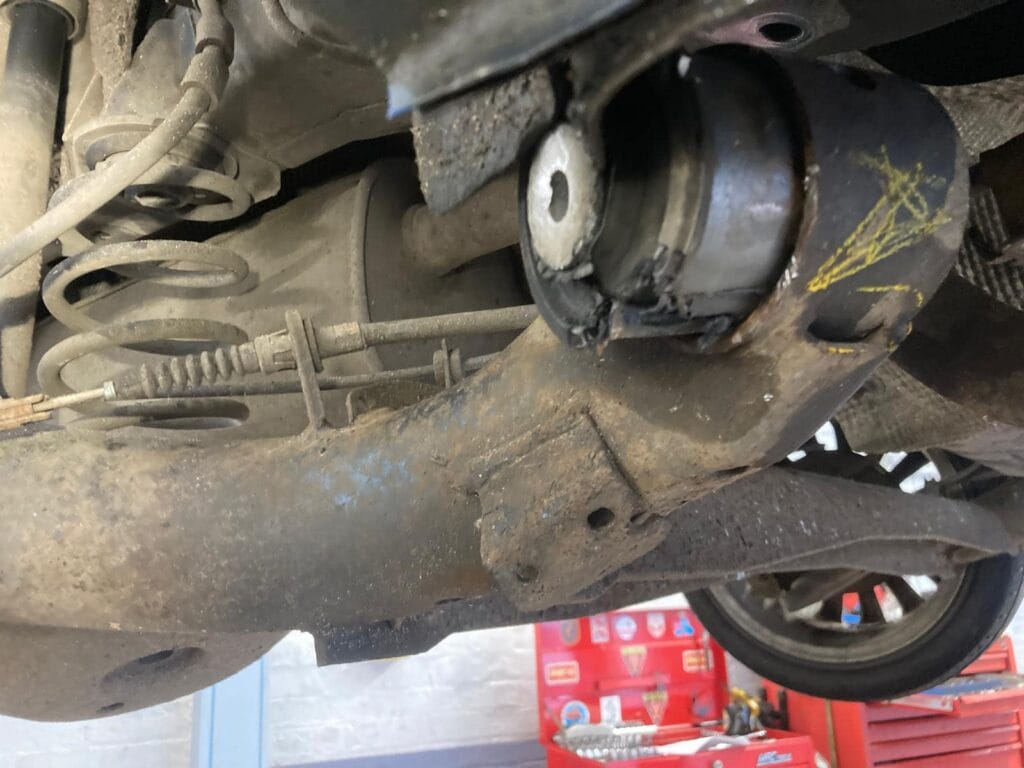
The issue isn’t abuse or mileage alone — it’s the design and materials. The plastic outer shell cracks, the rubber debonds from the centre tube, and the voided rubber simply can’t cope with real-world loads for long. Once that happens, the rear axle is free to move far more than it should.
And that’s where the fun starts.
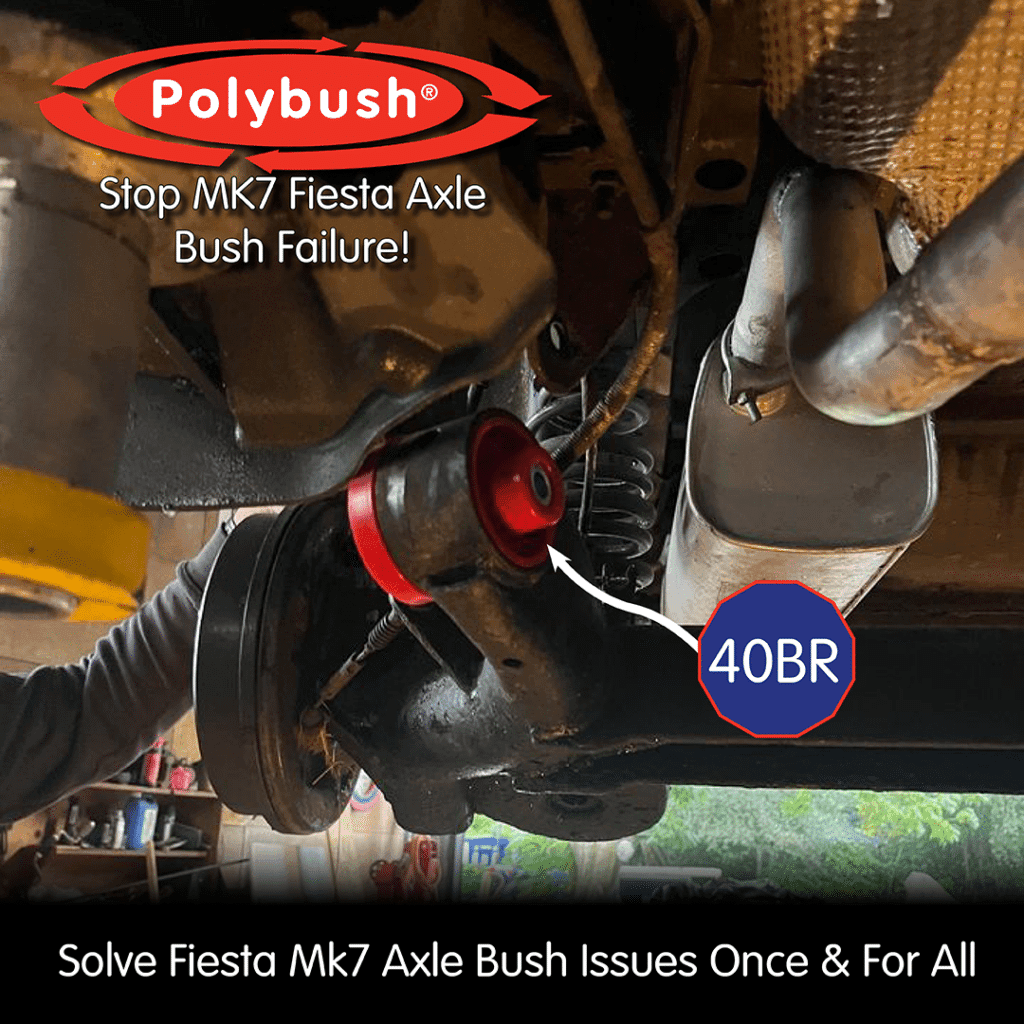
Mk7 Ford Fiesta Rear Axle Bush Failure
Symptoms of Failing Rear Axle Bushes
If your Fiesta Mk7 or Mazda 2 is suffering from worn rear axle bushes, you’ll usually notice:
A loose or unsettled feeling when cornering
Excessive vibration or road noise
Poor rear-end stability under braking
Reduced driver confidence and feedback
Left unchecked, worn rear beam bushes don’t just affect handling — they accelerate wear in tyres, suspension components, and braking performance, turning a relatively simple job into an expensive chain reaction.
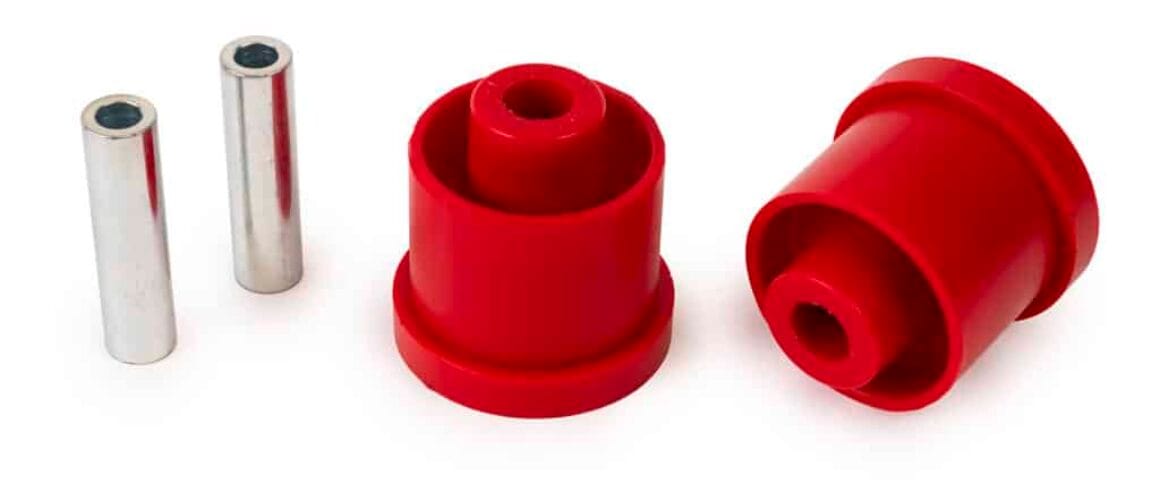
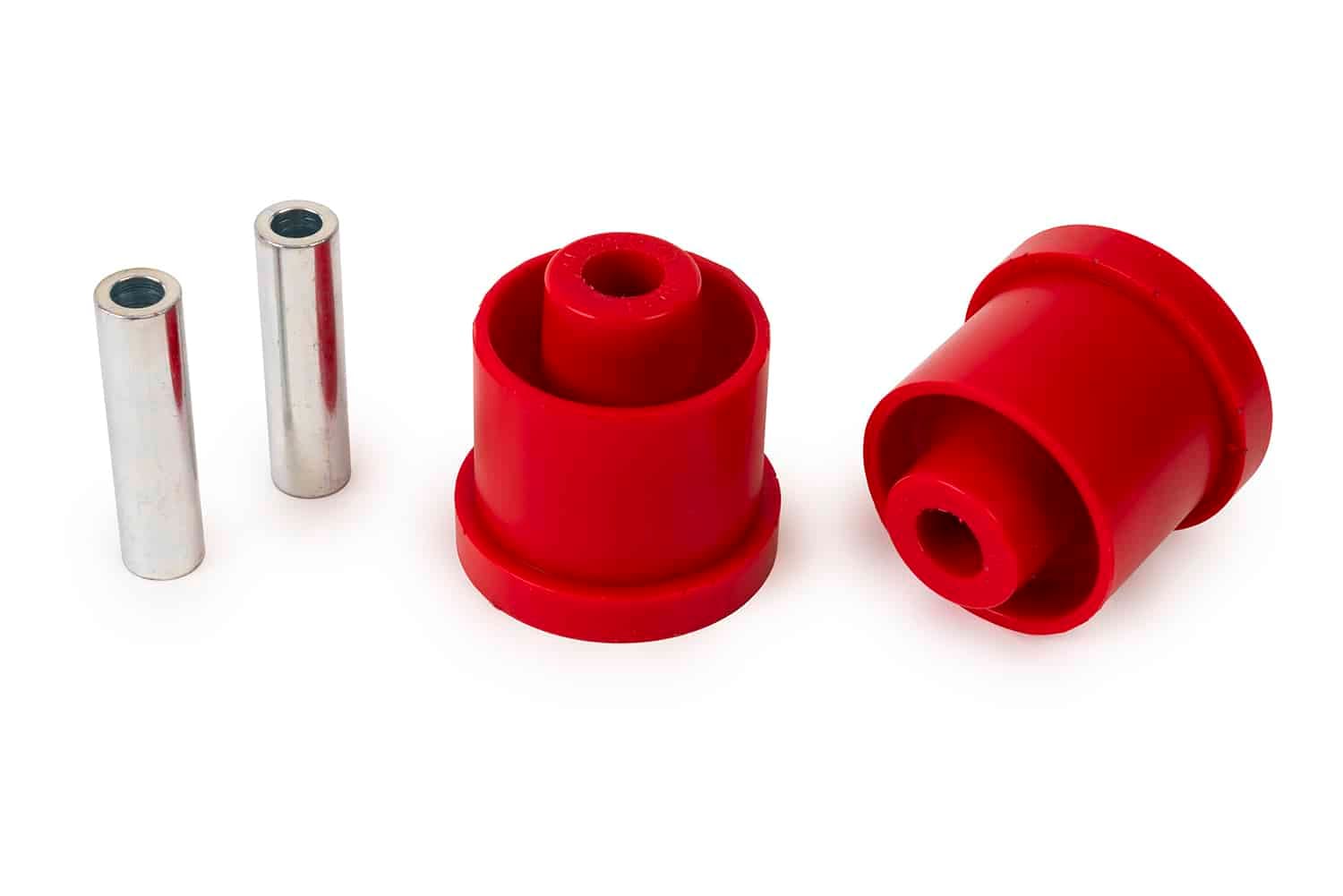
Rather than replicating the weaknesses of the factory rubber bush, the 40BR is manufactured from high-quality polyurethane, engineered to resist deflection, fatigue, and debonding.
40BR Installed Into A Ford Fiesta MK7
Key Benefits of Polybush 40BR
✔ Sharper, More Predictable Handling By removing the large voids found in the OEM bush, the rear axle is properly located. The result is noticeably better cornering precision and rear-end stability — especially noticeable on Fiesta Mk7 ST models.
✔ Comfort Is Retained This isn’t about turning your daily driver into a bone-shaker. The 40BR is tuned to control movement without introducing harshness, so ride comfort remains spot-on for road use.
✔ Improved Tyre Life & Braking Stability Less axle movement means more consistent tyre contact and better braking confidence. It’s one of those upgrades that quietly improves everything the car does.
Easy Installation – No Axle Removal Required
One of the big wins with the Polybush 40BR is installation.
The Polybush 40BR Rear Axle Bush – Fitting Mk7 Fiesta
Unlike some solutions, the rear axle does not need to be removed from the vehicle. We have heard the average time it takes to install is around 30 mins! That makes it a far more appealing job for:
Independent garages
Performance specialists
Competent DIYers
Less labour, fewer seized bolts, and a quicker turnaround — all without compromising on results.
Why Polyurethane Beats Rubber Every Time
If you’re replacing rear axle bushes on a Fiesta Mk7, fitting rubber again is usually just delaying the inevitable. Polyurethane doesn’t suffer from the same ageing, cracking, or debonding issues, which means:
Longer service life
More consistent performance
Less money spent redoing the same job
As we say for good reason: “Fit it once, fit Polybush.”
Related Suspension Upgrades for Fiesta Mk7 & Mazda 2
While the 40BR rear axle bush solves the most common rear-end issue, it’s often worth considering related components while you’re there:
When it comes to vehicle performance, most drivers think about engines, brakes, or tyres—but few realise how vital polyurethane (PU) is to modern automotive design. From suspension precision to ride comfort and durability, polyurethane has become one of the most important materials in today’s cars.
At Polybush, we specialise in high-performance polyurethane suspension bushes, engineered to outperform traditional rubber alternatives. Here are 10 surprising facts about polyurethane—and why it’s the smart choice for your vehicle.
1. From Wartime Innovation to Performance Essential
Polyurethane was originally developed during World War II as a replacement for scarce natural rubber. Today, it has evolved into a premium automotive material, widely used in suspension bushes, engine mounts, seals, and performance components.
Unlike rubber, polyurethane does not degrade as quickly, making it ideal for long-lasting suspension solutions like Polybush products.
2. Revolutionised Ride Comfort and Control
Polyurethane foam transformed automotive seating in the 1950s, but solid polyurethane has done the same for vehicle handling. In suspension systems, PU bushes maintain geometry under load, ensuring better steering response, stability, and driver feedback—especially under hard driving or towing conditions.
3. Built to Withstand Heat, Oil, and Harsh Conditions
Rubber bushes are prone to cracking, softening, and perishing when exposed to heat, oil, and road contaminants. Polyurethane, however, is highly resistant to chemicals, moisture, and extreme temperatures, making it perfect for demanding suspension applications.
That’s why Polybush suspension bushes last significantly longer than rubber equivalents.
4. Engineered for High-Performance Suspension
Polyurethane can be moulded precisely, allowing manufacturers like Polybush to produce tight-tolerance suspension bushes that improve handling without compromising safety.
Used in:
Suspension bushes
Shock absorber mounts
Anti-roll bar bushes
Chassis and drivetrain components
PU delivers strength, flexibility, and consistency where rubber simply can’t compete.
5. Available in Multiple Hardness Ratings
One of polyurethane’s biggest advantages is tunability. Unlike rubber, polyurethane suspension bushes can be manufactured in multiple hardnesses (Shore ratings).
At Polybush, this means:
Softer compounds for road comfort
Medium hardness for fast road and towing
Harder compounds for motorsport, off-road, and performance use
This allows you to tailor your suspension exactly to your driving needs.
6. Reduces Unwanted Movement Without Excess Noise
Polyurethane bushes reduce excessive flex found in worn rubber bushes, keeping suspension components correctly aligned. This leads to:
Reduced tyre wear
More predictable handling
Increased braking performance
Polybush products are engineered to minimise noise and vibration, offering a perfect balance between comfort and performance.
7. Plays a Role Throughout the Entire Vehicle
Beyond suspension, polyurethane is used in:
Tyres (as performance additives)
Engine and gearbox mounts
Seals and gaskets
Protective coatings
Its versatility makes PU one of the most widely used materials in automotive manufacturing.
8. Supports Lightweight, Efficient Vehicle Design
As vehicles become lighter and more efficient, polyurethane is increasingly used in body panels, bumpers, and structural components. Its high strength-to-weight ratio helps reduce mass without sacrificing durability—benefiting both fuel economy and performance.
9. Holds Vehicles Together—Literally
Polyurethane adhesives and sealants bond metal, plastic, and glass throughout modern vehicles. These strong yet flexible bonds improve structural integrity and crash safety while reducing unnecessary weight.
10. A Key Material in Electric and Future Vehicles
Polyurethane is now essential in electric vehicles, used for:
Battery pack protection
Thermal insulation
Vibration damping
As EVs evolve, polyurethane—and especially durable suspension components—will continue to play a vital role.
Why Polybush Polyurethane Suspension Bushes Are the Best Choice
Replacing worn rubber bushes with Polybush polyurethane suspension bushes delivers immediate and long-term benefits:
Longer lifespan than rubber
Improved handling and steering precision
Resistance to oil, heat, and road grime
Multiple hardness options to suit your driving style
Designed and manufactured for performance and durability
Whether you drive a classic car, daily commuter, 4×4, or performance vehicle, Polybush polyurethane bushes provide a smarter, stronger, and more reliable upgrade.
Upgrade Your Suspension with Polybush
Polyurethane might be your vehicle’s hidden performance advantage—and with Polybush, you’re choosing expertly engineered suspension solutions built to last.
Contact Polybush today to find the right polyurethane suspension bushes for your vehicle and experience the difference in performance, control, and longevity.
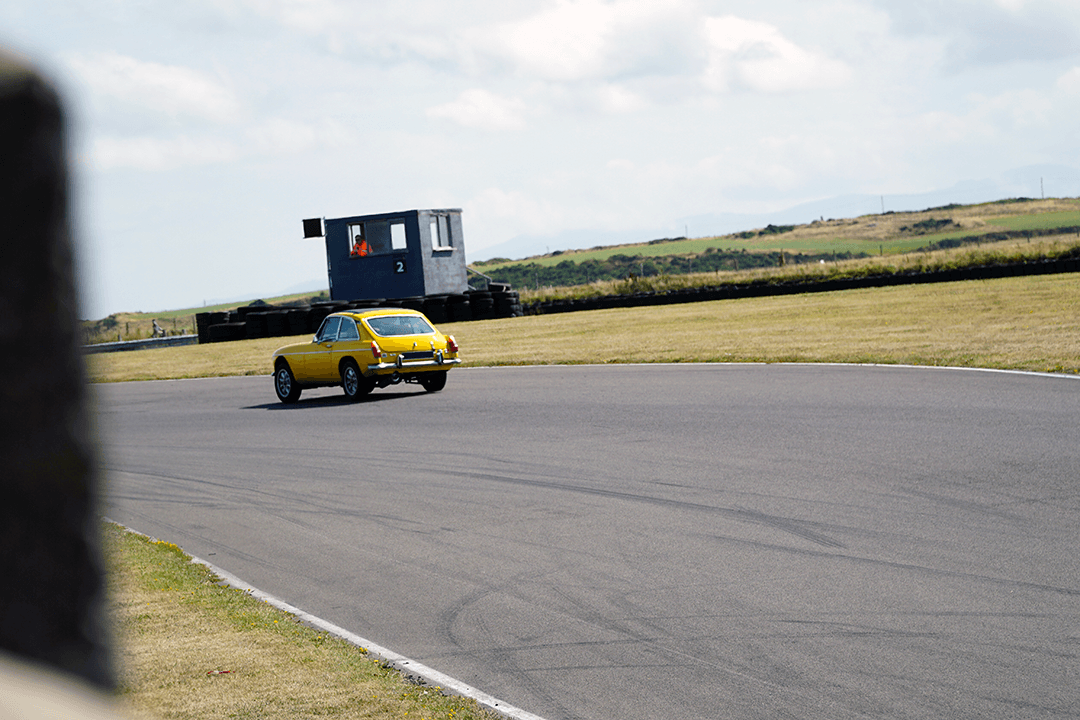
After fitting our Polybush Comfort Grade Kit 38 to this particular car, we wanted to see how it behaved when the owner pushed it properly — not just the usual B-road jaunt, but a genuine track session with some spirited driving.
If you want to see the original installation and explanation of Comfort Grade, you’ll find that video here: https://youtu.be/azyvqagMbOU
Driver Feedback: Comfort Bushes Under Pressure
The owner’s verdict was glowing. He already expected the Comfort Grade bushes to improve road manners — that’s their wheelhouse — but what took him by surprise was how composed they remained once the pace went up.
Even in faster corners, the BGT felt predictable and settled. Turn-in improved thanks to more stable geometry, the back end stayed planted, and mid-corner bumps didn’t knock the car offline. In his words: “It feels like the MG I know, just… sorted.”
And that’s exactly what Comfort Grade is meant to do: keep the classic feel, but tidy up the slack that ageing rubber introduces.
Why Polybush Outperforms Rubber — On Road and Track
Rubber is fantastic when fresh, but it breaks down quickly with heat, oil, age and use. Once it softens or cracks, your suspension geometry starts wandering, which is why old classics can feel vague or unstable.
MG BGT – Comfort Grade Bushes
Our polyurethane bushes maintain their shape and resilience for years — often decades — delivering:
consistent handling
sharper steering feel
improved ride quality
vastly better long-term durability
And, importantly, every Polybush product is British-made, engineered and manufactured right here in the UK. These cars were built for British roads, so the parts should be as well.
Different owners want different behaviours from their MG, so we offer three tailored grades:
Comfort Grade (Blue)
The setup used in our track test. Perfect for everyday road use, long tours and maintaining that classic MG suppleness.
Better control, without making the car feel modern or harsh – See Our Blog
Dynamic Grade (Orange)
A brilliant option if you want a bit more sharpness and response. It’s ideal for fast road driving — a livelier, more eager feel, but still perfectly civilised.
Think of it as giving the car a bit more “pep in its step”, without compromising comfort – See Our Blog
Performance Grade (Red)
For drivers who really lean on the car. Perfect for track days, competition, or anyone wanting maximum precision.
It’s the most focused, most durable option for high-stress use.
Track-Day Takeaway: The MG BGT Still Has Plenty Left to Give
The biggest win from the day was how natural the upgrade felt. The owner climbed out of the car smiling, because the BGT didn’t feel drastically changed — it just felt like its best self.
That’s the philosophy behind Polybush: Enhance the classic, don’t overwrite it.
Whether you choose Comfort, Dynamic or Performance, everything we make is:
British-made
Engineered for British cars
Designed to last
Tested on real roads and real circuits
For anyone restoring, upgrading, or simply enjoying their MG BGT, Polybush will help it feel tighter, more controlled and far more confidence-inspiring — without stripping away the charm that makes these cars so loved.
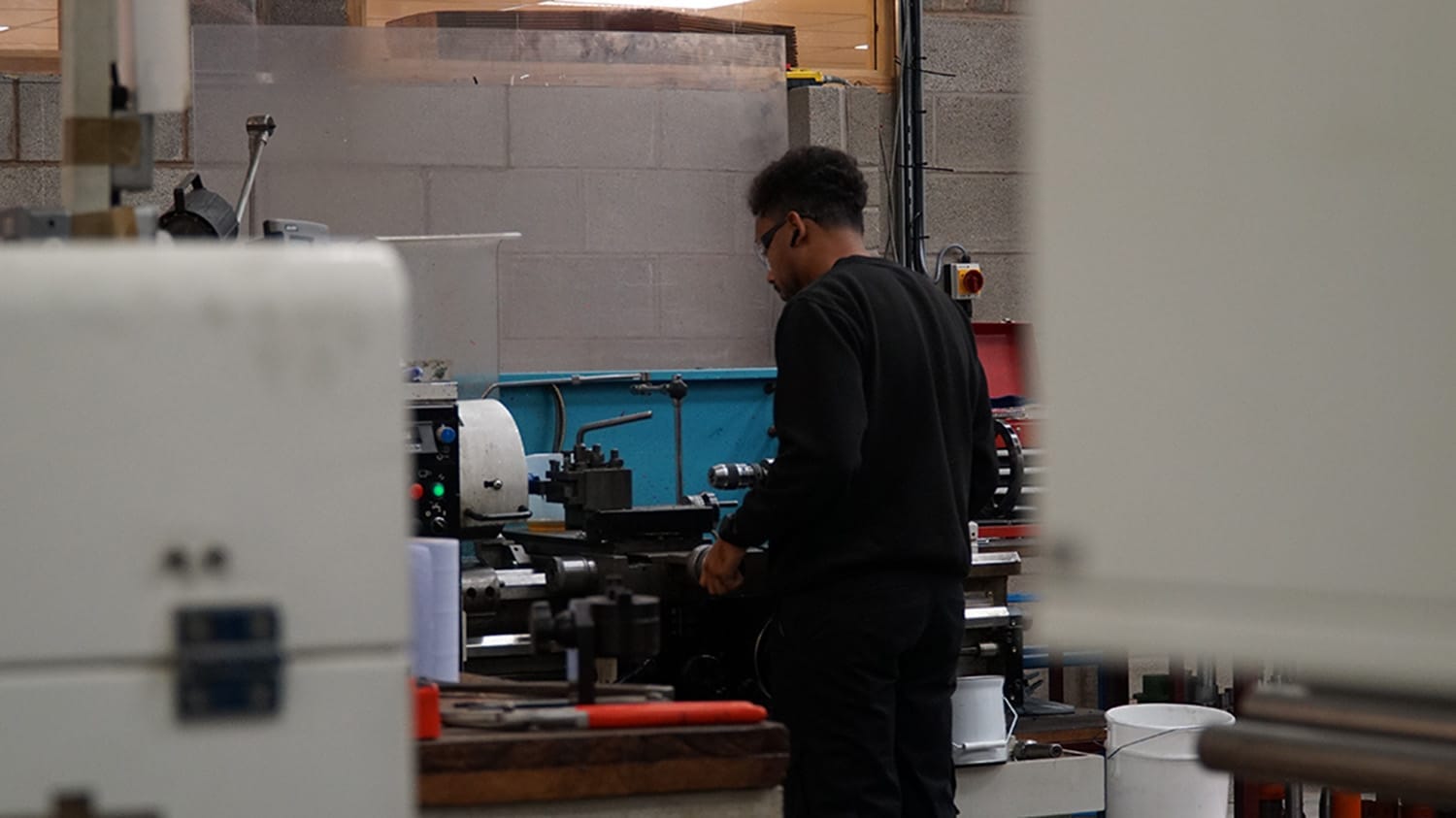
If you’ve ever been halfway through a project and realised the exact bush, spacer or mount you need doesn’t exist, you’ll know the sinking feeling that comes with it. That’s exactly why we manufacture our Polyurethane Bar—a machinable polyurethane rod that lets you create the precise component your build demands.
In this post, we’ll run through what makes polyurethane bar so handy, why it’s better than trying to adapt an ill-fitting part, and how it can save the day for classic restorers, fabricators, off-roaders and anyone who enjoys making their own solutions.
What Is a Polyurethane Bar?
A polyurethane bar (sometimes called a polyurethane rod) is exactly what it sounds like: A solid length of high-quality polyurethane that you can machine on a lathe. We produce it in a variety of diameters, so you can pick the size closest to your end goal and turn it down to your exact measurements.
It’s made from the same material we use in our production suspension bushes—so you’re getting the durability, flexibility and impressive tear strength you’d expect from proper automotive-grade polyurethane.
Why Polyurethane Bar Beats Adapting an Existing Part
Can’t Find What You’re Looking For | Try Polyurethane Bar
We’ve seen plenty of people try to modify a rubber bush or shave down something “close enough” to get themselves out of trouble. Honestly, it’s rarely worth it. Rubber deforms, collapses, and generally doesn’t appreciate being re-imagined into something it was never meant to be.
Machining a lathe-ready polyurethane rod, on the other hand, gives you:
Perfect fitment
You’re not fudging anything. You machine the part to exactly the dimensions you want—outer diameter, inner diameter, length, chamfers, the lot.
Far stronger material than rubber
Polyurethane laughs in the face of oils, road grime, UV, compression cycles and general abuse. If you’re going to the trouble of machining a custom part, you may as well make it last.
Consistency and repeatability
Need to make a second bush? A spare? A mirrored pair? Easy. Same bar, same material, same process.
Who Benefits Most From Using Polyurethane Rod?
Honestly, anyone with a lathe. But the biggest winners tend to be:
Classic car restorers
Some old cars use oddball bush sizes the aftermarket never produced in polyurethane. With a polyurethane bar, you can recreate them exactly—no compromise, no hunting scrapyards, no praying for NOS.
Fabricators & custom builders
If you’re designing your own suspension arms, engine mounts, subframe bushings, vibration isolators or even just mounting an intercooler / uprated radiator, a raw polyurethane rod lets you tweak your design until it’s bang on.
Off-road & 4×4 tuners
Land Rover owners, I’m looking at you. When you’re experimenting with geometry, lift kits or custom arms, polyurethane rods let you build the right isolator or bush for your setup.
Anyone solving a vibration or fitment issue
Sometimes a standard bush is too soft, too tall, too wide, or not quite the right hardness. Machined polyurethane lets you dial in the response you want.
How Easy Is It to Machine Polyurethane?
If you’ve handled nylon bar or other engineering plastics, this isn’t much different. It cuts cleanly, holds tolerances nicely, and doesn’t fight you like some softer elastomers.
A few quick tips:
Use sharp tools
Take moderate cuts (don’t try to peel massive chunks off)
Keep the part well supported to avoid deflection
Clean up edges with a light skim or sharp blade
The beauty is that you’re not battling the material—polyurethane behaves itself and produces a tidy, functional component.
Why Keep A Polyurethane Bar in Your Workshop?
Because it’s one of those “save the day” materials. If you’ve got a length on the shelf, you’re never stuck waiting for a weird-size bush or resorting to a bodged solution.
I’d argue it’s as essential as keeping a stock of aluminium bar or mild steel in the corner—except polyurethane solves the kind of problems metal never can.
Ready to Make Your Own Bushes?
If you’re fed up with chasing parts that don’t exist, or you simply want the freedom to create exactly what your project needs, our Polyurethane Bar is the way to go.
Various sizes, proper automotive grade, and built to take real-world punishment.
Your project deserves a part that fits perfectly—so why settle for anything else?