25 August 2026

Speak to one of our experts.

6 March 2026
Share:


Advice Blog
The Iveco Daily is one of the most widely used light commercial vehicles in Europe. Known for its strong ladder-frame chassis and high payload capacity, the Daily has become a trusted platform for minibus conversions, council fleets, community transport vehicles, delivery vans and specialist commercial applications.
Across multiple generations — from the MK2 through to the modern MK6 — Iveco Daily vehicles are designed to operate under demanding conditions. Many cover extremely high mileage while carrying heavy loads or transporting passengers on daily routes.
While the chassis and drivetrain are well regarded for durability, one component that frequently requires maintenance is the suspension bush system. Over time, the original rubber bushes fitted to the suspension can deteriorate, particularly in high-mileage fleet vehicles.
This guide explains:
• Common suspension bush problems on Iveco Daily vehicles
• Why rubber bushes often fail in fleet environments
• The benefits of upgrading to polyurethane suspension bushes
• The differences between Iveco Daily suspension systems across generations
• Why Polybush suspension bushes are widely used by fleet operators and workshops
Suspension bushes are small but critical components within the vehicle’s suspension system. They are typically made from rubber and are installed between metal suspension components to reduce vibration, absorb road shock and allow controlled movement.
On the Iveco Daily, bushes are commonly found in:
• Wishbones and suspension arms
• Anti-roll bar mounts
• Leaf spring mounts
• Torsion bar suspension components
• Subframe and chassis mounting points
Their job is to maintain correct suspension geometry while isolating vibration from the vehicle chassis.
When bushes wear or degrade, suspension components can move excessively, which leads to handling problems and increased wear on other components.
Iveco Daily Suspension Bushes Guide – Common Problems and Heavy-Duty Polybush Upgrades
While the Iveco Daily is designed for durability, the factory rubber bushes can struggle under heavy fleet use.
Vehicles used for:
• School transport
• Community minibuses
• Shuttle buses
• Delivery fleets
• Council transport vehicles
often operate under constant load and high daily mileage.
Several factors accelerate bush wear.
Many Iveco Daily vehicles operate close to their maximum payload capacity. When transporting passengers or equipment, suspension components experience continuous load cycles.
Over time, rubber bushes can begin to compress and lose their structural integrity.
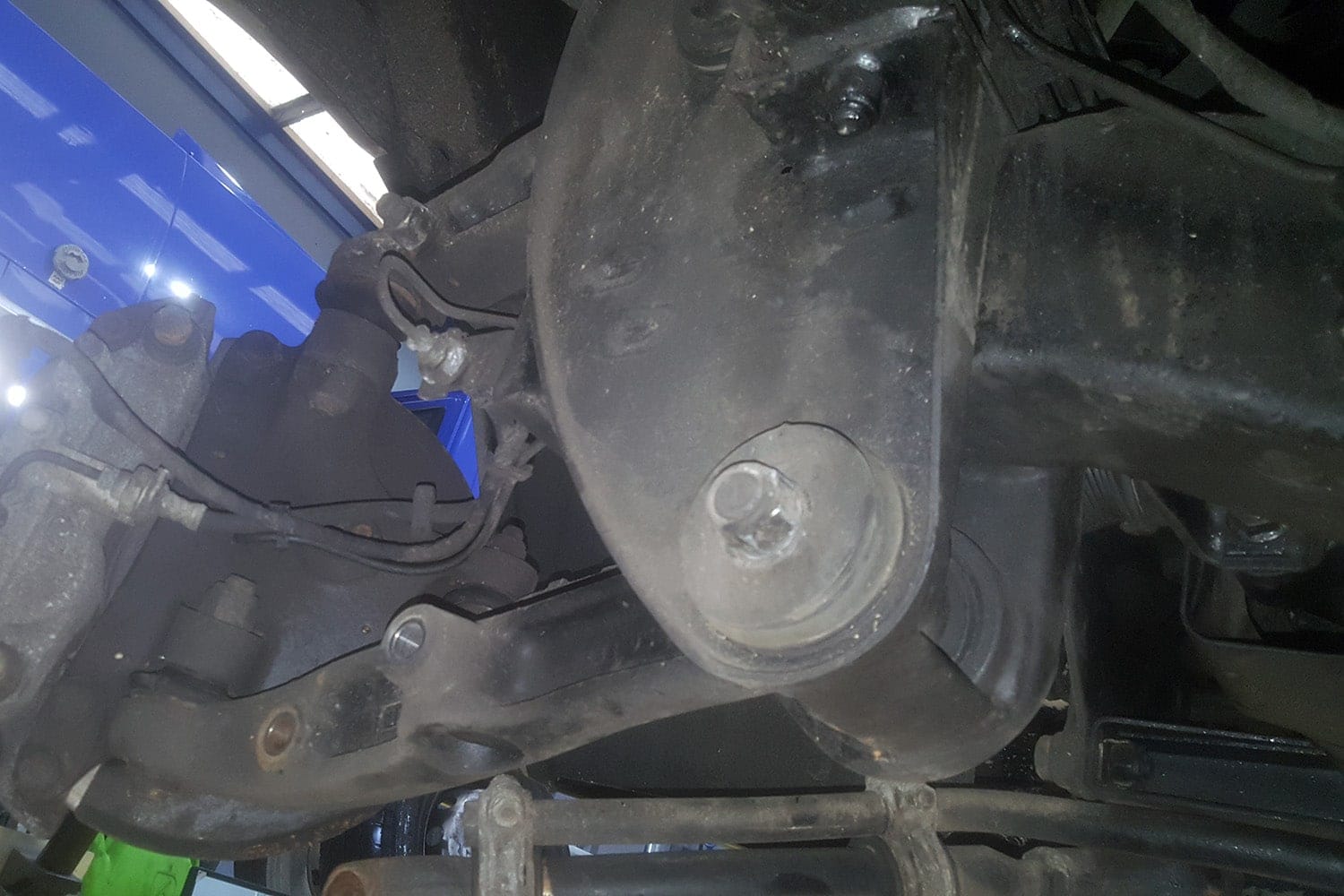
Vehicles used for school runs or urban delivery routes often drive in stop-start conditions. Braking, accelerating and cornering repeatedly places additional stress on suspension components.
Rubber bushes are vulnerable to damage from:
• Oil contamination
• Road salt
• Heat cycles
• Age-related cracking
As the rubber degrades, suspension movement increases.
Fleet operators and workshops often notice several warning signs when suspension bushes begin to fail.
Typical symptoms include:
• Knocking or clunking noises from the suspension
• Steering instability or vague handling
• Excessive body roll
• Uneven tyre wear
• Increased vibration through the chassis
• Poor wheel alignment
These issues are particularly noticeable on minibus conversions and passenger transport vehicles, where ride comfort and stability are important.
Ignoring worn bushes can also lead to premature tyre wear and increased maintenance costs.
Across its generations, the Iveco Daily has used different front suspension designs. Understanding these systems helps explain why certain bush failures occur.
Many Iveco Daily models use a torsion bar front suspension system.
This design uses a torsion bar acting as the spring, combined with suspension arms and bushes that allow controlled movement.
Advantages include:
• Strong load handling capability
• Compact suspension design
• Good durability for commercial vehicles
However, torsion bar systems rely heavily on suspension bushes to maintain correct geometry, which means worn bushes can quickly affect alignment and steering stability.
Some later Iveco Daily models use a transverse leaf spring front suspension system.
This design can improve ride quality and weight distribution, but it still relies on bushes to isolate vibration and maintain proper movement.
In both systems, bush wear is a common maintenance issue on high-mileage vehicles.
One common issue reported by workshops maintaining Iveco Daily vehicles is camber misalignment.
Over time, suspension bush wear and heavy loads can cause the front wheels to move out of their correct camber angle.
Symptoms include:
• Inner tyre edge wear
• Steering instability
• Poor vehicle tracking
To address this, Polybush developed specialised Camber Correction Bushes for torsion bar suspension models.
These innovative bushes allow technicians to correct camber alignment, restoring proper suspension geometry and helping extend tyre life.
For fleet operators running high-mileage minibuses, this can significantly reduce ongoing maintenance costs.
Lower Arm Camber Correction Bush – Iveco – Daily | Torsion Bar
Traditional suspension bushes are manufactured from rubber, which provides flexibility but has limitations in durability.
Polyurethane bushes offer several advantages over standard rubber components.
Polyurethane is significantly more resistant to:
• compression
• deformation
• oil contamination
• heat degradation
This allows bushes to maintain their performance for longer.
Because polyurethane bushes are more stable under load, they help maintain consistent suspension geometry, improving steering precision and handling.
Fleet operators often choose polyurethane bushes because they last significantly longer than standard rubber bushes, reducing the need for frequent replacements.
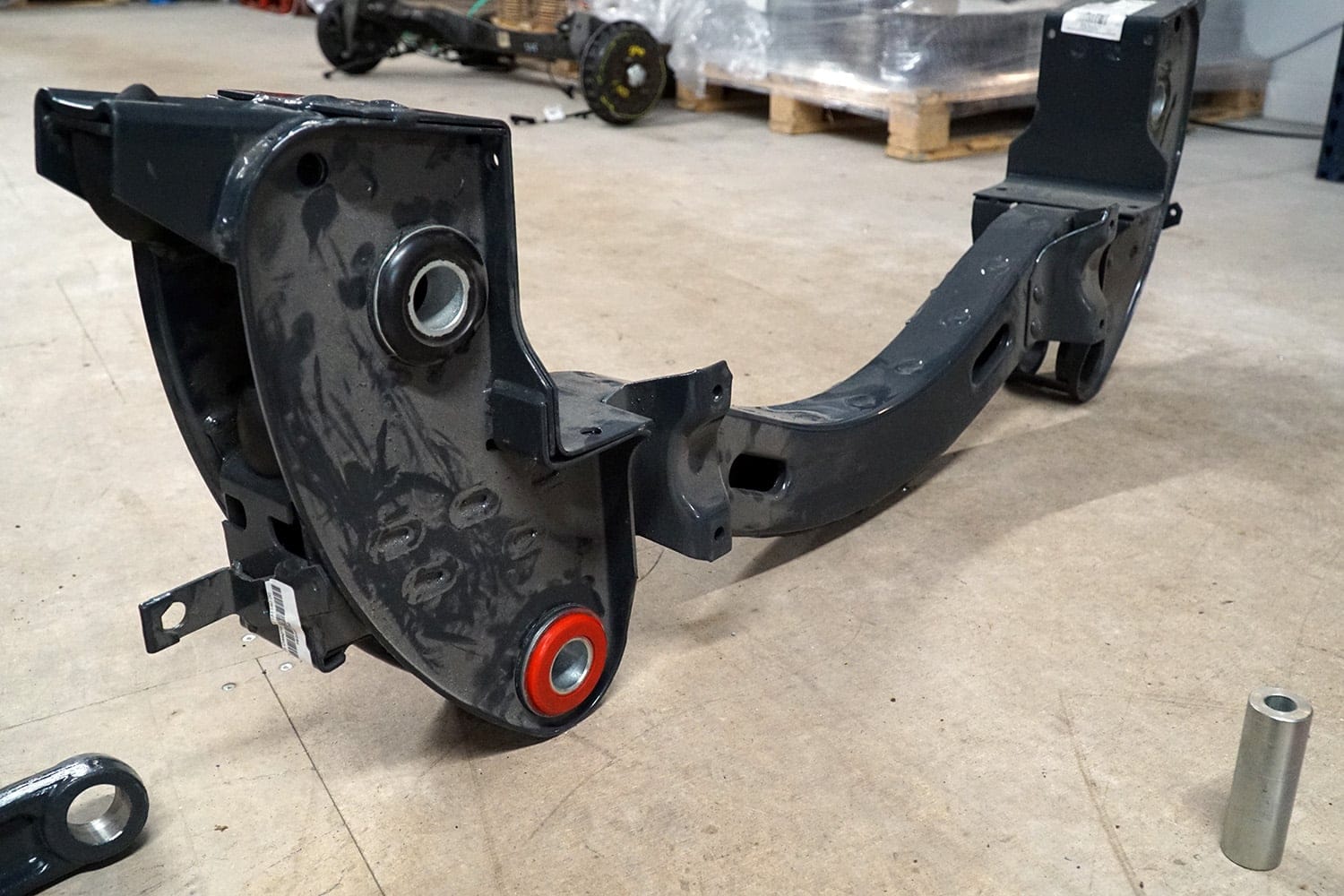
Polybush has developed a strong reputation for producing high-quality polyurethane suspension bushes for commercial vehicles.
Polybush products are engineered using advanced polyurethane materials and are designed specifically to replace factory rubber components.
Key reasons fleet operators choose Polybush include:
• Long service life in demanding fleet environments
• Improved suspension performance under load
• Reduced vehicle downtime
• Reliable performance on high-mileage vehicles
Polybush suspension bushes are widely used by:
• fleet maintenance workshops
• minibus operators
• council transport departments
• commercial vehicle specialists
Polybush manufactures suspension bushes for multiple generations of the Iveco Daily.
These include:
Iveco Daily MK2 (1989–1999)
Early torsion bar suspension models commonly used in specialist vehicles and older fleet applications.
Iveco Daily MK3 (1999–2006)
A popular platform for commercial vans and minibus conversions.
Iveco Daily MK4 (2006–2011)
Widely used in passenger transport fleets and commercial delivery operations.
Iveco Daily MK5 (2011–2014)
A common base for school transport vehicles and community minibuses.
Iveco Daily MK6 (2014-On)
Modern Daily models used extensively in fleet operations, available with torsion bar or transverse leaf spring suspension.
For each of these platforms, Polybush manufactures durable polyurethane suspension bushes designed to improve reliability and longevity.
Many Iveco Daily vehicles remain in service for hundreds of thousands of miles. Regular suspension maintenance is essential for ensuring safety, ride comfort and long-term reliability.
Replacing worn rubber bushes with polyurethane alternatives is one of the most effective ways to:
• restore suspension performance
• improve vehicle stability
• reduce tyre wear
• minimise fleet maintenance costs
For workshops and operators responsible for maintaining Iveco Daily vehicles, Polybush suspension bushes provide a durable and proven solution.
Polybush manufactures suspension bushes for the full range of Iveco Daily vehicles, including:
• Iveco Daily MK2 (1989–1999)
• Iveco Daily MK3 (1999–2006)
• Iveco Daily MK4 (2006–2011)
• Iveco Daily MK5 (2011–2014)
• Iveco Daily MK6 (2014-On)
Each product is engineered to provide improved durability, reliable suspension performance and longer service life compared with standard rubber bushes.
For fleet operators, vehicle specialists and workshops maintaining Iveco Daily vans and minibuses, upgrading to Polybush suspension bushes helps ensure vehicles remain stable, reliable and cost-effective to maintain even in demanding service conditions.
25 August 2026
20 August 2026