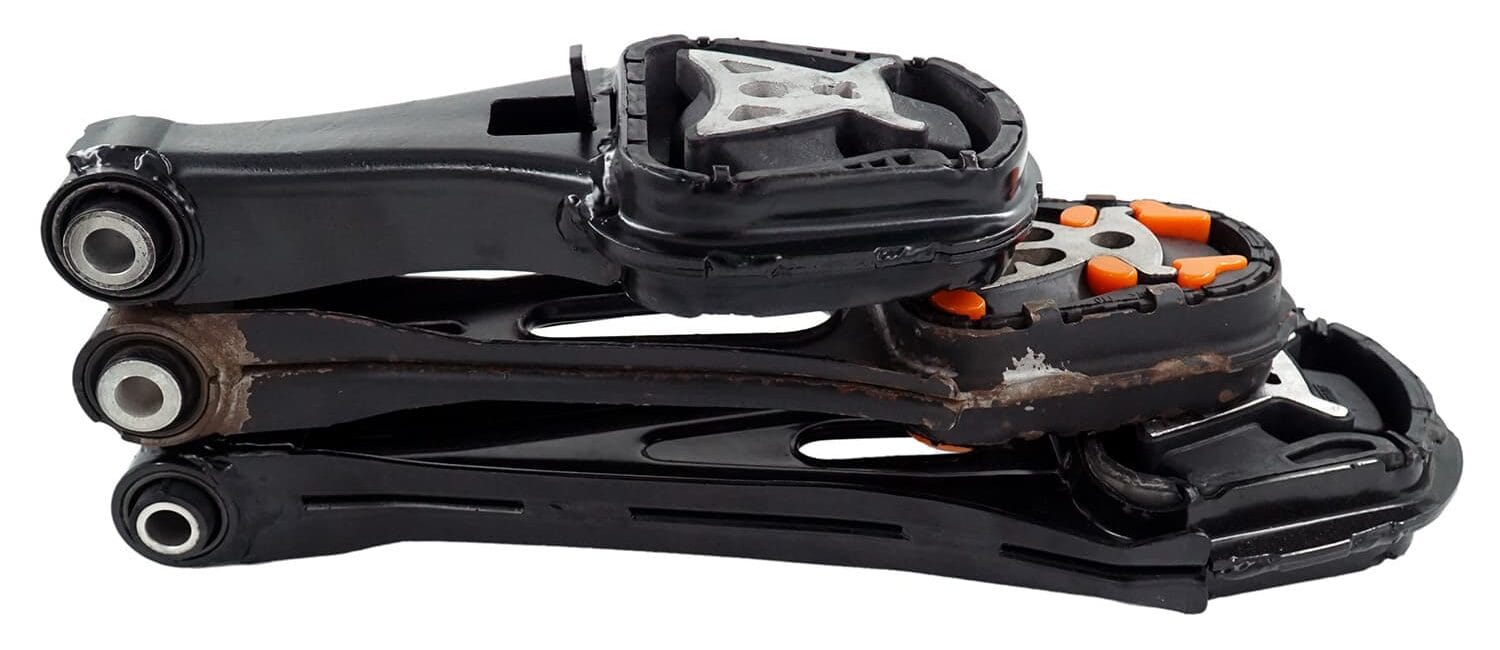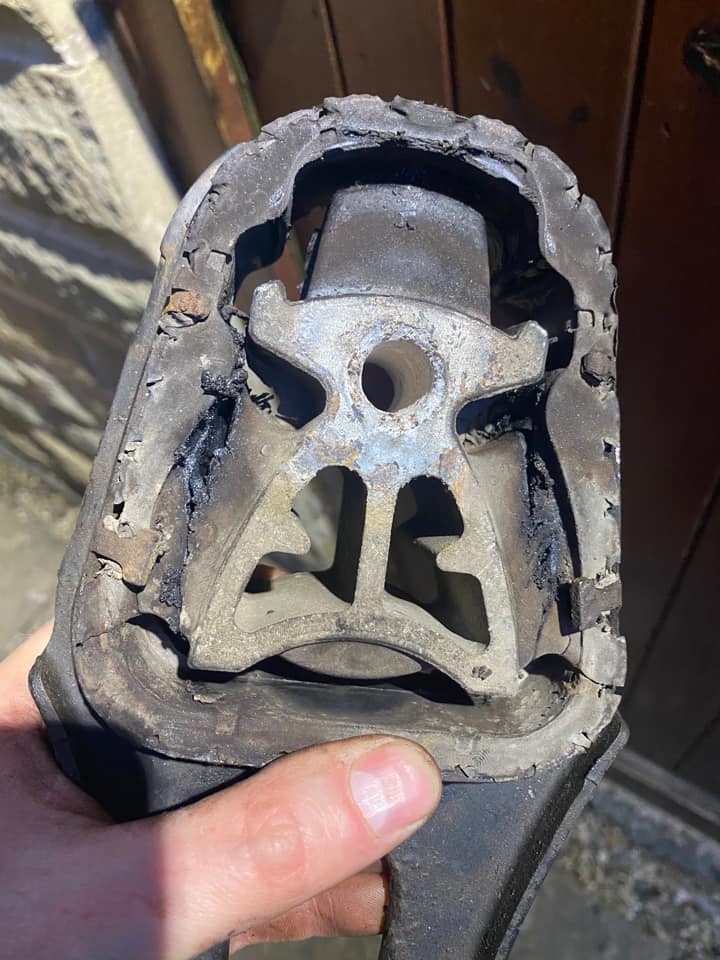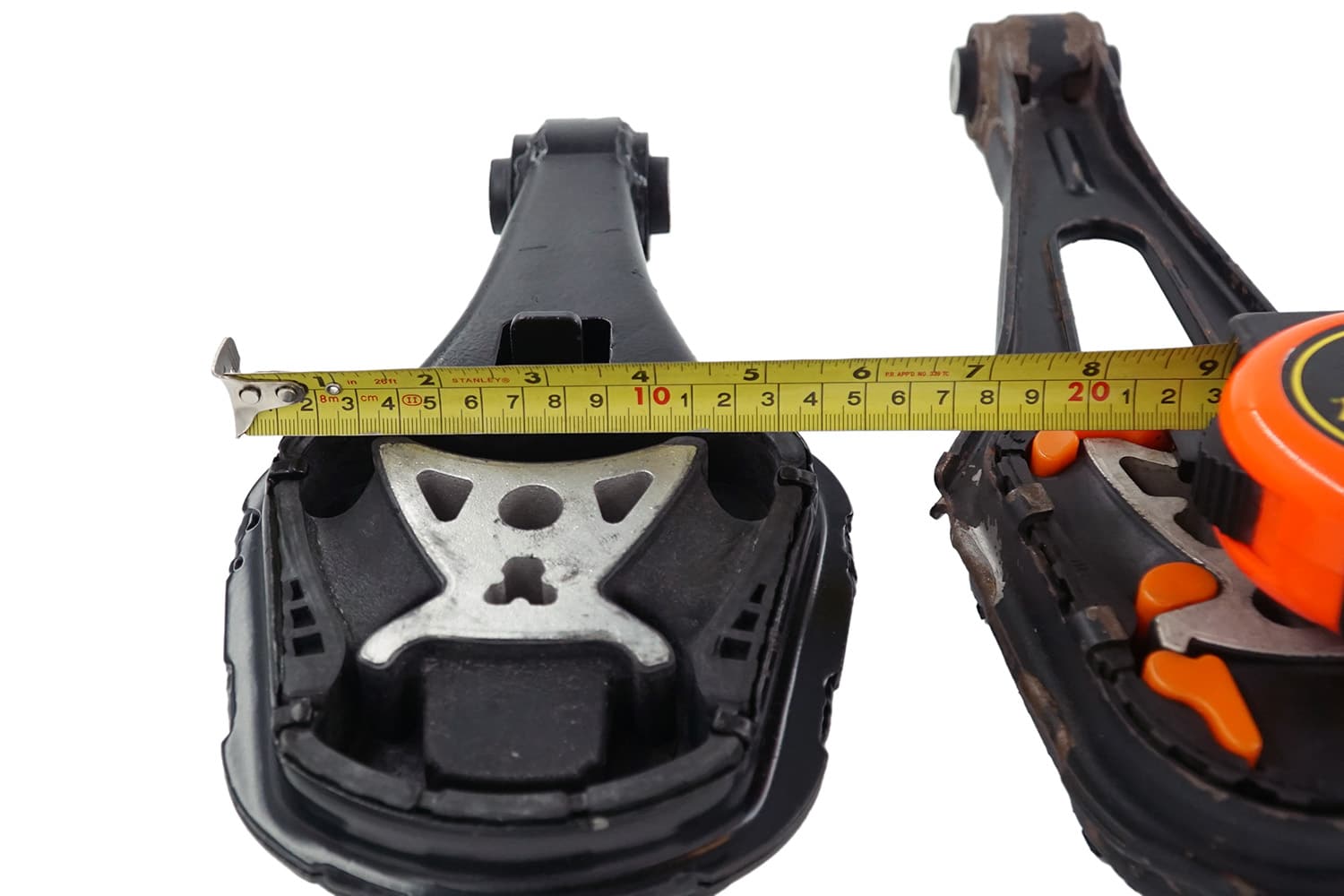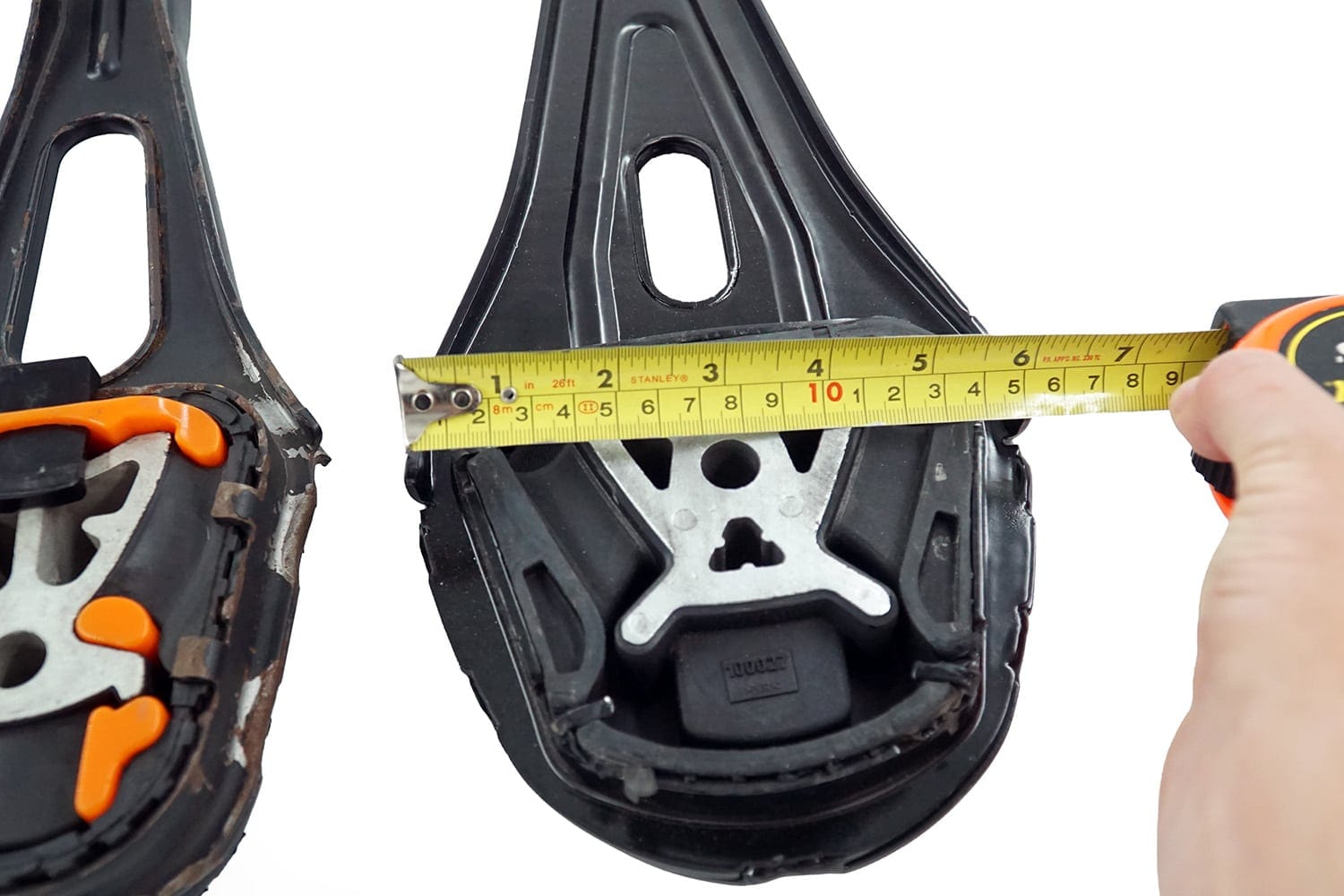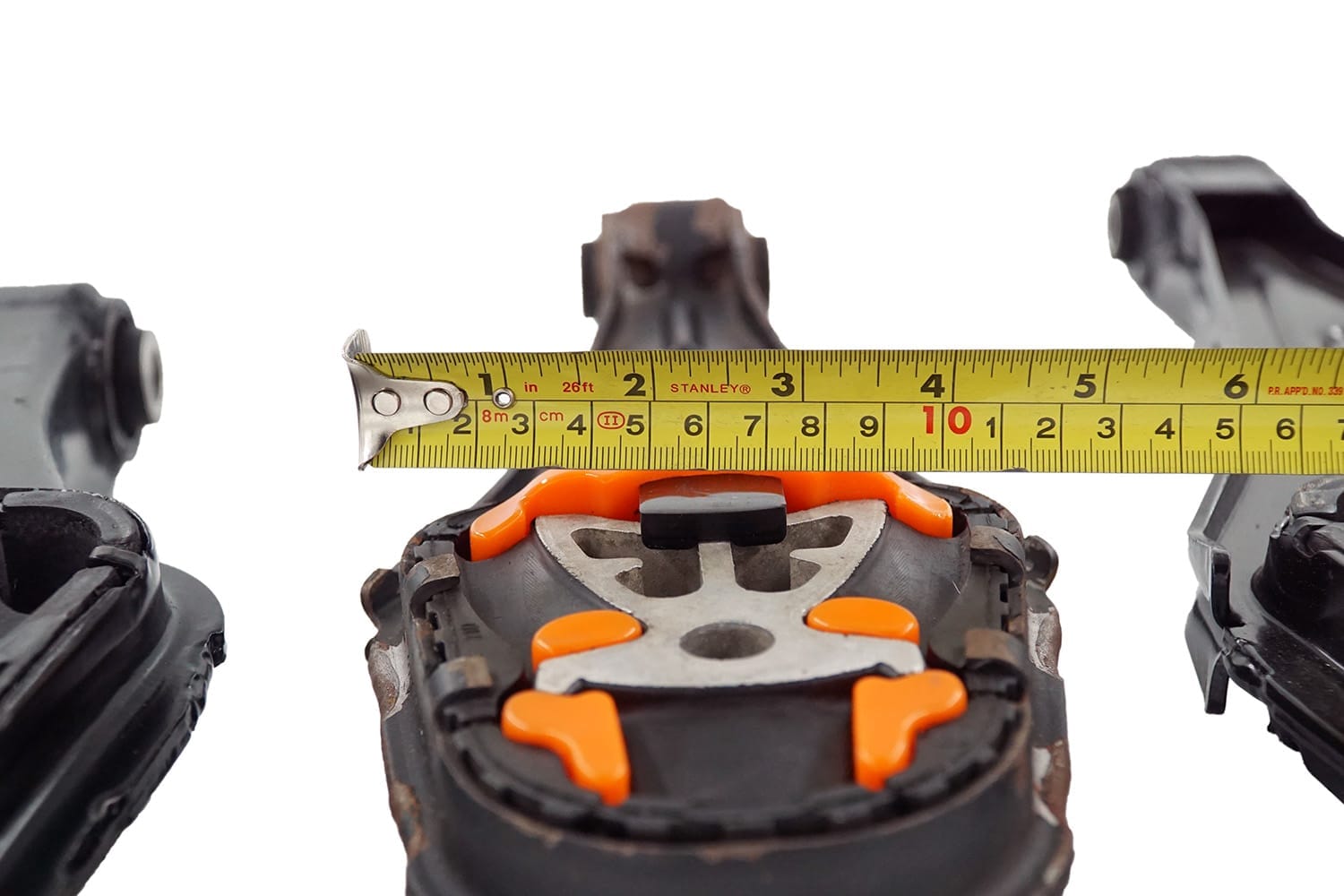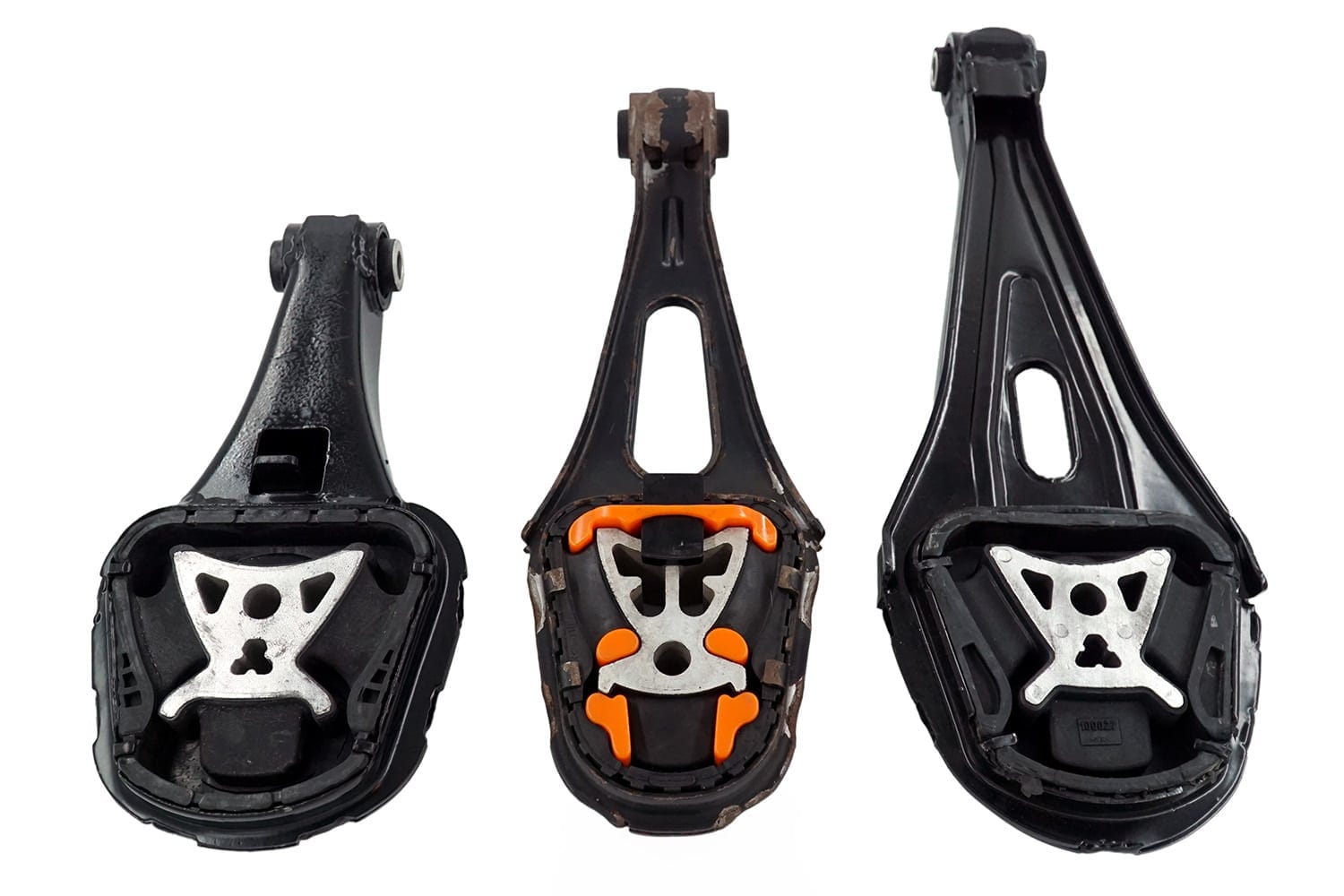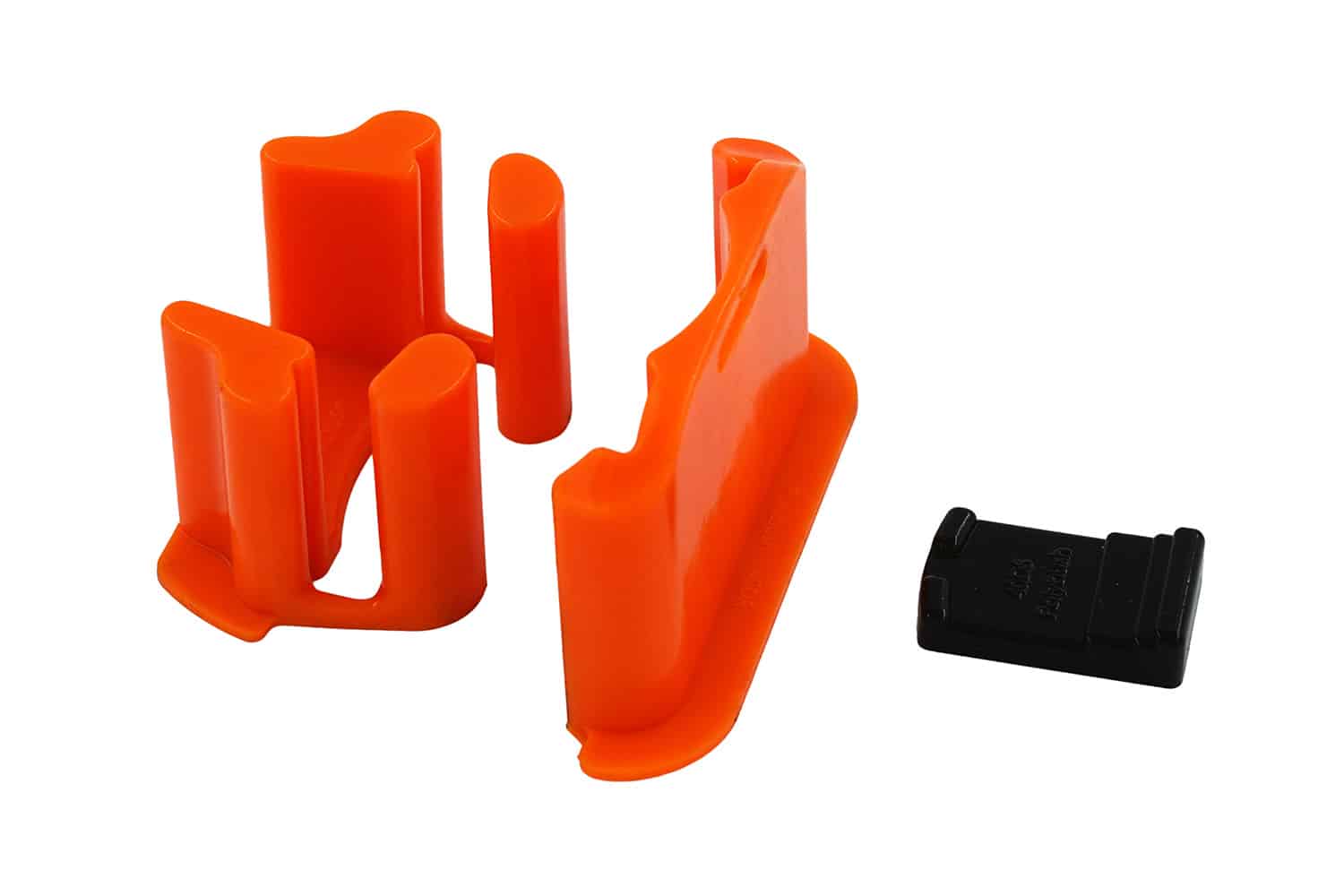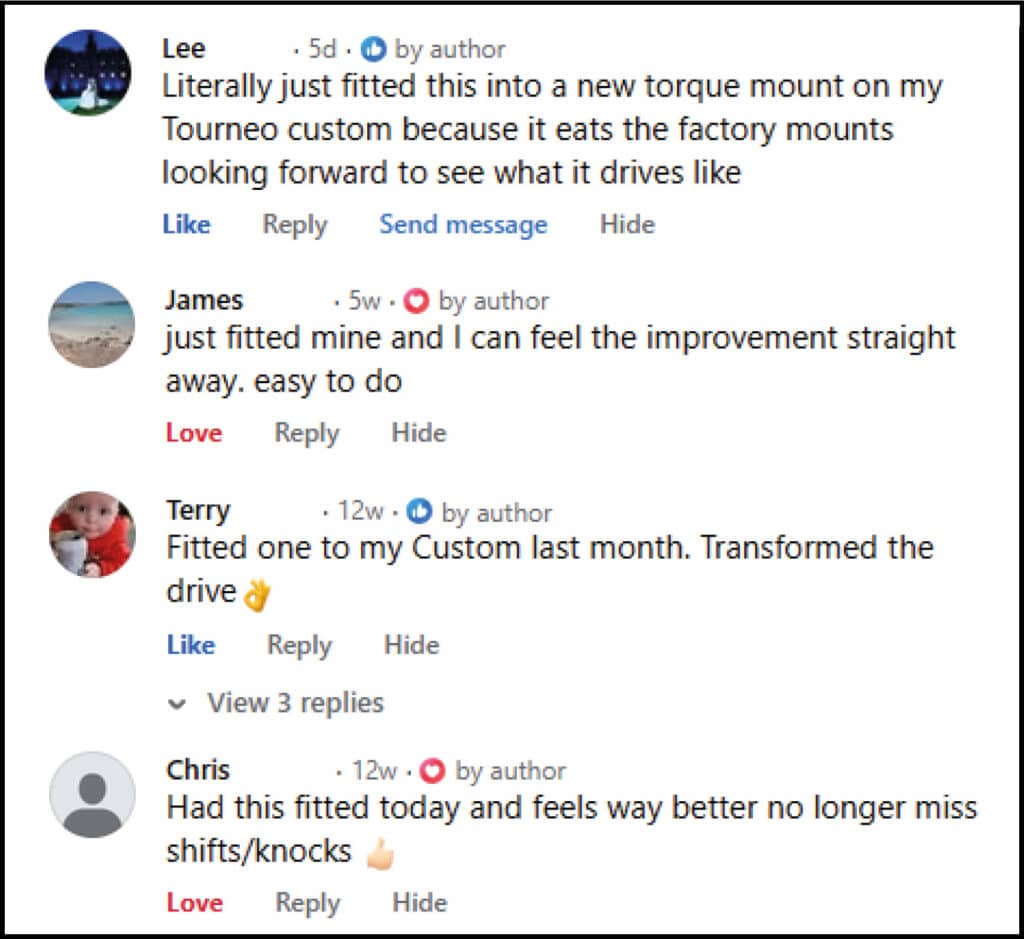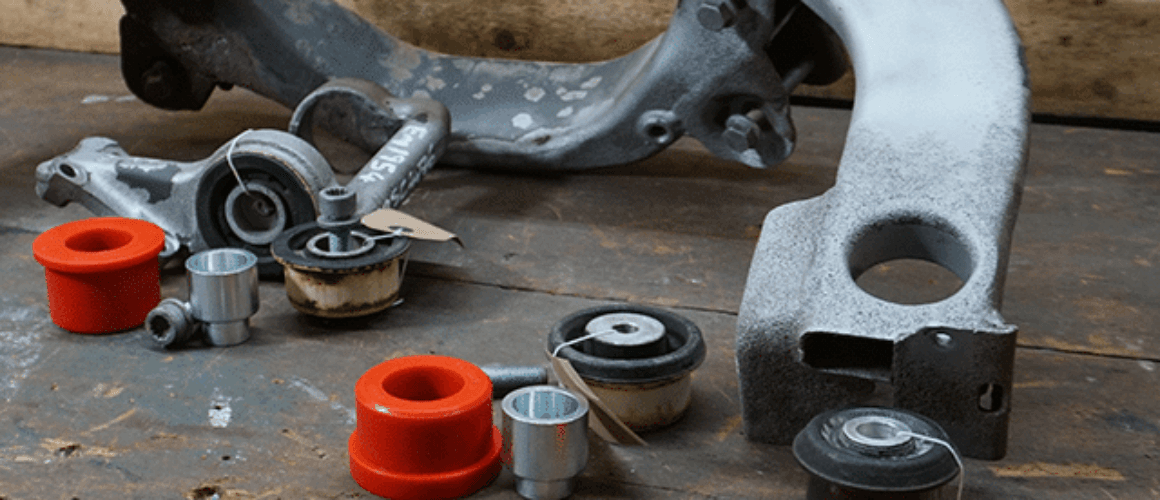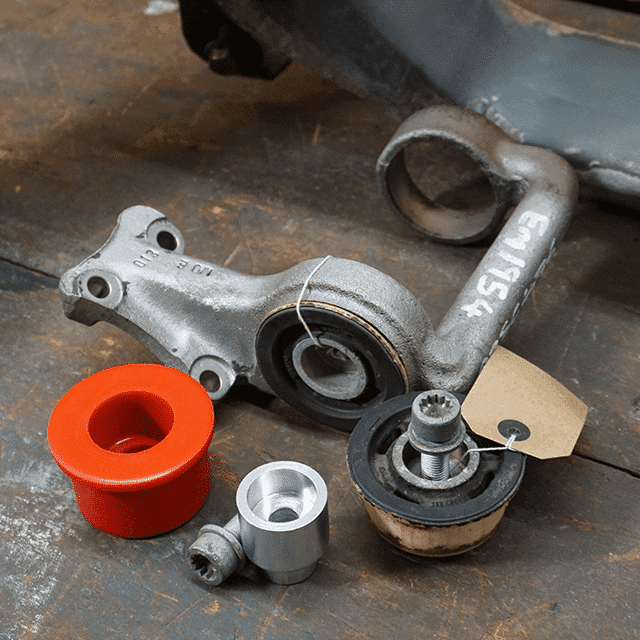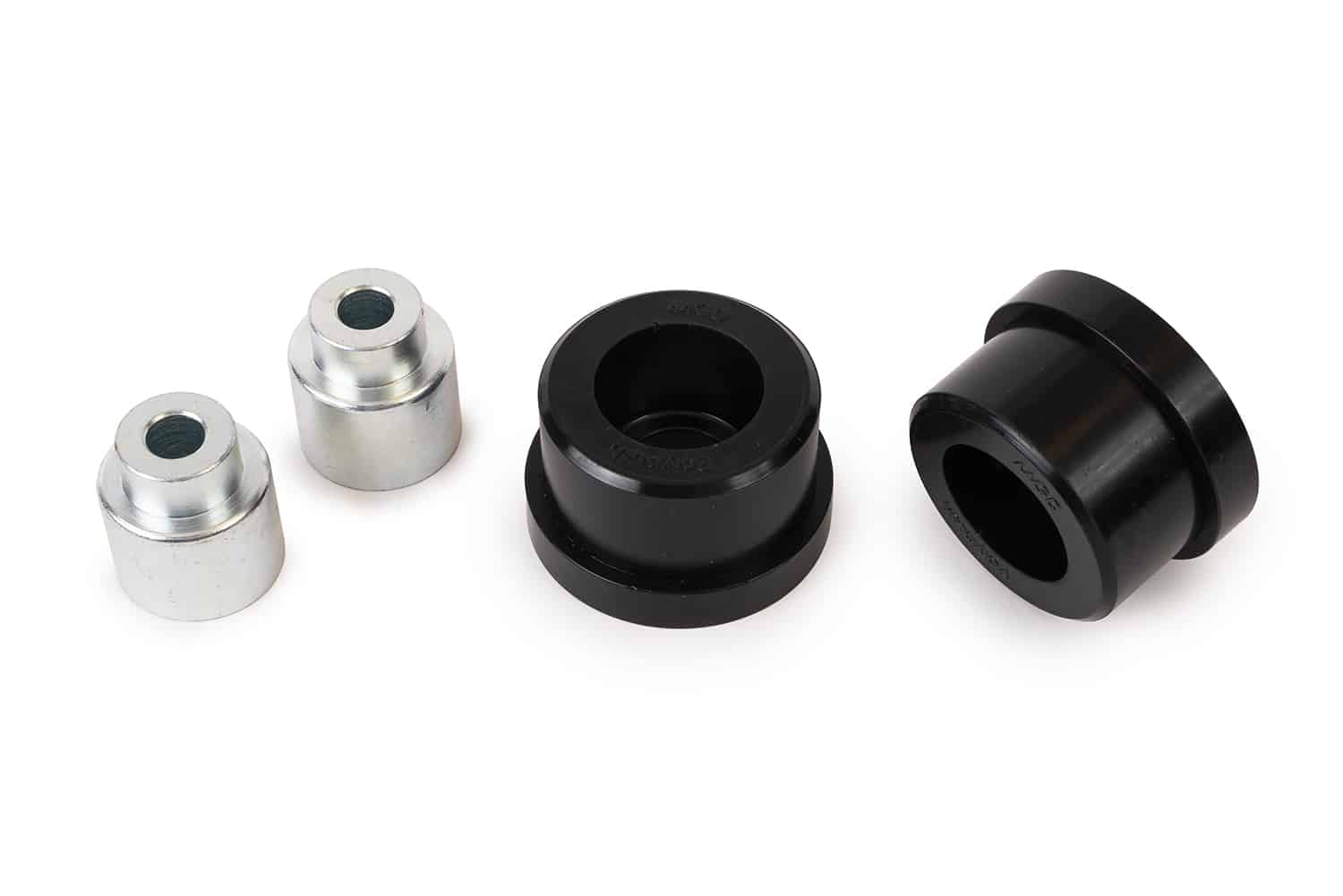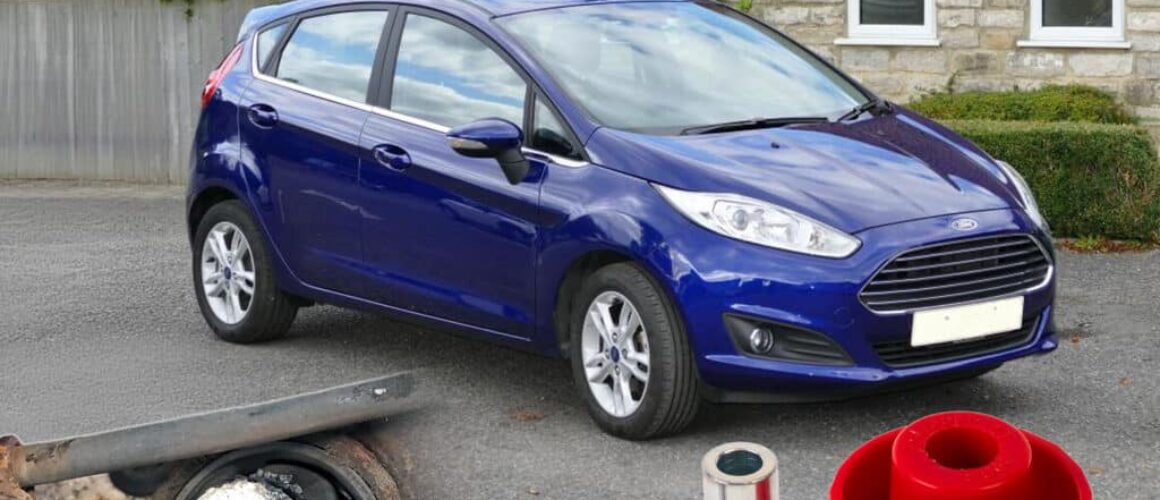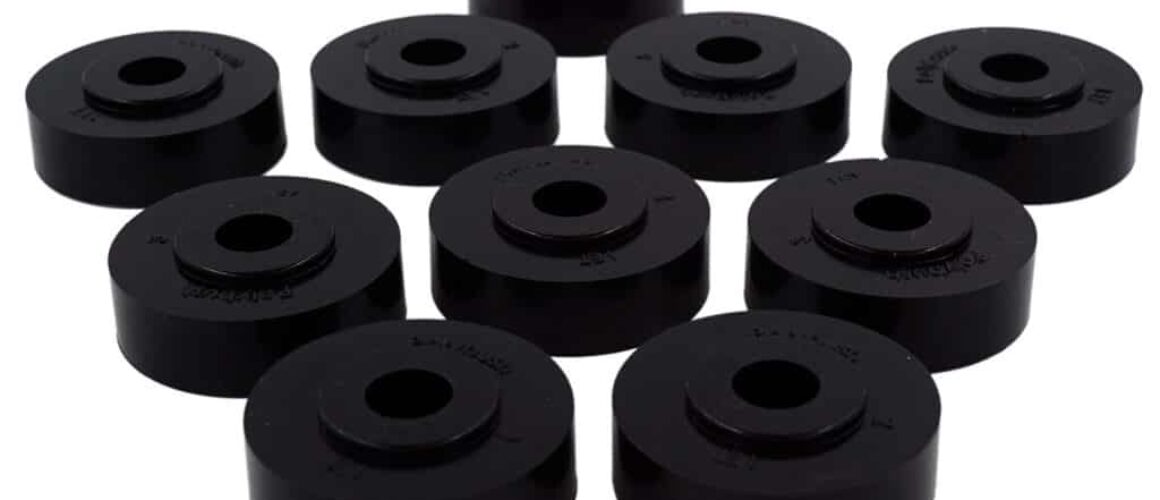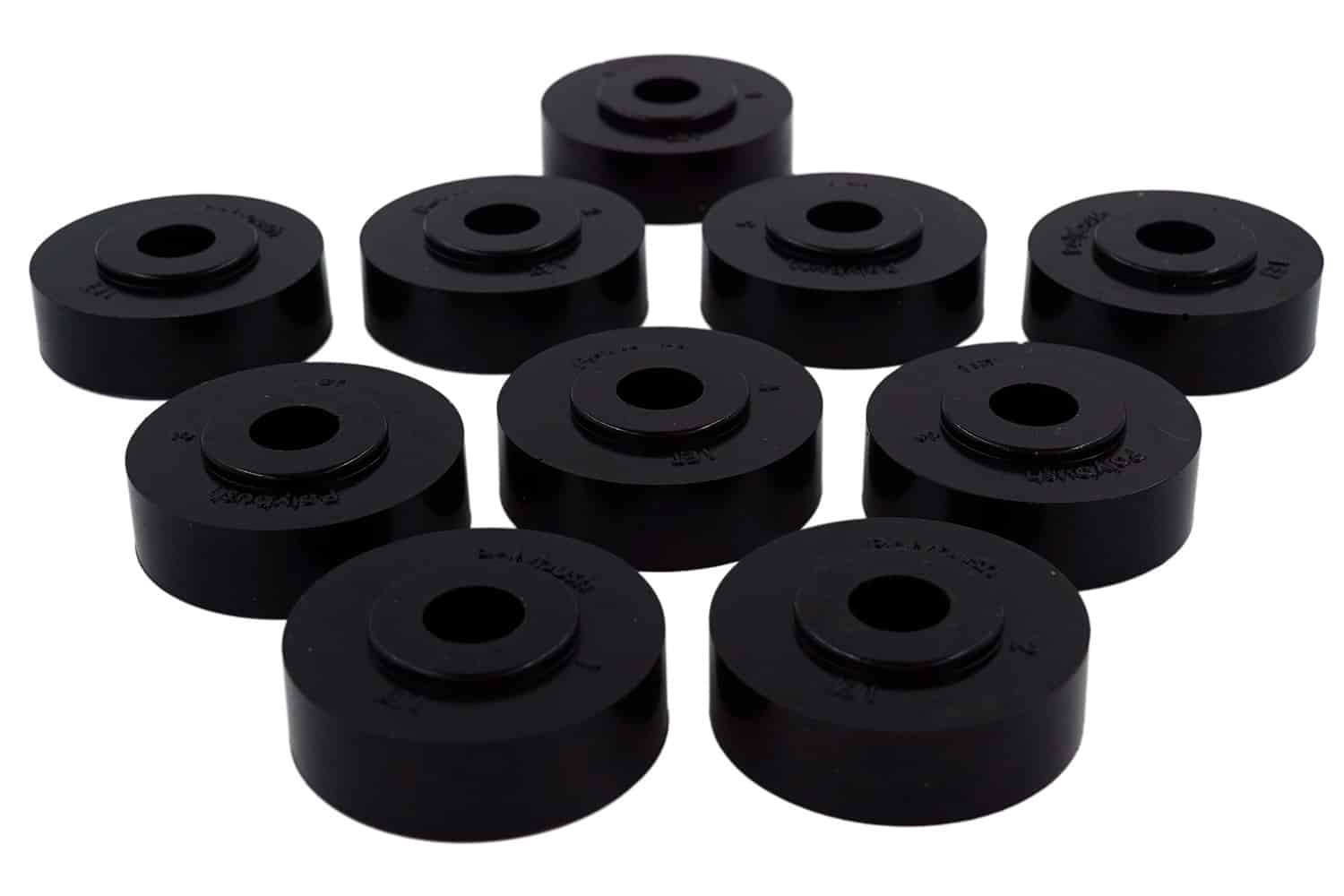


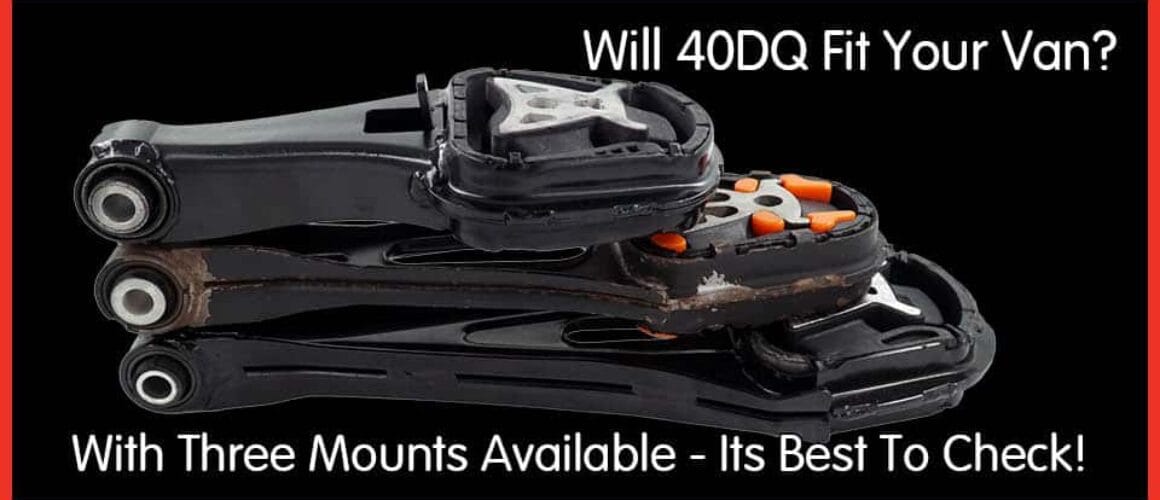
Are you sick of the dreaded Transit dogbone mount failing on your Ford Transit V362/V363 (2013–2023)? You’re not alone. At Polybush, we’ve been listening to Transit owners, van converters, tradespeople and fleet mechanics who keep seeing the same issue crop up again and again — the lower torque mount (often called the dogbone mount) simply doesn’t last when left in standard rubber form. That’s exactly why we developed the 40DQ Lower Torque Mount Insert.
40DQ – Ford Transit Mk8 Lower Torque Mount
This isn’t just another “replacement part” — it’s a genuine performance and durability upgrade for a known weak point on these vans.
What This Fits (OEM Part Numbers)
Our 40DQ Lower Torque Mount Insert is engineered to be installed into the original mount housings for the following OEM part numbers:
Let’s break it down in simple terms: the lower torque mount (dogbone) is there to control engine and transmission movement under load — especially on acceleration, deceleration and gear changes. In a Transit carrying heavy payloads or towing regularly, that mount sees a lot of abuse.
The trouble is, the factory uses rubber in these mounts. While rubber is quiet and cheap, it has some critical weaknesses:
Rubber Weaknesses
Age hardening: Rubber hardens over time, especially when exposed to heat and engine bay oils.
Creep & distortion: Under constant torque loads, it stretches and deforms.
Water/oil contamination: Oil and road grime degrade rubber faster than you expect.
Loose feel: As it deteriorates, the engine moves more — leading to clunks, vibrations and stress elsewhere.
Search forums like TransitCenter or social groups on Facebook, and you’ll find countless owners complaining “dogbone mount snapped again”, “engine shifting under acceleration”, or “harsh vibration when pulling loads”. This is exactly the failure mode that cheap-as-chips rubber replacements can’t fix — because they’re the same material Ford originally used.
Maintains torque control without letting the engine flop about
Reduces harsh vibration without making it uncomfortable
Greatly extends life compared with OEM rubber
This isn’t “rock hard” street racer stiffness — it’s engineered to strike the right balance for a working van.
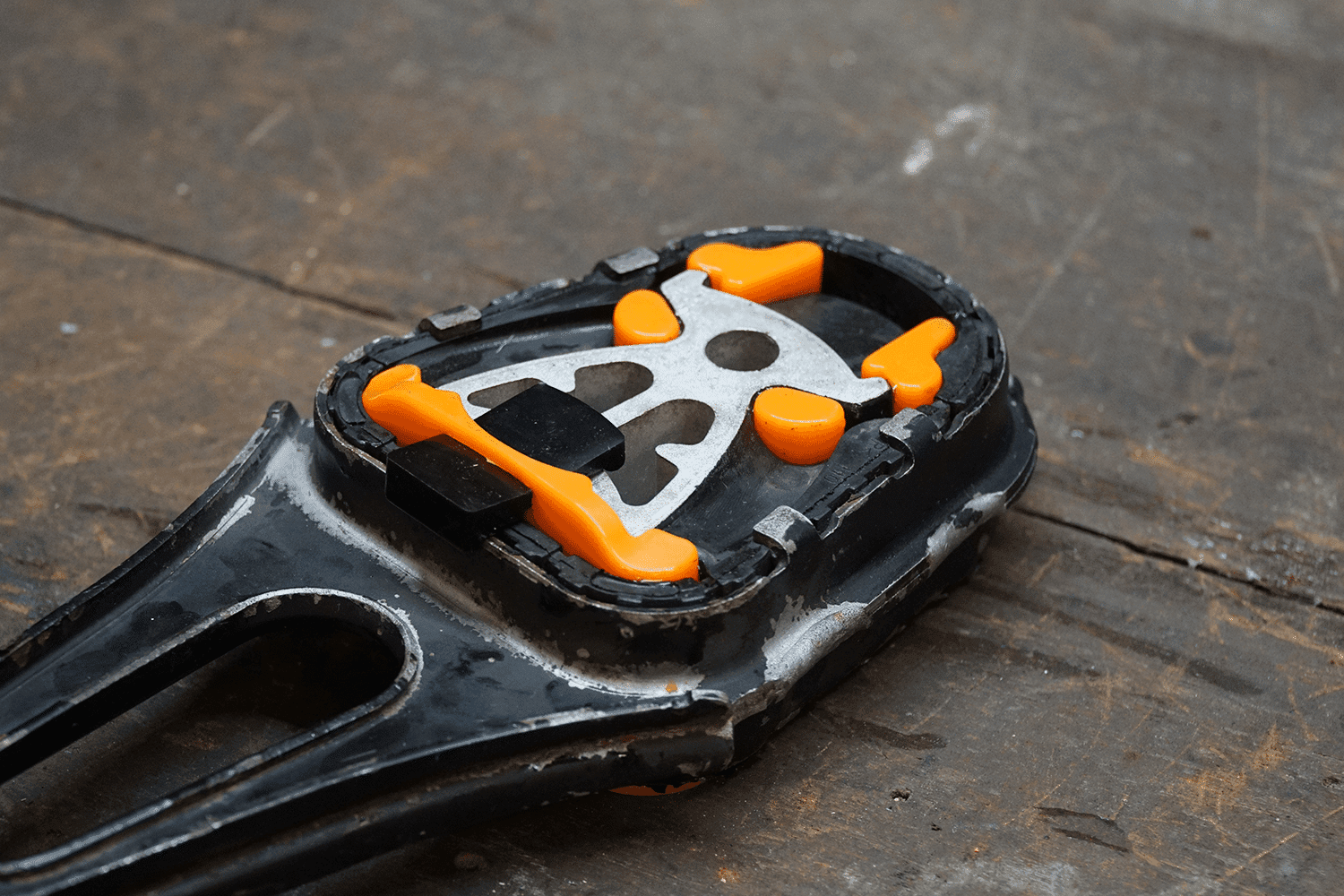
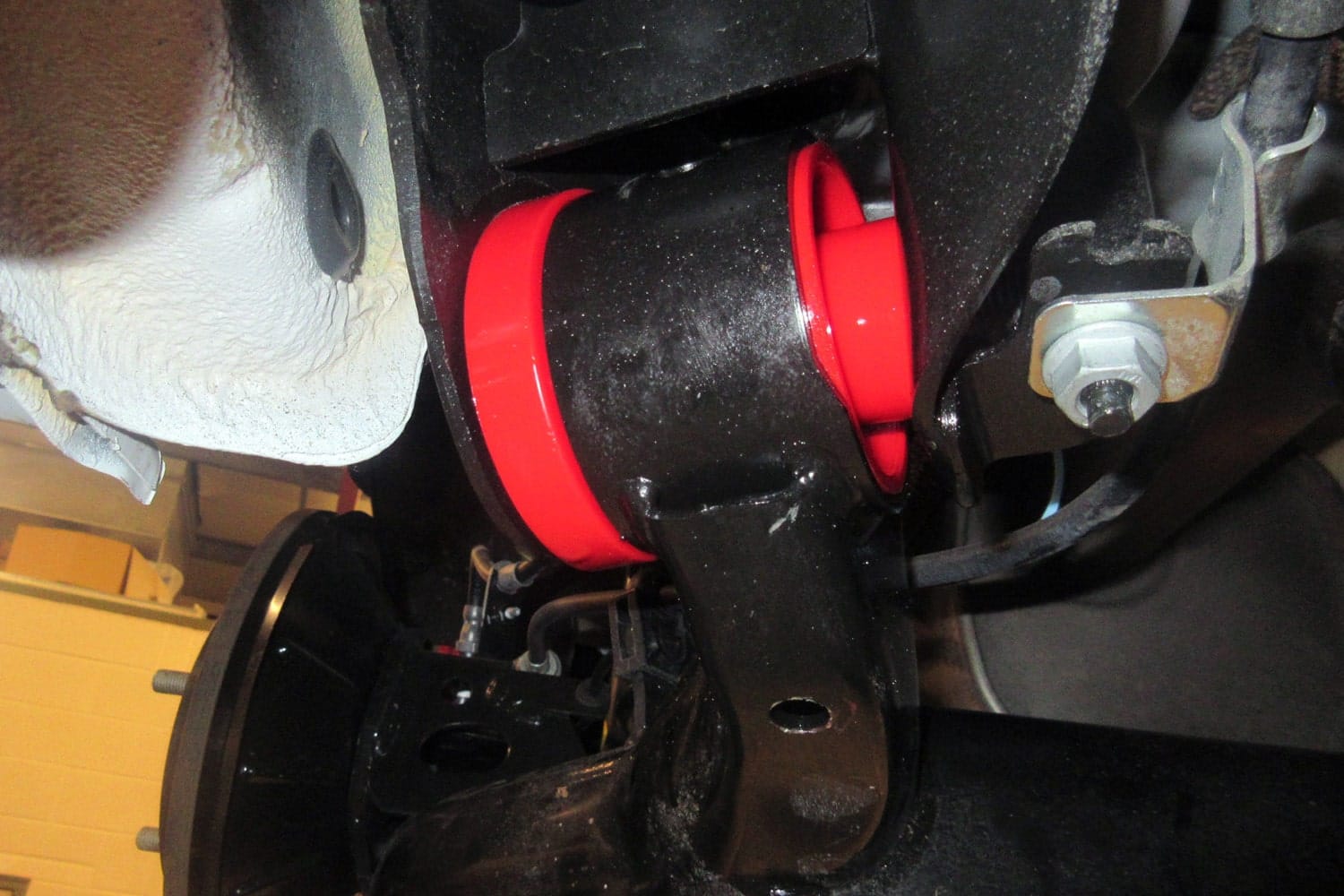
40DQ Installed in OEM Arm
Polyurethane vs Rubber — Why It Matters
Let’s chat materials for a moment — because this is where people either get it… or don’t.
Polyurethane Benefits
Feature
Polyurethane
Rubber
Load Bearing
Excellent
Moderate
Fatigue Resistance
Very high
Moderate
Oil/Contaminant Resistance
Very high
Poor
Hardness Stability
Stable over temperature
Softens/hardens with age
Noise/Vibration
Tunable
Tunable but degrades
Put simply: polyurethane does the job rubber was supposed to do — but better and for longer. It doesn’t sag or deform under load, it’s far more resistant to oil and heat, and it won’t turn into a brittle lump after a few years on the road.
So while rubber is comfortable when new, it’s a known failure point on high-stress parts like the Transit dogbone mount. Polyurethane keeps its shape, keeps your engine centred and keeps the van feeling tighter over more miles.
What This Means for You
Whether you’re a fleet manager tired of repeat failures, a van lifer prepping your Transit for a round-Europe tour, or a tradesperson relying on your van every day, the 40DQ Lower Torque Mount Insert is an upgrade that makes practical sense:
Less downtime
Reduced vibration/noise
Improved drivetrain control
Longer service life
No need for expensive aftermarket “heavy duty” rubber parts
Final Word
The Transit dogbone mount might be easy to overlook — until it fails. And when it does, you feel every gear change and hard acceleration. Our 40DQ insert isn’t about making your van feel “racey” — it’s about giving you confidence that the mount won’t be the next thing to let you down.
If you’re after a reliable, durable, engineered solution rather than a stop-gap rubber replacement, this is it.
It’s one of those common faults that sneaks up on you. One minute the car feels fine, the next it’s vague through corners, unsettled on the brakes, and just not as tight as it used to be.
The OEM Rear Axle Bush Problem
The original rear beam bushes — commonly found under OEM part numbers:
…have gained a bit of a reputation, and not a good one.
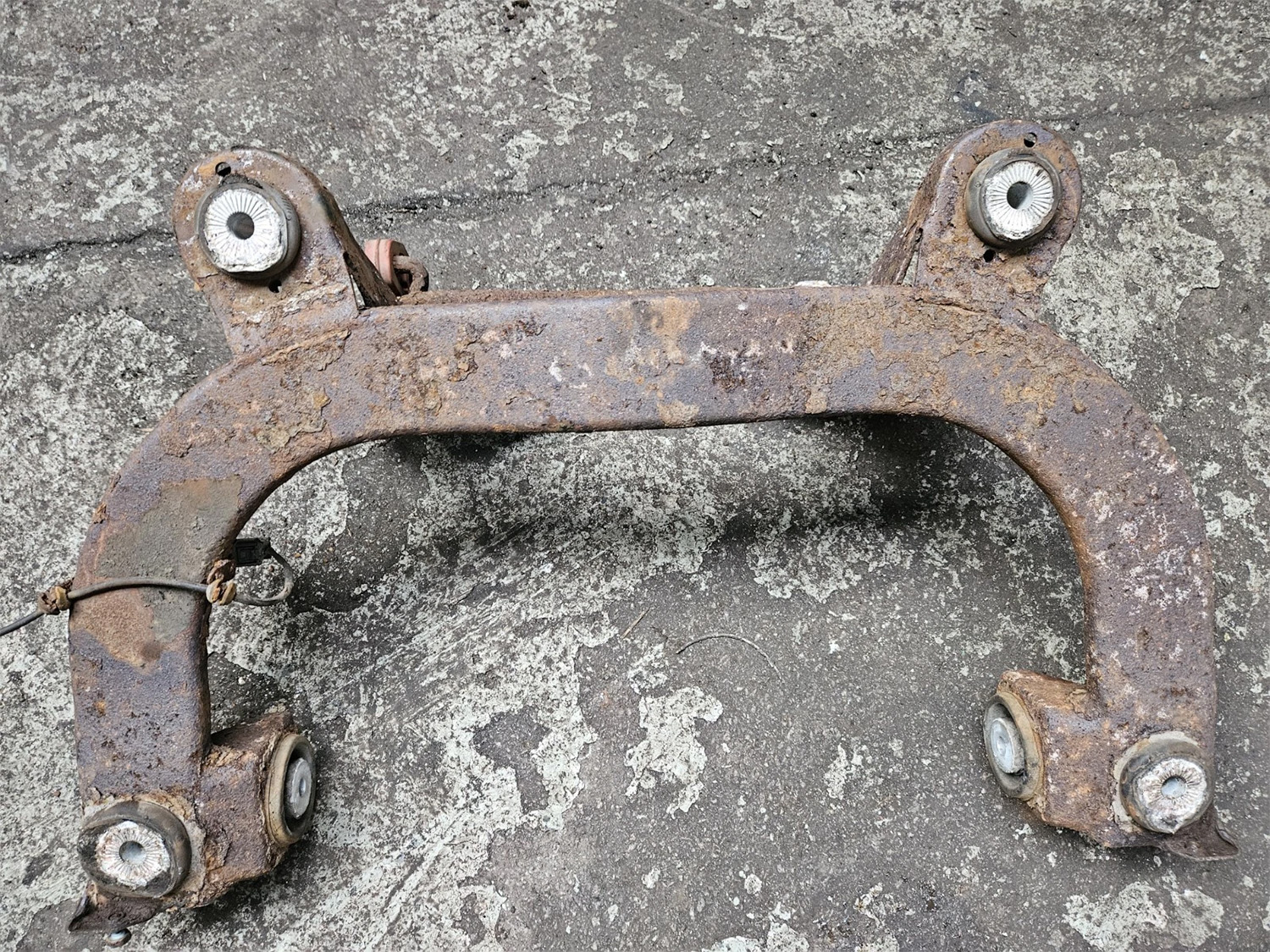
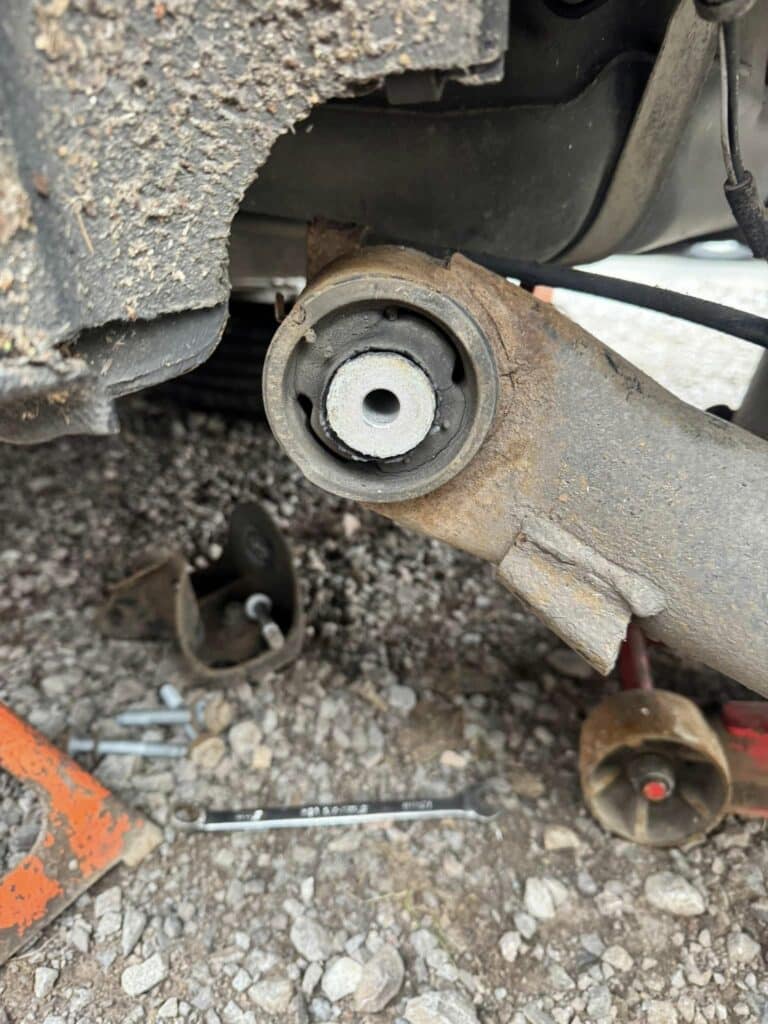
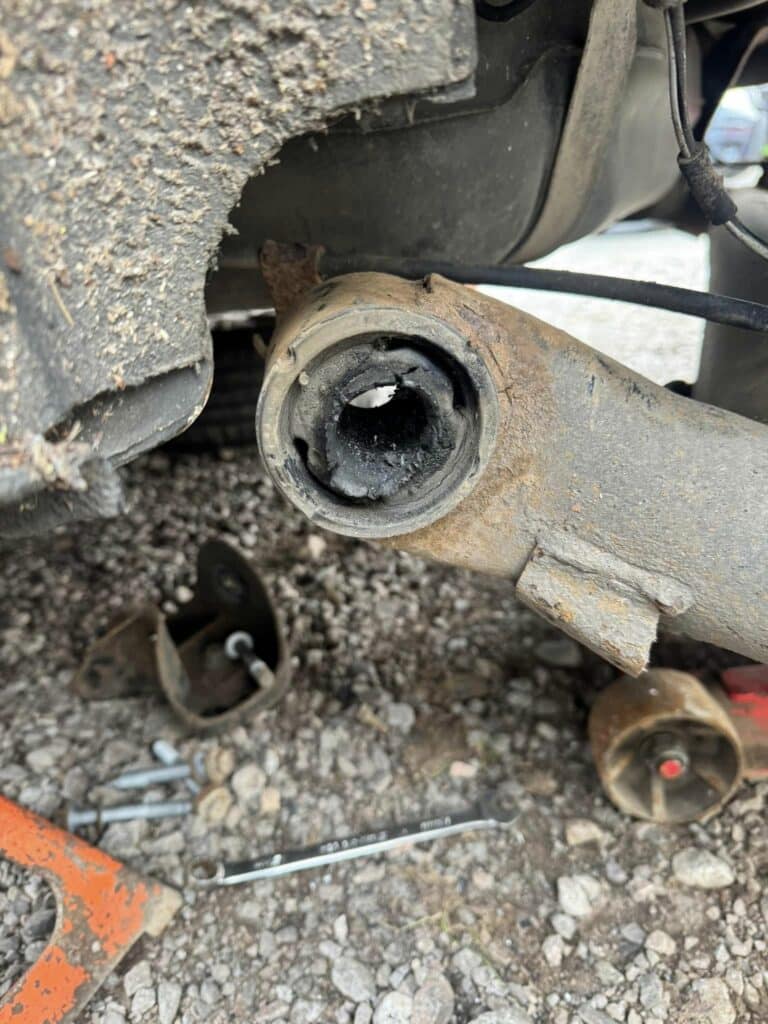
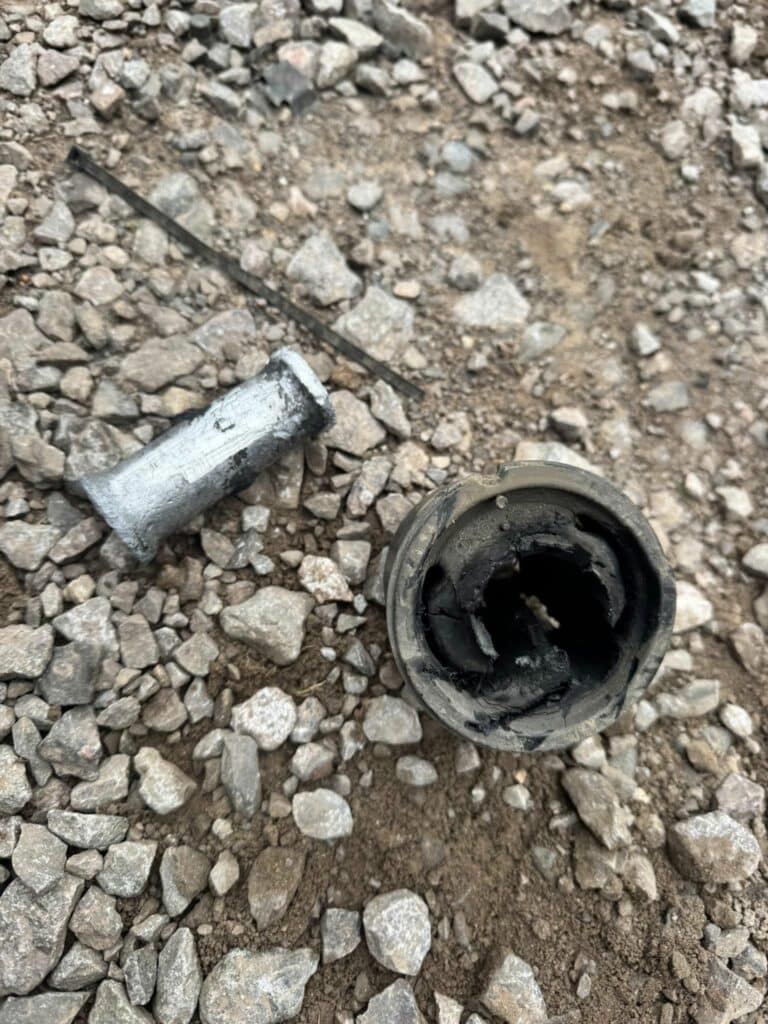
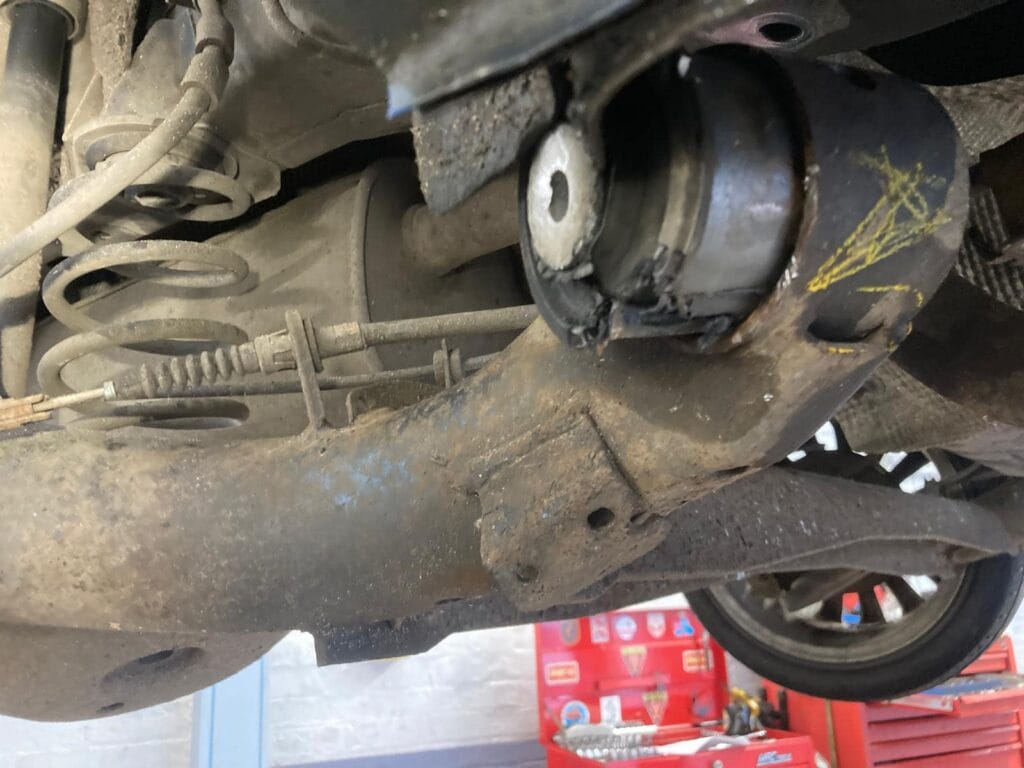
The issue isn’t abuse or mileage alone — it’s the design and materials. The plastic outer shell cracks, the rubber debonds from the centre tube, and the voided rubber simply can’t cope with real-world loads for long. Once that happens, the rear axle is free to move far more than it should.
And that’s where the fun starts.
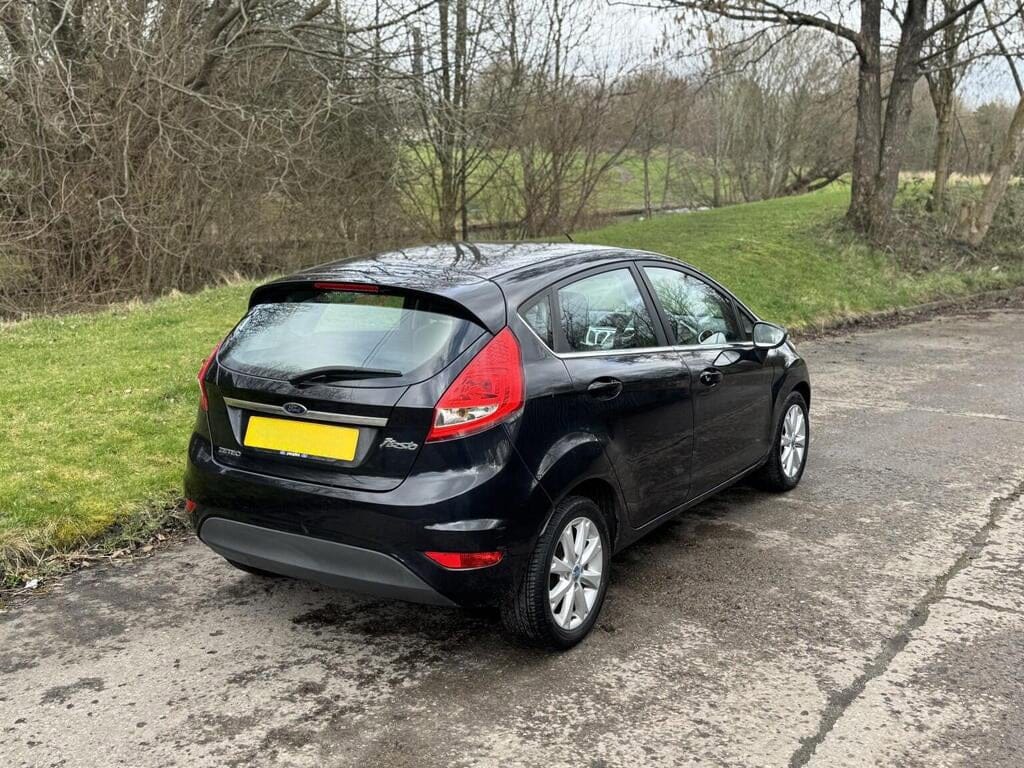
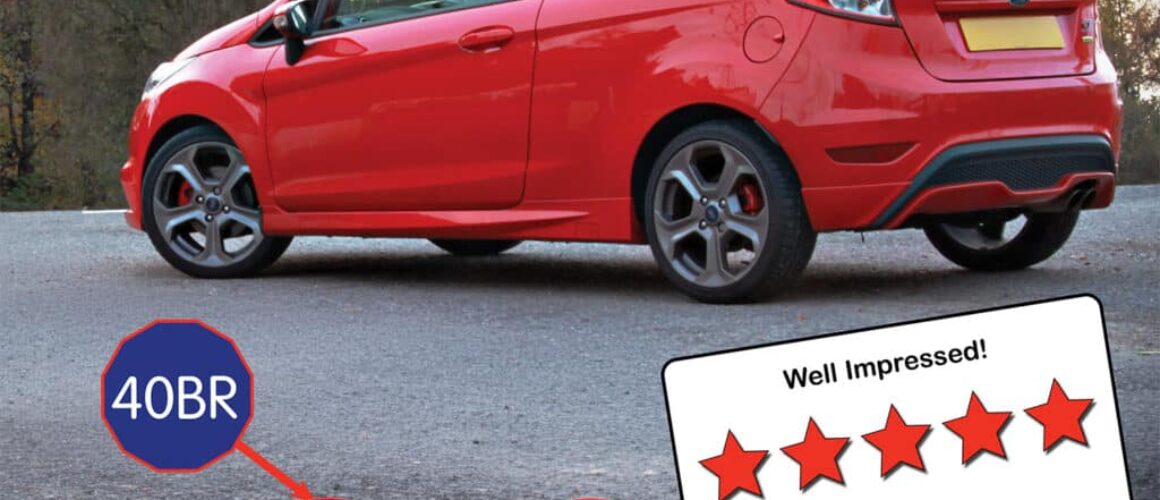
Mk7 Ford Fiesta Rear Axle Bush Failure
Symptoms of Failing Rear Axle Bushes
If your Fiesta Mk7 or Mazda 2 is suffering from worn rear axle bushes, you’ll usually notice:
A loose or unsettled feeling when cornering
Excessive vibration or road noise
Poor rear-end stability under braking
Reduced driver confidence and feedback
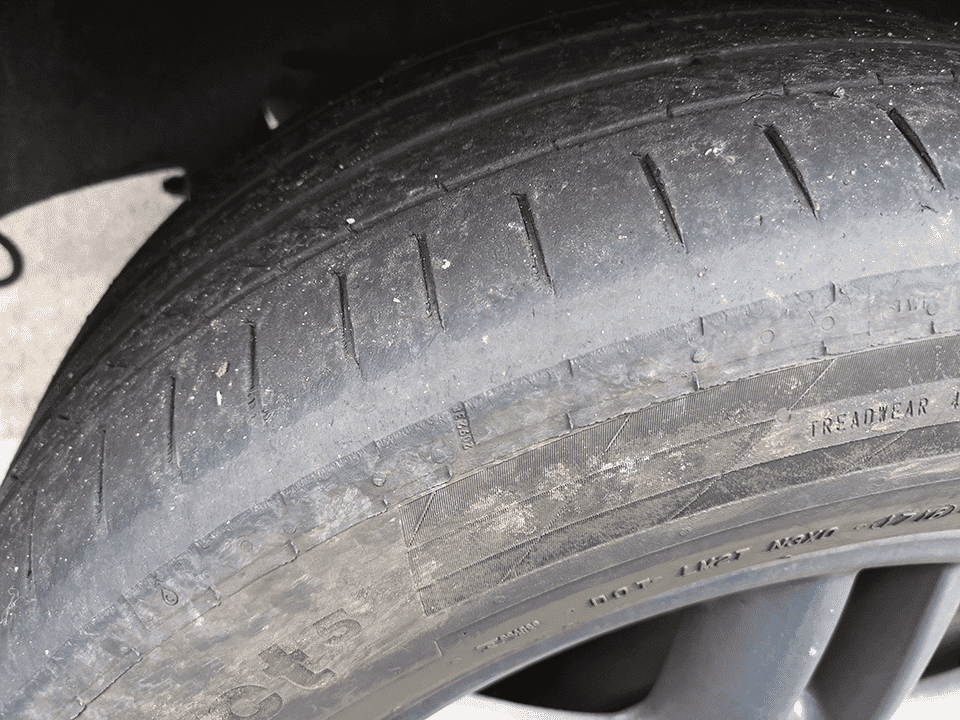
Left unchecked, worn rear beam bushes don’t just affect handling — they accelerate wear in tyres, suspension components, and braking performance, turning a relatively simple job into an expensive chain reaction.
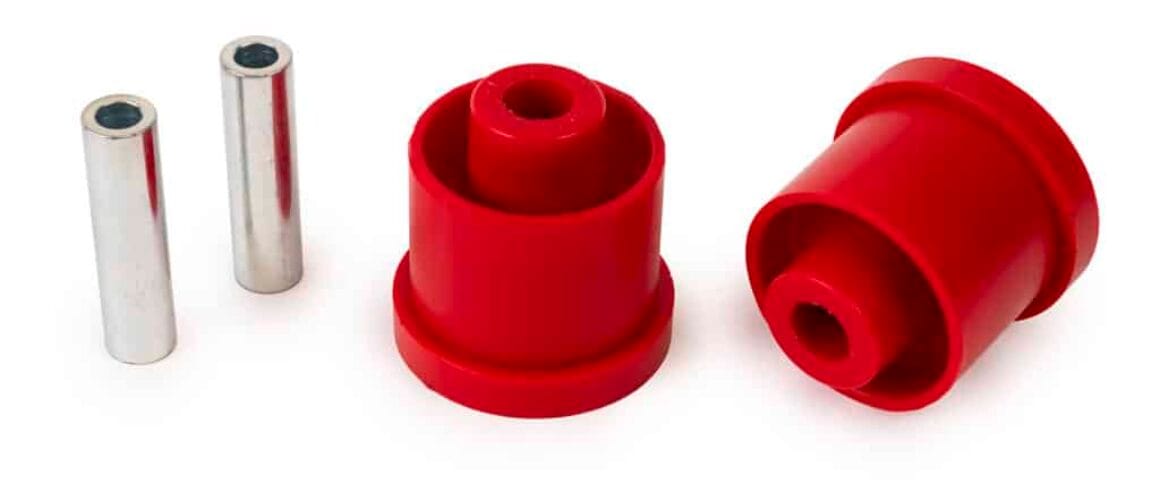
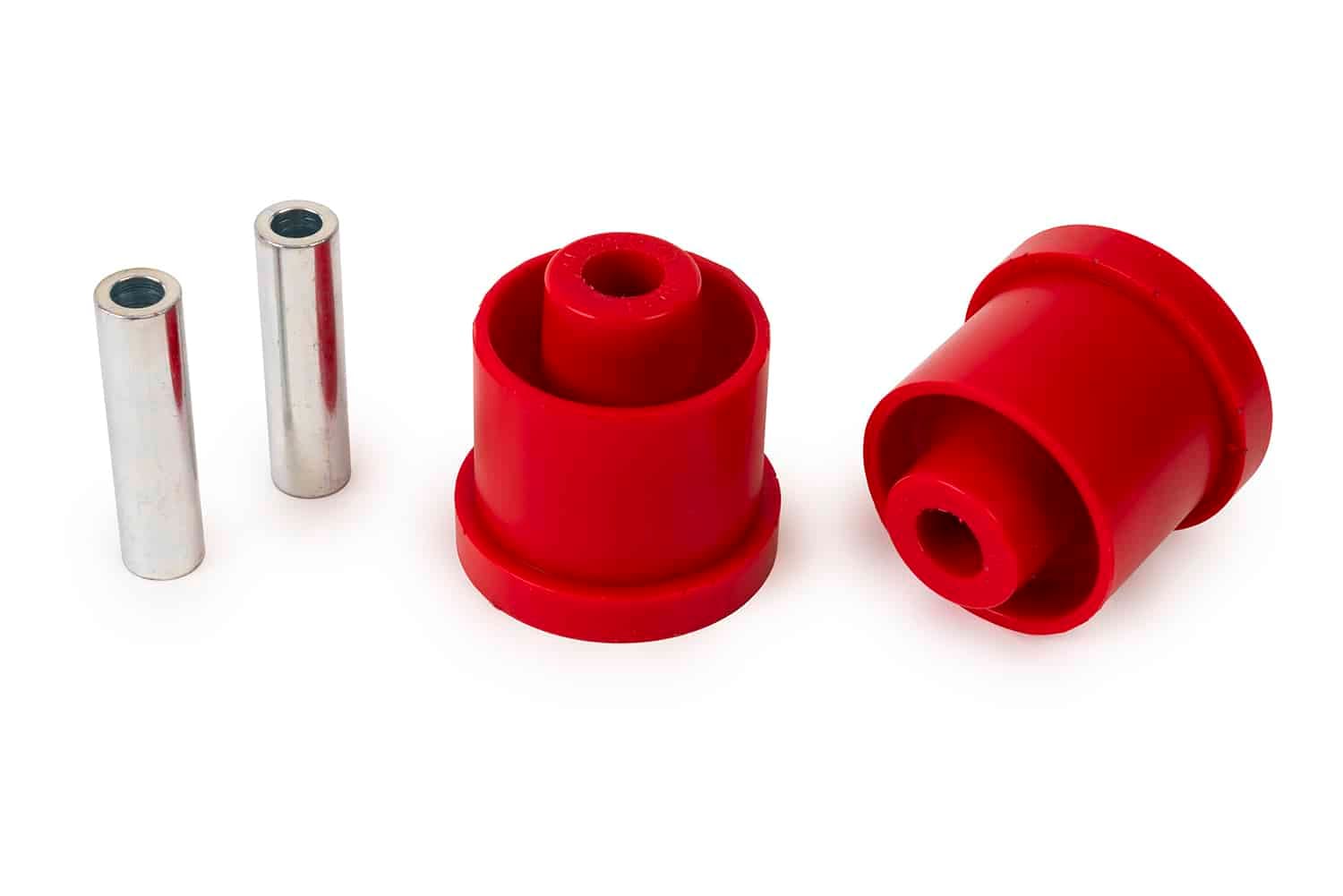
Rather than replicating the weaknesses of the factory rubber bush, the 40BR is manufactured from high-quality polyurethane, engineered to resist deflection, fatigue, and debonding.
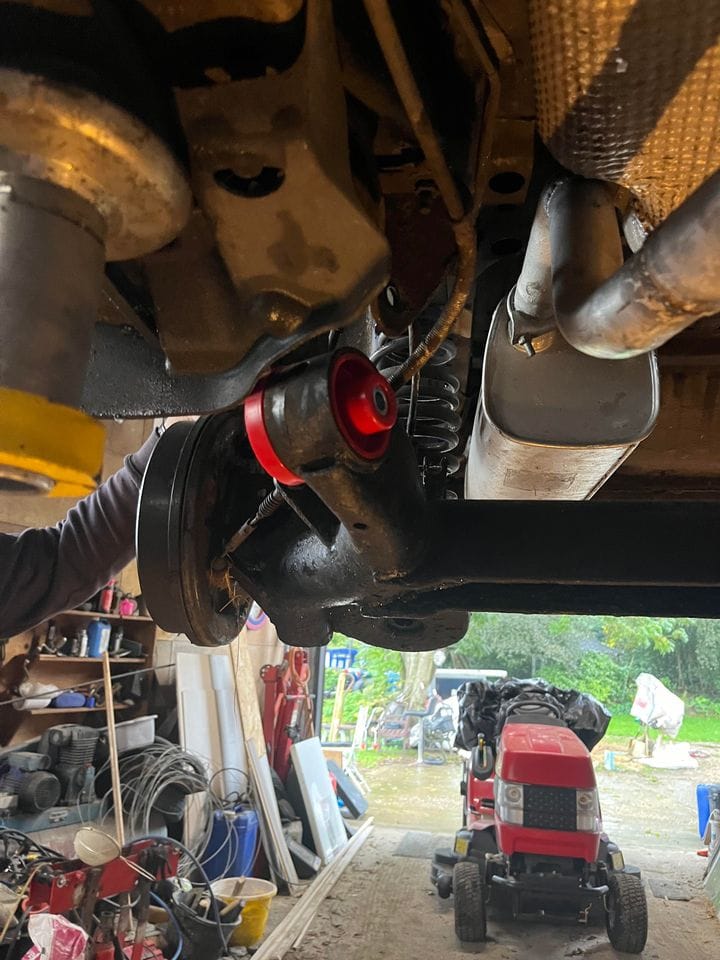
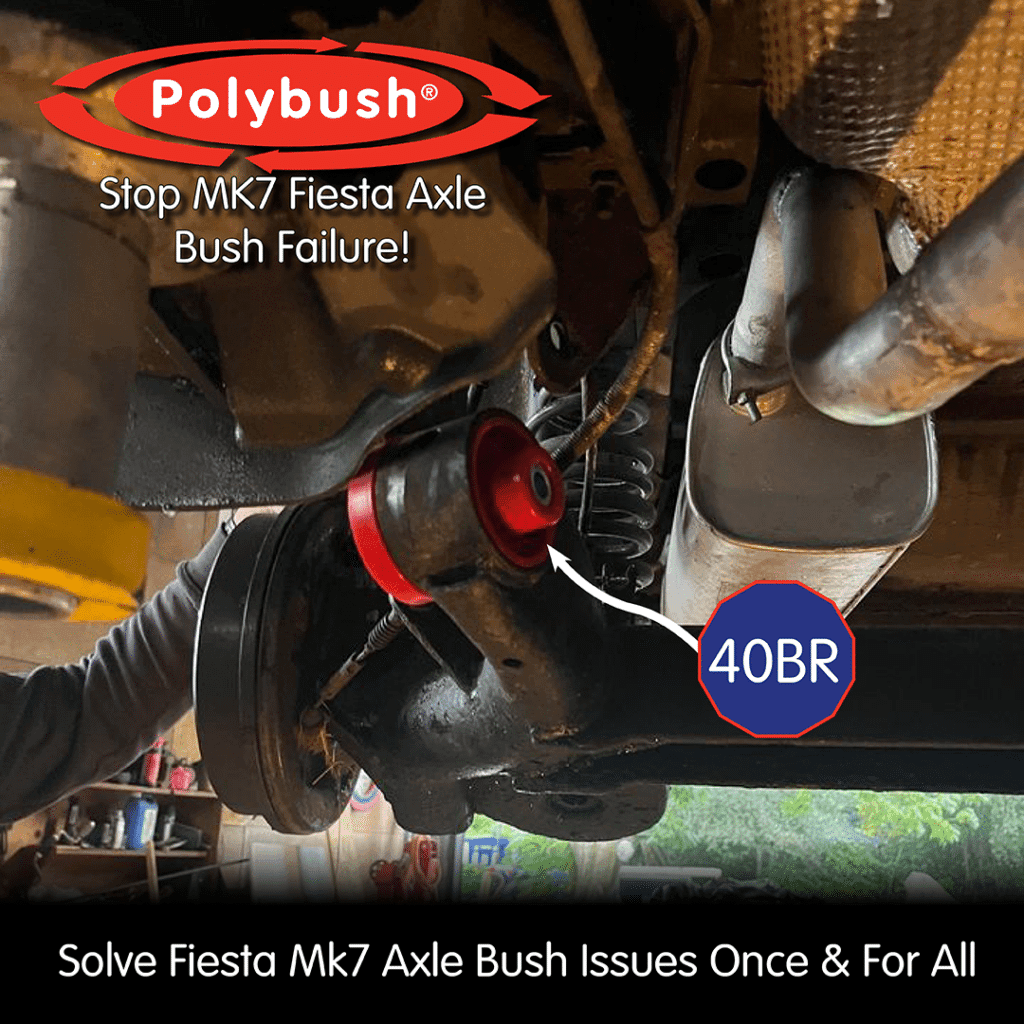
40BR Installed Into A Ford Fiesta MK7
Key Benefits of Polybush 40BR
✔ Sharper, More Predictable Handling By removing the large voids found in the OEM bush, the rear axle is properly located. The result is noticeably better cornering precision and rear-end stability — especially noticeable on Fiesta Mk7 ST models.
✔ Comfort Is Retained This isn’t about turning your daily driver into a bone-shaker. The 40BR is tuned to control movement without introducing harshness, so ride comfort remains spot-on for road use.
✔ Improved Tyre Life & Braking Stability Less axle movement means more consistent tyre contact and better braking confidence. It’s one of those upgrades that quietly improves everything the car does.
Easy Installation – No Axle Removal Required
One of the big wins with the Polybush 40BR is installation.
The Polybush 40BR Rear Axle Bush – Fitting Mk7 Fiesta
Unlike some solutions, the rear axle does not need to be removed from the vehicle. We have heard the average time it takes to install is around 30 mins! That makes it a far more appealing job for:
Independent garages
Performance specialists
Competent DIYers
Less labour, fewer seized bolts, and a quicker turnaround — all without compromising on results.
Why Polyurethane Beats Rubber Every Time
If you’re replacing rear axle bushes on a Fiesta Mk7, fitting rubber again is usually just delaying the inevitable. Polyurethane doesn’t suffer from the same ageing, cracking, or debonding issues, which means:
Longer service life
More consistent performance
Less money spent redoing the same job
As we say for good reason: “Fit it once, fit Polybush.”
Related Suspension Upgrades for Fiesta Mk7 & Mazda 2
While the 40BR rear axle bush solves the most common rear-end issue, it’s often worth considering related components while you’re there:
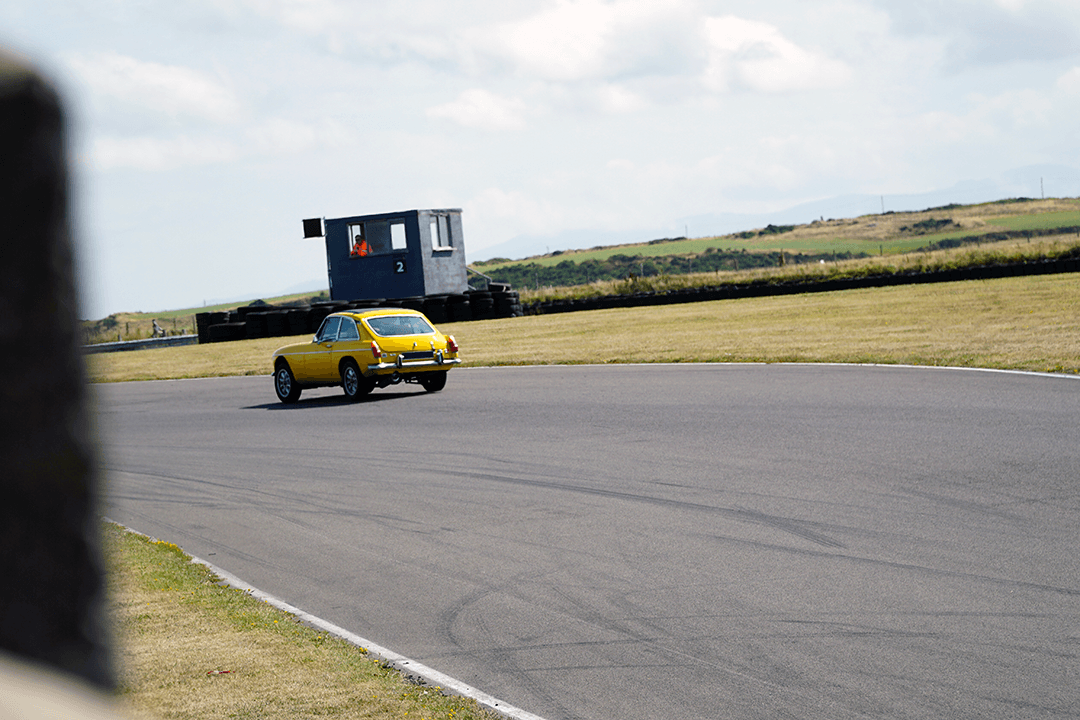
After fitting our Polybush Comfort Grade Kit 38 to this particular car, we wanted to see how it behaved when the owner pushed it properly — not just the usual B-road jaunt, but a genuine track session with some spirited driving.
If you want to see the original installation and explanation of Comfort Grade, you’ll find that video here: https://youtu.be/azyvqagMbOU
Driver Feedback: Comfort Bushes Under Pressure
The owner’s verdict was glowing. He already expected the Comfort Grade bushes to improve road manners — that’s their wheelhouse — but what took him by surprise was how composed they remained once the pace went up.
Even in faster corners, the BGT felt predictable and settled. Turn-in improved thanks to more stable geometry, the back end stayed planted, and mid-corner bumps didn’t knock the car offline. In his words: “It feels like the MG I know, just… sorted.”
And that’s exactly what Comfort Grade is meant to do: keep the classic feel, but tidy up the slack that ageing rubber introduces.
Why Polybush Outperforms Rubber — On Road and Track
Rubber is fantastic when fresh, but it breaks down quickly with heat, oil, age and use. Once it softens or cracks, your suspension geometry starts wandering, which is why old classics can feel vague or unstable.
MG BGT – Comfort Grade Bushes
Our polyurethane bushes maintain their shape and resilience for years — often decades — delivering:
consistent handling
sharper steering feel
improved ride quality
vastly better long-term durability
And, importantly, every Polybush product is British-made, engineered and manufactured right here in the UK. These cars were built for British roads, so the parts should be as well.
Different owners want different behaviours from their MG, so we offer three tailored grades:
Comfort Grade (Blue)
The setup used in our track test. Perfect for everyday road use, long tours and maintaining that classic MG suppleness.
Better control, without making the car feel modern or harsh – See Our Blog
Dynamic Grade (Orange)
A brilliant option if you want a bit more sharpness and response. It’s ideal for fast road driving — a livelier, more eager feel, but still perfectly civilised.
Think of it as giving the car a bit more “pep in its step”, without compromising comfort – See Our Blog
Performance Grade (Red)
For drivers who really lean on the car. Perfect for track days, competition, or anyone wanting maximum precision.
It’s the most focused, most durable option for high-stress use.
Track-Day Takeaway: The MG BGT Still Has Plenty Left to Give
The biggest win from the day was how natural the upgrade felt. The owner climbed out of the car smiling, because the BGT didn’t feel drastically changed — it just felt like its best self.
That’s the philosophy behind Polybush: Enhance the classic, don’t overwrite it.
Whether you choose Comfort, Dynamic or Performance, everything we make is:
British-made
Engineered for British cars
Designed to last
Tested on real roads and real circuits
For anyone restoring, upgrading, or simply enjoying their MG BGT, Polybush will help it feel tighter, more controlled and far more confidence-inspiring — without stripping away the charm that makes these cars so loved.
Solving the Mitsubishi Outlander PHEV’s Most Common Mounting Problem – Polybush 17AW
The Outlander PHEV’s Balance of Efficiency and Engineering
Since its launch in 2012, the Mitsubishi Outlander Mk3 PHEV (GF, GG, ZJ, ZK, ZL) has been a game-changer in the plug-in hybrid market. It offers electric efficiency combined with petrol reliability, making it one of the most popular hybrid SUVs in the UK and Europe.
However, beneath the smooth, silent running of its electric powertrain lies a known weak spot – the rear motor mount, front bracket bush. Owners and technicians alike have found that this particular bush wears prematurely, creating unwanted noise, vibration, and harshness (NVH) that detracts from the refined feel of the vehicle.
17AW Fitted To The OEM Mitsubishi Outlander Motor Mount Housing.
The Problem: OEM Rear Motor Mount Front Bracket Bush Failure
At the heart of this issue is the Rear Motor Mount Front Bracket Bush, found in the rear motor mount assembly (OEM part numbers 3517A090 and 3517A053). This bush plays a vital role: it supports the rear electric drive motor and isolates vibrations from the chassis, ensuring smooth power delivery between electric and petrol modes.
Symptoms of Bush Wear or Failure:
Noticeable vibration through the cabin, especially under acceleration
A “clunk” or jolt when transitioning between drive and regeneration modes
Increased drivetrain movement and harshness when engaging drive or reverse
Reduced comfort and refinement
Hybrid systems generate high torque at low RPM, which puts significant stress on these bushes. Over time, the original rubber compound softens, splits, or even separates from its metal sleeve. Unfortunately, replacement of the full OEM mount is costly – and using the same rubber component means the issue will likely reoccur.
Instead of replacing the entire OEM mount, the Polybush 17AW allows technicians and owners to replace only the worn bush within the existing bracket. This makes it a cost-effective, long-term upgrade that maintains the vehicle’s comfort while greatly improving durability.
Key Features of the Polybush 17AW:
Direct-fit design – Installs into the original mount housing (OEM 3517A090 / 3517A053)
OEM comfort, Polybush longevity – Retains ride quality while improving bush life
Resistant to wear and deformation – Polyurethane resists oil, heat, and road contaminants
Reduces drivetrain movement – Improves response and stability during acceleration
Manufactured and tested in the UK – Ensuring consistent quality and precision
Polybush 17AW, Replacing OE Reference: 3517A053, Part of 3517A090,
Retaining Comfort Without Compromise
One of the biggest advantages of Polybush’s approach is that it doesn’t trade comfort for performance. The 17AWbush has been carefully tuned to maintain the Outlander’s factory refinement, ensuring that vibrations remain isolated while providing firmer support for the hybrid drivetrain.
This means drivers enjoy:
Improved throttle response
Reduced cabin vibration
Greater drivetrain longevity
A more consistent hybrid driving experience
Why the OEM Bush Fails – and How Polybush Fixes It
Rubber bushes like the OEM 3517A090 / 3517A053 are prone to fatigue from repeated load cycles, especially in hybrid vehicles where torque delivery is instantaneous. The soft compound eventually degrades, allowing excess engine and motor movement that stresses surrounding components.
Polybush polyurethane, however, is chemically resistant and mechanically stable. It doesn’t compress or perish like rubber, and its precision moulding ensures proper alignment and load distribution. As a result, Polybush 17AW eliminates the play that leads to premature wear and failure – without increasing NVH.
Simple Installation, Big Improvement
Replacing the bush is straightforward for workshops and experienced DIY enthusiasts. The existing mount is removed, the worn OEM bush pressed out, and the Polybush 17AW pressed in using standard tools. The result is a refreshed, strengthened mount that restores the feel and performance of the Outlander PHEV.
Fitment Summary
Specification
Details
Vehicle
Mitsubishi Outlander Mk3 PHEV
Years
2012–2021
Chassis Codes
GF, GG, ZJ, ZK, ZL
OEM Part Numbers
3517A090 / 3517A053
Polybush Replacement
17AW
Position
Rear Motor Mount Front Bracket Bush
In Summary
The Mitsubishi Outlander Mk3 PHEV is a reliable and innovative hybrid SUV, but its rear motor mount front bracket bush remains a common weak point. The Polybush 17AW replacement provides the perfect upgrade – retaining comfort, improving longevity, and preventing the all-too-familiar vibrations caused by OEM bush failure.
Polybush 44CB: The Ultimate Front Wishbone Front Bush Upgrade for Audi, VW, Seat & Skoda
When it comes to replacing front suspension bushes on Audi, Volkswagen, Seat, and Skoda models, part numbers like 1K0 407 182, 5Q0 407 182, 1K0 407 182 F, Delphi TD521W, and Febi 24390 are among the most common.
If you’re searching for a long-lasting, easy-fit upgrade for these OEM parts, look no further than the Polybush 44CB – a UK-made polyurethane suspension bush designed for effortless installation and a lifetime of consistent performance.
Redesigned with ease of fitment in mind, the new Top Hat-style 44CB ensures quick, accurate installation and a perfect fit. It’s also the ideal upgrade for vehicles already fitted with Polybush 44EX, delivering improved control and refined handling without sacrificing ride comfort.

Polybush 44CB Fitted To Arm – Replacing 1K0-407-182, 1K0-407-182-F, 5Q0-407-182
Why Choose Polybush 44CB Over Rubber or Generic Polyurethane?
If your car’s suspension is still running original rubber wishbone bushes, chances are they’ve begun to crack, perish, or soften over time. Even aftermarket rubber replacements don’t last long when exposed to oil, UV light, and road grime.
Here’s why Polybush 44CB is a smarter, longer-lasting choice:
Longer-Lasting Performance
Manufactured in the UK from a unique automotive-grade polyurethane, Polybush bushes resist oil, fuel, UV, and ageing. They won’t split or degrade like rubber, giving you years of reliable service and sharper handling.
Improved Handling & Steering Response
A firmer, precisely engineered material reduces unwanted bushing flex. The result? More consistent wheel alignment, better steering feedback, and tighter control under braking and cornering — without harshness.
ORIGINAL EQUIPMENT – 1K0-407-182, 1K0-407-182-F, 5Q0-407-182 – Removed From Arm – You Can See There’s Lots of Flex
Comfort Intact
Unlike overly hard polyurethane alternatives, Polybush bushes are carefully tuned to retain OE comfort while enhancing stability. Perfect for daily drivers, fast-road use, or vehicles carrying heavier loads.
No Grease, No Squeaks
Polybush bushes are dry-fit – no messy greasing or special compounds required. Once installed, they stay silent and consistent mile after mile, without the need to re-grease like other manufacturers.
Made in the UK | ISO 9001 Certified
Every Polybush product is manufactured in the UK to exacting standards and ISO:9001 certified, ensuring precision fitment, performance, and durability.
Redesigned for Simplicity: The Top Hat Advantage
The latest 44CB Top Hat-style design makes installation easier than ever. The new profile allows for a smoother, straighter fit into the wishbone with less effort and no specialist tools.
For workshops and home mechanics alike, that means less time on the ramp and a perfect alignment every time.
Already using our Polybush 44EX? The 44CBis the natural next step — offering a compatible, refined upgrade that enhances both comfort and performance.
Fast Road & Lightly Modified Cars – More control, less flex.
Older Models – Replace perished or unavailable OEM bushes.
Fleet & 4×4 Vehicles – Reliable, long-life suspension solution – The perfect solution for Taxi’s, Police, Ambulance or First Responder vehicles, where reliability is key.
Skoda Octavia Taxi – Fitted with Polybush Polyurethane Suspension Bushings
Polybush achieves the perfect balance — OEM comfort with upgraded performance and durability.
Upgrade to Polybush 44CB Today
The Polybush 44CB is a direct replacement for: OEM 1K0 407 182, 1K0 407 182 F, 5Q0 407 182, Delphi TD521W, and Febi 24390.
Whether you’re refreshing your Audi A3, VW Golf, Skoda Octavia, or Seat Leon, this British-made polyurethane upgrade delivers sharper handling, longer life, and a smoother ride.
Polaris Rangers are built for work — trusted by farmers, groundskeepers, estate managers and off-road enthusiasts alike.
But even the toughest UTVs (Utility Task Vehicles) have a weak link: their suspension bushes.
From brand-new Ranger 1000 Crew models to well-used Ranger 800s, owners across the UK & US (and beyond) have reported premature bush wear.
The issue is simple — the factory-fitted hard, non-flexible Nylon-like bushes can’t withstand the constant punishment of off-road use, mud, chemicals, and load stress.
That’s where Polybush comes in. Manufactured in the UK and proven in the field, Polybush’s polyurethane suspension bushes transform the way your Polaris handles, lasts, and performs — turning early failures into long-term reliability.
Why OEM Polaris Bushes Fail
Rubber is soft, cheap, and comfortable — but on working vehicles, it’s also vulnerable. Constant flexing and exposure to contaminants like oil, fuel, and cleaning chemicals cause rubber to perish, crack and split. That’s why your Polaris doesn’t have rubber bushes; it has hard plastic bushes. But when you add in heavy loads, side stresses, and daily use, it’s no surprise many Polaris Rangers develop knocking noises, vague steering, or uneven tyre wear within months.
Tyre Wear Caused By Failing Bushes
Common failure symptoms include:
Excessive movement in wishbones (Control Arms & A-Arms)
Uneven tyre wear or steering pull
Suspension clunks or squeaks
Poor stability under load
Once this happens, alignment suffers, tyres wear faster, and your Ranger loses that planted, confident feel it had when new.
The Polybush Solution
Polybush’s precision-engineered polyurethane bushes directly replace Polaris OEM rubber components, eliminating the weaknesses of rubber while preserving comfort and flexibility.
Unlike rubber and Nylon, polyurethane resists oil, fuel, UV, and high-pressure washing — meaning your suspension geometry remains correct and consistent for the life of the vehicle.
Polybush 53M
Polaris Ranger Lower Shock Bushing – Part of OEM 7043753
All Polybush Polaris kits are supplied ready to fit and cross-referenced with OEM part numbers, so you can find the correct replacement whether you’re searching by Polaris part number or Polybush reference.
Our Product Range: Polybush Kits for Polaris Ranger
We’ve developed a complete range of replacement polyurethane bushes to suit the entire Polaris Ranger family — from the dependable 500 EFI to the advanced XP Kinetic.
Each kit replaces known weak points in the suspension system and includes components for control arms, shock absorber mounts, anti-roll bars, and cargo box pivots.
Polybush Part No.
Description / Fitment
OEM Reference
Kit 228
Front Wishbone (A-Arm) Kit (M10)
5452233, 5139966
Kit 229
Rear Wishbone (A-Arm) & Hub Kit (M10)
5452233, 5139966
Kit 230
Front Drop Link (Linkage Bar) Kit
5416013, 5415470
Kit 231
Rear Drop Link (Linkage Bar) Kit
5456858
Kit 232
Shock Absorber Kit (Front or Rear)
7043753
53A
Front Lower Wishbone (A-Arm) Bush
5439874, 5138797
53B
Rear Wishbone (A-Arm) Upper & Lower Inner Bush
5439270, 5137591
53C
Rear Lower Wishbone (A-Arm) Outer Bush
5439270, 5137593
53D
Rear Upper Wishbone (A-Arm) Outer Bush
5439270, 5137592
53E
Front & Rear Wishbone (A-Arm) to Subframe Bush (M10)
5452233, 5139966
53F
Rear Upright (Weld-Control Arm) Lower Bushing
5452271, 5139991
53G
Rear Upright (Weld-Control Arm) Upper Bushing
5452233, 5139990
53H
Rear Anti-Roll Bar (Stabilizer) Bush 20.7mm
5456858
53J
Front Anti-Roll Bar (Stabilizer) Bush 15.875mm
5465925
53K
Front & Rear Drop Link (Linkage Bar) Bushing
5416013, 5415470
53L
Front or Rear Shock Absorber Lower Bushing
7043753
53M
Front or Rear Shock Absorber Upper Bushing
7043753
53N
Roller-Cam Latch Bush
5458307
53P
Front Drop Link (Torsion Bar Linkage) Lower Bushing
Polybush bushes are available for every major Polaris Ranger model from 2010 onwards. Below is a breakdown of common factory issues and how Polybush solves them.
OEM rubber bushes in the control arms (A-Arms) often deform quickly, leading to vague steering and noise. Polybush 53A and 53E replace these with durable polyurethane, maintaining correct alignment even under heavy loads.
The most common complaint is excessive play in the lower wishbone (A-Arm) bushes and rear hub mounts. Our kits 228 and 229 replace OEM 5452233 and 5139966 bushes, restoring precision and stability.
The 800’s heavy-duty chassis puts real strain on the anti-roll bar and rear upright bushes. Our 53F and 53H bushes prevent deflection and extend lifespan dramatically.
Diesel torque and extra vibration destroy OEM rubber bushes in short order. Polybush polyurethane eliminates premature wear and isolates vibration without sacrificing comfort.
A powerful workhorse with a known weak point — the lower control arm (A-Arm) and rear hub bushes. Polybush kits 234 and 237 provide long-term stability, with polyurethane that won’t compress or crack.
Owners often report poor alignment and a harsh knocking under load. Our complete replacement kits include 53A–53M to ensure every control arm (A-Arm) and shock pivot is properly supported.
The electric XP Kinetic’s instant torque and quiet running make bushing quality vital. Our polyurethane bushes maintain geometry without introducing noise or vibration, ensuring smooth, silent performance.
For electric and estate-use Rangers, silent operation is essential. Polybush 53L and 53M provide durable, noise-free shock absorber mounts that last for years without deterioration.
Tested and Proven by John Osman Groundcare
We don’t just make bushes — we test them in real-world conditions with professionals who know these machines inside out.
John Osman Groundcare in the UK is one of the country’s leading Polaris dealers and service specialists. They don’t just sell and maintain Polaris Rangers — they also rent them out and know exactly where the factory parts fall short.
“We’ve seen brand new Rangers come back with failed bushes within months. By fitting Polybush from new, we stop the problem before it starts — saving time, cost, and customer frustration.” — Luke, John Osman Groundcare
Many of their new machines now leave the showroom fitted with Polybush bushes from day one — ensuring reliability for years to come.
Q: Are Polybush bushes stiffer than factory-fitted bushes? A: In this case, our polyurethane bushes are engineered to be more flexible than OEM, improving ride comfort, control and longevity.
Q: Will Polybush bushes fit my US-spec Polaris Ranger? A: Yes — our fitments match global OEM part numbers and specifications.
Q: Can I install Polybush myself? A: Most bushes are direct replacements using standard tools. For professional installation, visit your local Polaris specialist, such as John Osman Groundcare.
Q: How long do Polybush bushes last? A: Polybush bushes regularly outlast OEM several times over, even under commercial or agricultural use.
Q: Where can I buy Polybush Polaris bushes? A: Directly through Polybush.co.uk or via authorised Polaris service centres.
In Summary
If you own a Polaris Ranger, you’ve likely experienced premature bush failure — but you don’t have to live with it.
Polybush’s UK-made polyurethane bushes provide a permanent fix for worn control arm (A-Arm), shock absorber, and anti-roll bar bushes (Sway Bar), delivering improved comfort, sharper handling, and long-term reliability.
From Ranger 500 to XP Kinetic, from John Osman Groundcare’s workshop to farms and estates nationwide — Polybush keeps working vehicles working.
If you run a Transit, it earns its keep. Whether it’s carrying tools, materials, deliveries, a camper conversion or towing kit, it’s under load far more often than a typical car.
And that’s exactly why the standard lower torque mount — the “dogbone” mount — becomes a weak point.
On paper, the lower torque mount controls engine movement under acceleration and braking. In reality, in a working Transit, it’s dealing with:
Heavy payloads
Stop–start driving
Hill starts under load
Towing
Constant gear changes
Engine braking
The standard mount uses rubber. That’s fine on a lightly used passenger vehicle. But on a Transit that’s earning money every day, rubber simply doesn’t hold up.
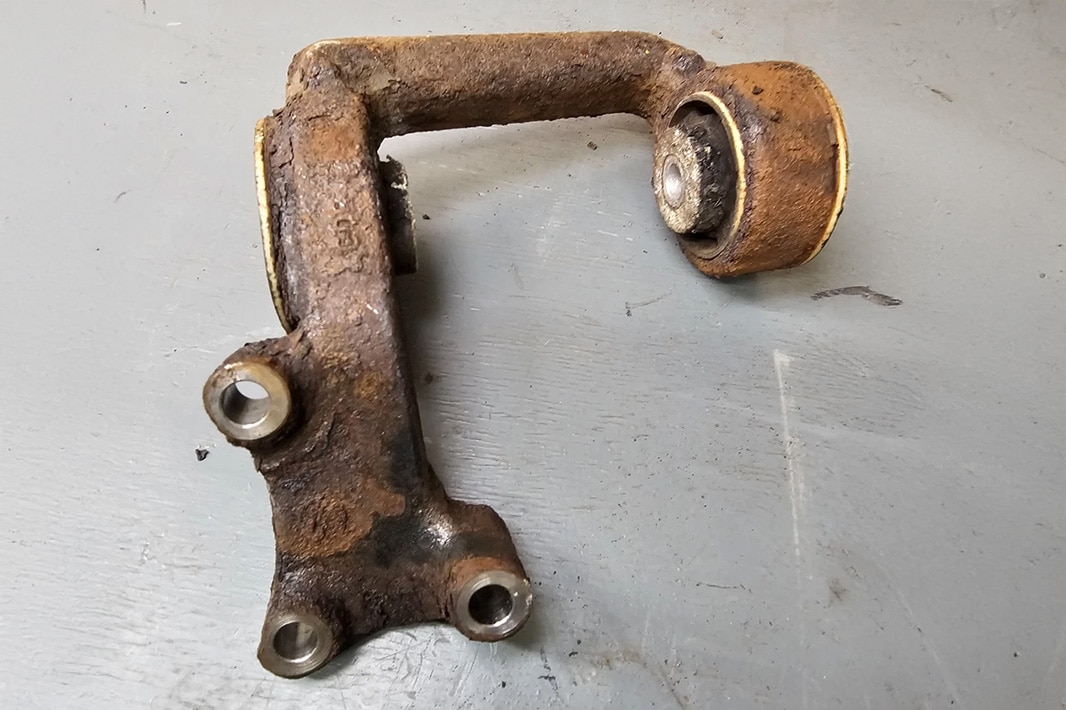
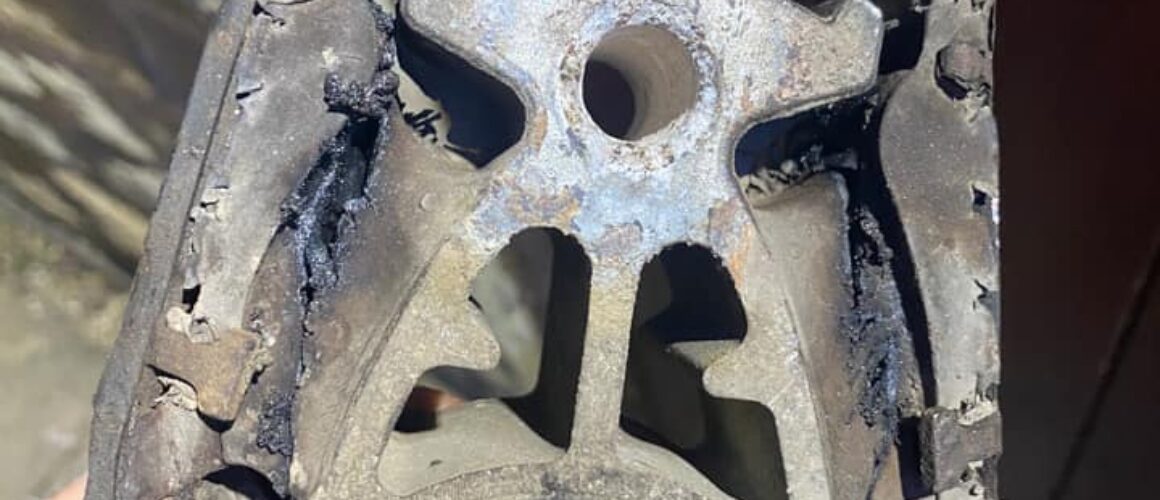
OEM Bush Failure
What Actually Happens
Over time the rubber:
Softens from engine heat
Degrades from oil contamination
Tears under repeated torque load
Compresses and loses shape
You’ll start to notice:
Clunks when pulling away
Excess engine movement
Harsh vibration through the cabin
Gear change movement feeling sloppy
A quick look through Transit owner groups and forums shows this isn’t rare. Owners regularly report “dogbone mount gone again” or engine movement issues returning within a short period after fitting another rubber replacement. The problem isn’t always the brand. It’s the material.
Why It’s Worse in a Transit Than a Car
Here’s the important bit: the Transit platform is designed to carry weight. That means higher torque loading through the drivetrain compared with a typical passenger car.
So even if the original mount lasted reasonably well in a lighter vehicle, once you’re:
Running at 3.5 tonnes
Towing regularly
Running fleet mileage
Living in it as a camper
…the stress multiplies.
Rubber creeps under sustained load. It deforms. Once it starts moving excessively, it accelerates its own failure.
The 40DQ Solution: Reinforce, Don’t Replace With the Same Weakness
Rather than replacing the whole mount with another rubber unit that will eventually fail again, the 40DQ insert fits into the OEM housing and reinforces it with high-grade polyurethane.
That gives you:
Controlled engine movement
Reduced stress on surrounding components
Far greater resistance to oil and heat
Long-term dimensional stability
It’s not about making the van harsh or uncomfortable. It’s about restoring proper torque control without introducing unnecessary vibration.
For a working vehicle, that balance matters.
Why Polyurethane Is the Right Material Here
Rubber has one main advantage: it’s cheap and compliant when new.
Polyurethane, on the other hand, offers:
Superior load-bearing capability
Far greater resistance to oil and road contamination
Minimal long-term deformation
Stable performance across temperature changes
In a high-load application like a Transit lower torque mount, those properties matter more than ultra-soft initial compliance.
You don’t want the engine flopping around under load. You want it controlled.
Polyurethane maintains that control for years, not months.
Who This Is Really For
This insert makes sense if you:
Run a trade van that’s always loaded
Manage a fleet and want fewer repeat failures
Use your Transit for towing
Have converted it to a camper and added weight
Are simply tired of replacing dogbone mounts
If your van works hard, the mount needs to be up to it.
40DQ – Installed in OEM Arm
Compatible with OEM part numbers:
1771506
1786184
2015369
BK21-6P082-AC
BK21-6P082-AD
BK21-6P082-AE
Febi 174862
The Bottom Line
The lower torque mount on the Ford Transit V362 and V363 is a known wear point under real-world working conditions. Replacing rubber with more rubber doesn’t solve the underlying weakness.
Less movement. Less repeat failure. More confidence in a van that earns its keep.
If you rely on your Transit every day, it makes sense to fit a mount solution built for how these vans are actually used — not just how they’re tested in a lab.
We’re based on Stand 1-465, and we’re bringing our expertise straight to the show so you can see, handle, and get advice on our polyurethane suspension bushes for classic and performance cars.
Why Stop by Our Stand?
At the show, you can:
Inspect our bushes up close — see cut-sections, compare with rubber originals, and understand why polyurethane lasts longer and improves handling.
Get expert guidance — whether it’s replacement parts, restoration, or handling upgrades, we can advise the right solution for your car.
Quote on the spot — for many models, we can give pricing immediately and help you choose the correct grade for your driving style.
Access show-only offers — bundles and multi-bush kits are usually available exclusively at the NEC.
The Team At The NEC – Justin, Greg & Ellis
Make Your Visit Easy
Bring along:
Part numbers, measurements, or photos of the bushes you’re replacing.
A list of which areas of the car you’re working on.
Have any questions about fitment or installation? As the manufacturer, we can provide precise advice to suit your application.
Why Choose Polybush?
Old rubber bushes degrade over time — causing sloppy steering, vibrations, and worn suspension geometry. Our polyurethane bushes:
Outlast rubber and resist oil, heat, and ageing.
Improve handling while maintaining comfort.
They are precision-made to match your car’s requirements.
Can replace obsolete or difficult-to-find originals.
Where to Find Us
The show is in
We’ll be in the Premium Hall (Hall 1) – 1-465 at the NEC, Birmingham (B40 1NT). Swing by to say hello.
We’re excited to announce a brand-new range of Polybush suspension bushes covering some of the most popular small cars on the road – and some of the most fun. Whether you’re driving a Fiat 500 around town, tackling B-roads in an Abarth 595, or relying on a Panda 4×4 through winter, these bushes will transform how your car feels and last far longer than rubber ever could.
Our latest release covers:
Fiat 500 (312) (2007-On)
Fiat 500C (312) (2009-On)
Fiat 500e (332) (2020-On)
Fiat 500e Convertible (332) (2020-On)
Fiat Panda 2WD inc 100 (139) (2003-2012)
Fiat Panda 4WD (139) (2004-2012)
Ford KA (RU8) (2008-2016)
Abarth 500, 595, 695 (312) (2008-On)
Abarth 500C, 595C, 695C (312) (2008-On)
Abarth 500e (332) (2023-On)
Abarth 500e Convertible (332) (2023-On)
That’s a huge range of cars that all suffer from the same weak point – rubber bushes.
Why Rubber Bushes Fail
If you’ve owned one of these cars for a while, you’ll know the story. Rubber bushes crack, split and deteriorate long before the rest of the suspension wears out. Heat, road salt, oils and just plain age all conspire to break them down. Once they go soft or start splitting, the handling falls apart – vague steering, uneven tyre wear, clunks and knocks, and in many cases, an expensive bill just to put it right.
“Every time the wishbone bushes go, it’s a nightmare – bumper off, arms out, and you know you’ll be back under there in 18 months doing it all again.”
That’s exactly why we’ve developed polyurethane replacements. Polybush bushes don’t degrade like rubber, meaning once you fit them, that job is done. No more repeat failures, no more premature MOT advisories, and your car drives like it should.
The New Polybush Range
We’ve launched four key bushes that tackle the main weak points in these cars:
The front bush in rubber – Walks out, causing caster changes, causing vague steering especially at speed. Our polyurethane version resists flex and oil contamination, keeping your geometry stable and your steering sharp.
Fiat 500 Arm OEM 51857021 Failure – Web
🔧 24U – Front Wishbone Rear Bush
OE References include: 50709579, 50710620, 51860383, FS51-3078-BA (and many more).
This is the one that causes the biggest headaches. The OEM rubber rear bush is notorious for failing, and replacing it as with the front bush is a proper chore – the front bumper has to come off just to access the bolts. That’s why it makes sense to fit Polybush once, and never have to go through the same pain again.
These bushes support the entire rear axle, so when the rubber fails, you’ll hear knocks and feel instability at speed. Swap to Polybush and the rear end tightens up beautifully – stable, predictable, and long-lasting.
🔧 24V – Rear Shock Absorber Upper Bush (M12)
OE References include: 50709731, 51857841, 9S51-18125-AA (and many more).
Electric versions of the Fiat 500 carry extra weight from the battery pack, putting added strain on the suspension components. The standard rubber bushes often struggle under this increased load, wearing out far sooner than expected.
Our 24V polyurethane bush is engineered to handle the extra mass and torque of the EV drivetrain. It maintains its shape and performance under pressure, giving your shocks the firm, consistent support they need for a smoother, more controlled ride.
Polybush Fiat 500 & 500E Suspension Bushes
🔧 24Y – Rear Shock Absorber Upper Bush (M10)
OE References include: Part of 51857841, 51864833 (and many more).
If you own one of these cars, you’ve probably replaced these more than once already. The OEM rubber fails for fun – it just can’t cope with the repeated loading. That’s where polyurethane really shines. Our 24Y bush shrugs off the punishment, giving your shocks the proper support they need for a consistent ride and handling.
Fiat 500 OEM 50709731 – Failure
Why Polybush is the Best Choice
Fit once, forget it – no need to replace every MOT cycle.
Resistant to oil, fuel, salt and heat – unlike rubber, Polybush won’t break down.
Improved handling and ride quality – sharper steering, better stability, and a more solid feel.
Cost-effective – especially when you factor in the labour involved in removing bumpers or subframes just to change failed OEM parts.
“Swapping rubber for Polybush is the smartest move – you do it once, and it transforms the way the car feels.”
Polybush 24U Fitted To A Fiat 500
Polybush 24T & 24U Fitted To A Fiat 500 Front Wishbone
These cars are fantastic fun, whether it’s a cheeky Fiat 500 nipping through traffic, a tough little Panda taking on back roads, or an Abarth 595 delivering a grin every time you prod the throttle. But they all share the same Achilles’ heel – rubber bushes that simply don’t last.
With Polybush polyurethane suspension bushes, you’ll only need to do the job once. The car will handle better, last longer, and finally live up to the way it should have left the factory.
Check out the full range of bushes for Fiat, Panda, KA, and Abarth & More – Here.
New Release: Polybush 49C Engine Stabiliser Bush for the 2.2L Matra Murena
At Polybush, we’re proud to support classic and rare vehicles with expertly engineered polyurethane components — and our latest release is one that’ll be of particular interest to Matra enthusiasts.
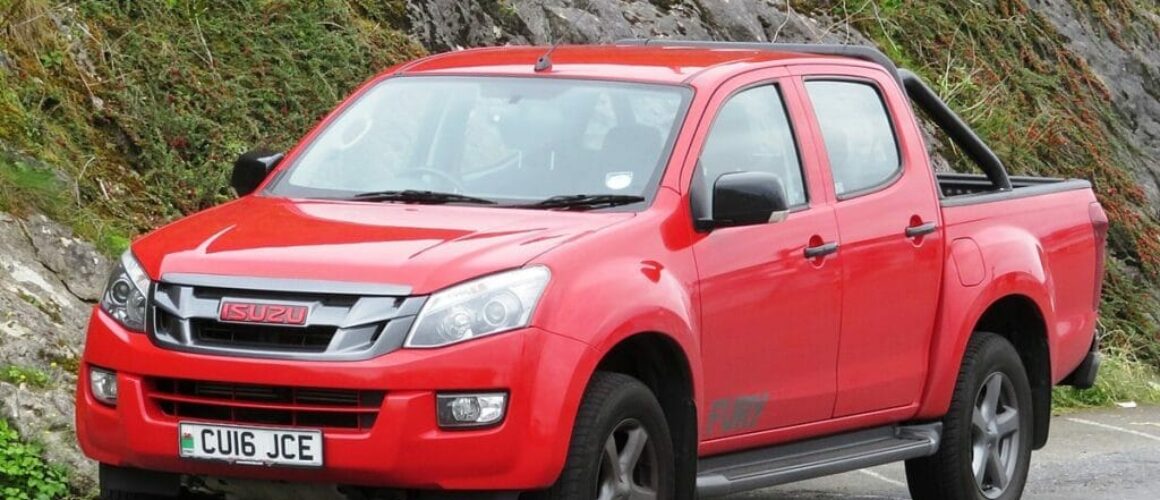
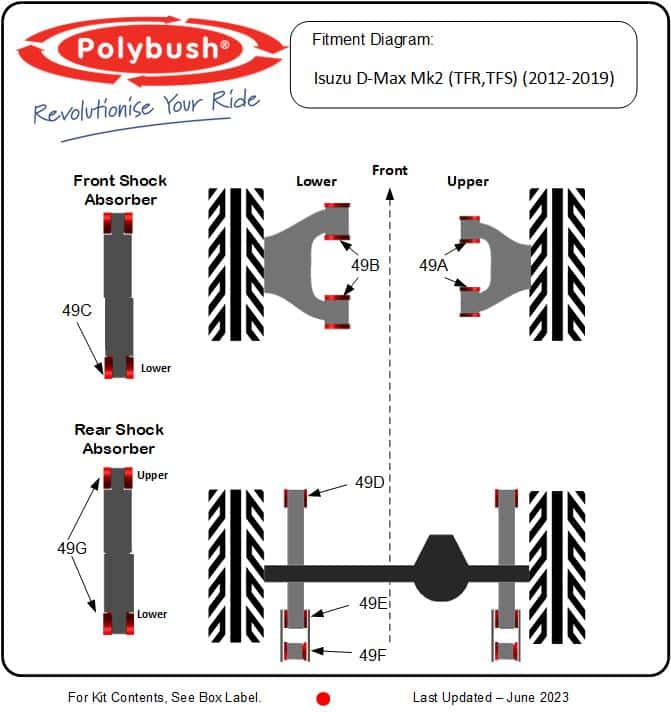
We’re pleased to announce the launch of our 49C Polyurethane Engine Stabiliser Bush, now available specifically for the 2.2L Matra Murena. Originally developed as a shock bush for the Isuzu D-Max Mk2, the 49C has proven to be an ideal fit for this unique French sports car after careful testing and feedback from respected specialists, including Roy Gillard of the Matra Club (www.matraclub.org.uk), one of the world’s leading experts on the marque.
Why a New Engine Stabiliser Bush for the Matra Murena?
The 2.2L version of the Matra Murena is a rare beast — a mid-engined, rear-wheel-drive, lightweight sports car that offers bags of character and a surprisingly capable chassis. However, like many classics, ageing rubber components in the drivetrain mountings can significantly dull its performance.
The original rubber stabiliser bush on these cars is prone to degradation over time, leading to excessive engine movement under load. This movement not only affects refinement but also reduces throttle response and can contribute to wear on the drivetrain. That’s where the Polybush 49C comes in.
Polyurethane vs Rubber: What’s the Benefit?
Unlike natural rubber, polyurethane doesn’t perish, crack or degrade with age or exposure to oil, salt, and heat. That’s a huge advantage for a classic like the Murena, which may not be driven daily — but deserves to feel sharp and responsive every time the key’s turned.
Here’s what you can expect from the Polyurethane 49C Bush:
🔧 Sharper Throttle Response
By better controlling engine movement under load, the 49C reduces drivetrain slop. That means more immediate throttle response, smoother gear changes, and a more connected driving feel. It’s especially noticeable when accelerating hard or shifting quickly — two things the Murena 2.2L loves to do.
🔇 OEM-Level NVH
We’ve carefully tuned the durometer (hardness) of the 49C bush to retain OEM-like NVH characteristics.
What is NVH? NVH stands for Noise, Vibration and Harshness — the trio of comfort-related sensations you feel (or don’t feel) from the engine and chassis. Too hard a bush, and you’ll get unwanted vibration in the cabin. Too soft, and performance suffers.
With Polybush, you get the best of both worlds — performance gains without compromising comfort.
🛠 Durability and Fit
Our bushes are designed to be a direct replacement, with no modification needed. The 49C offers a perfect fit for the stabiliser mounting on the 2.2L Murena and will last significantly longer than rubber, saving time and money in the long run.
Expert Input from the Matra Club
In developing this application, we worked closely with Roy Gillard of the Matra Club, whose knowledge of Matra vehicles is second to none. Roy confirmed the need for a quality replacement in this area of the drivetrain and provided detailed insights into the specific fitment for the 2.2L variant.
“There’s been a need for a modern, durable replacement for the stabiliser bush on the 2.2 Murena for some time. The Polybush 49C is a welcome solution that not only fits correctly but enhances the driving experience without adding noise or harshness.” – Roy Gillard, Matra Club
Only for the 2.2L Murena
It’s worth noting that this bush is only suitable for the 2.2L version of the Matra Murena. If you’re unsure of your model or fitment, feel free to get in touch with us — we’re always happy to help.
Available Now from Polybush
If you want to tighten up the feel of your 2.2L Matra Murena, reduce engine movement, and gain a little more precision from your classic, the Polybush 49C Engine Stabiliser Bush is available now.
Like all Polybush products, it’s manufactured in the UK, built to last, and backed by our expert team of enthusiasts and engineers.
🛒 Order yours today or get in touch to discuss your vehicle – we’re here to keep classics like the Murena driving as they should.