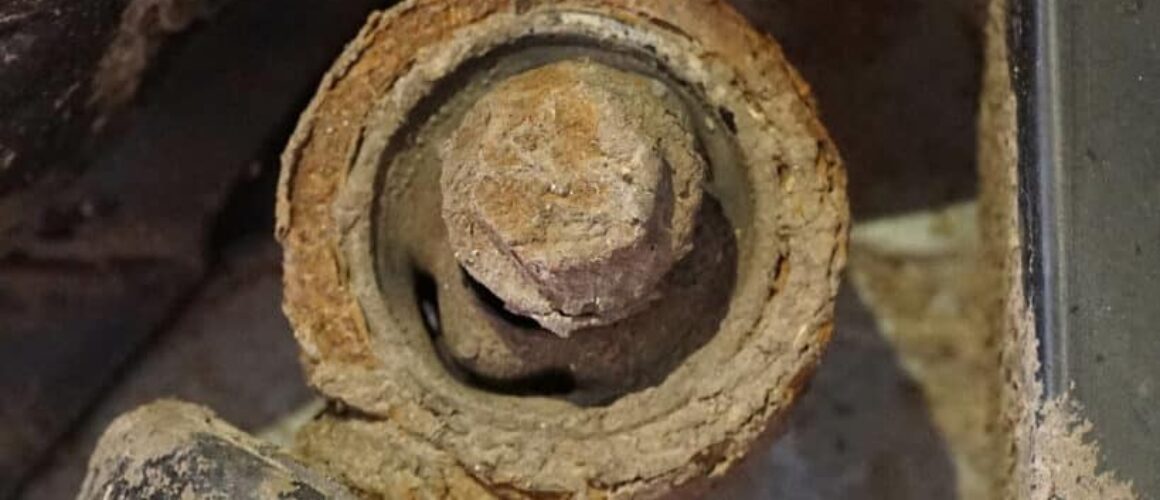
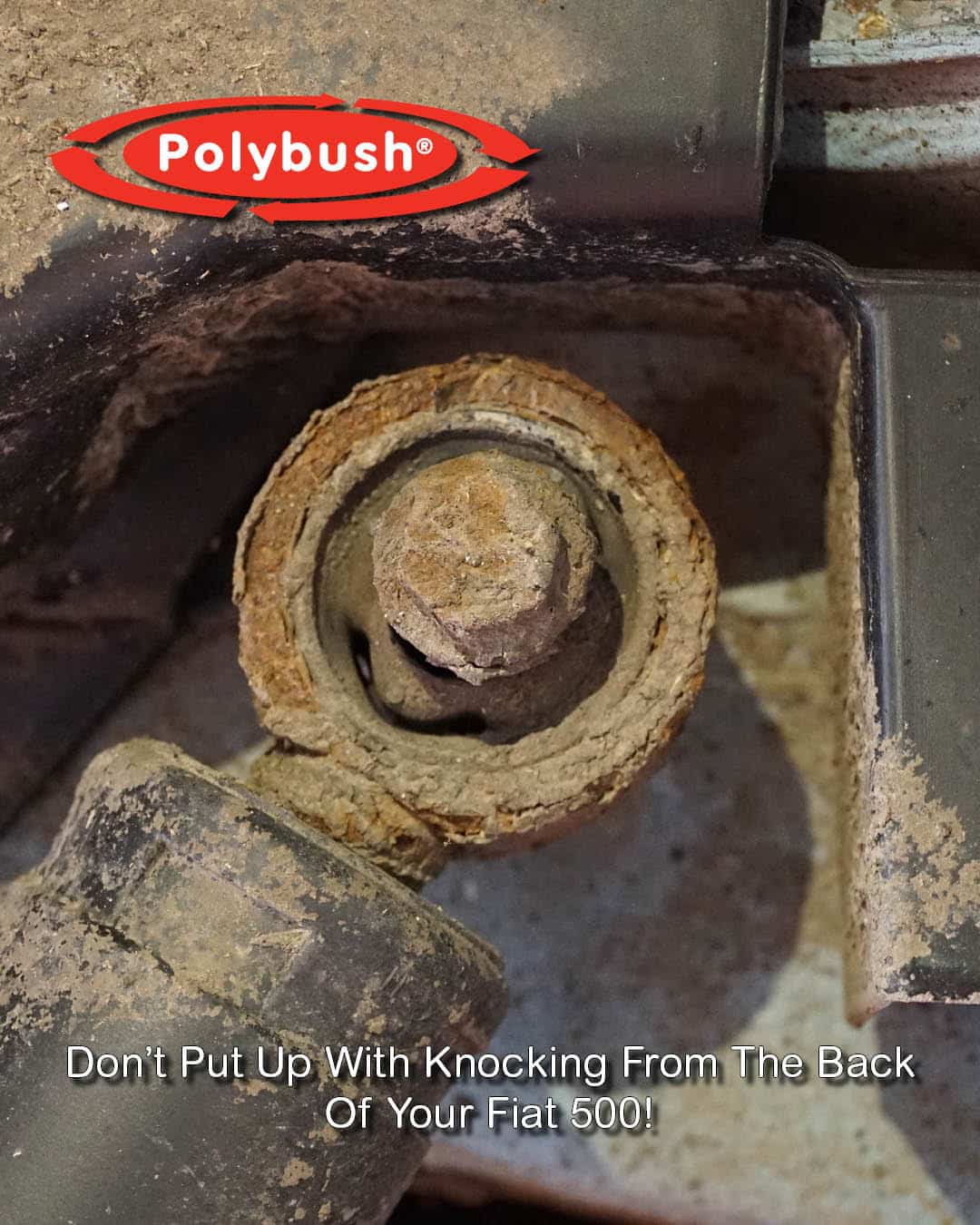
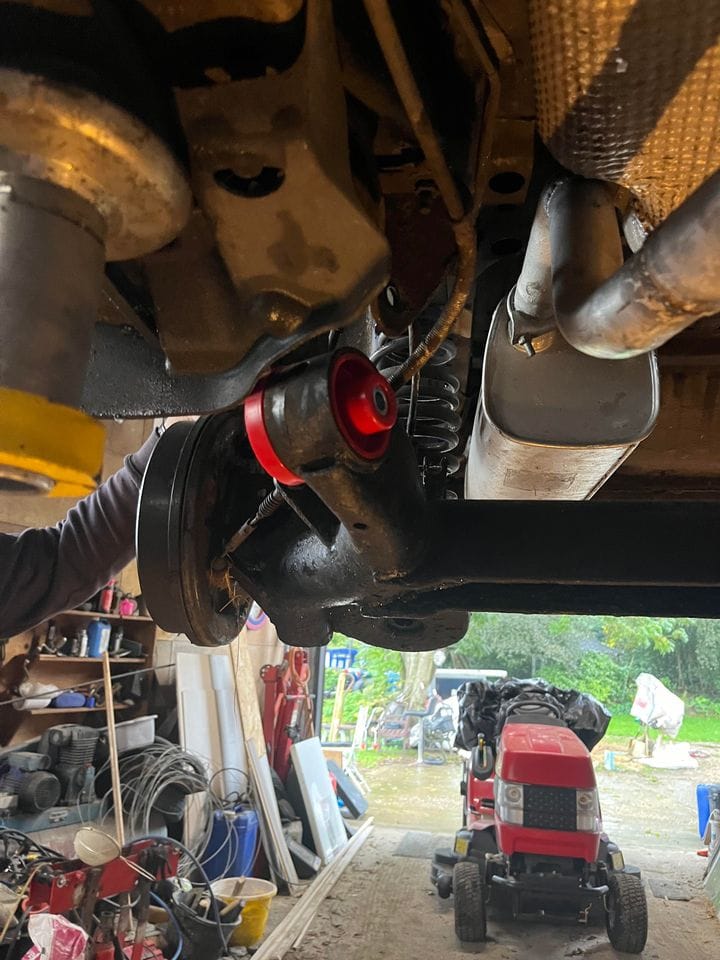
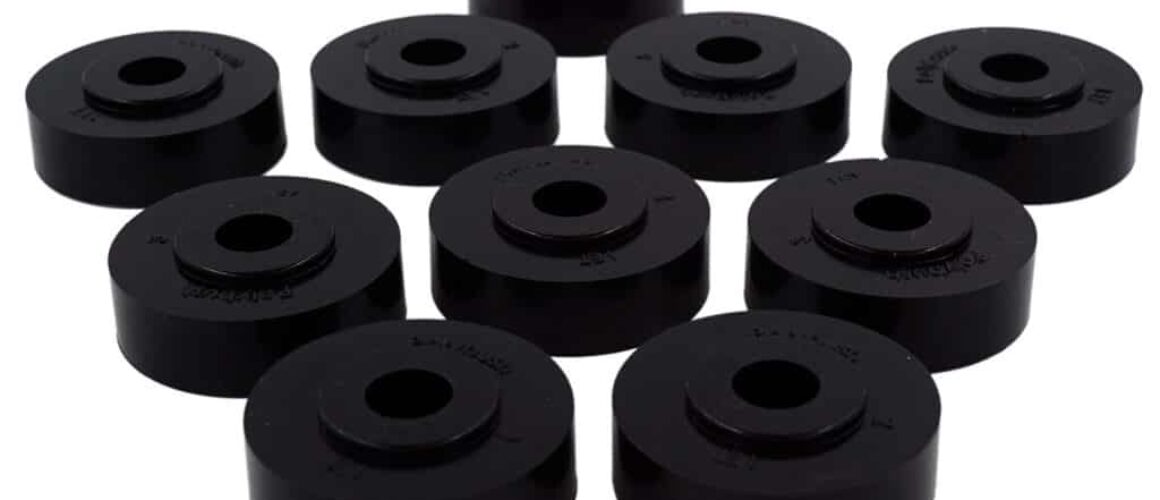
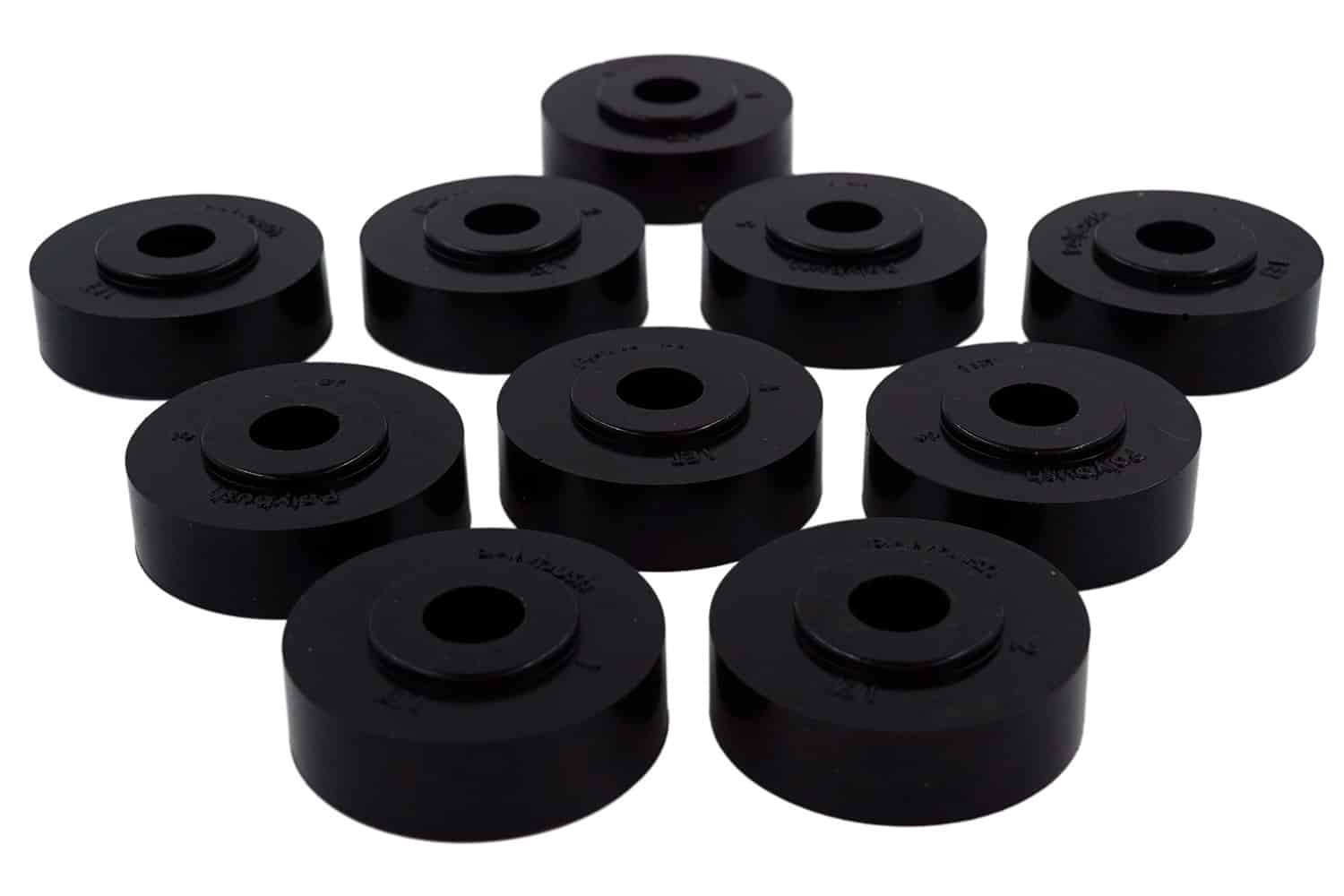
If you’re chasing a rear-end knock on a Fiat 500, 500C or Abarth 312 or Abarth 312C, there’s a very high chance the issue is coming from the rear upper shock absorber bushes. These small rubber mounts sit at the top of the rear dampers and play a critical role in keeping the suspension controlled, quiet and properly located.
On paper, they’re simple components. In reality, they’re one of the most common failure points on this platform.
What the rear upper shock bush actually does
The rear upper shock bush is responsible for:
Isolating vibration from the damper into the body
Keeping the shock absorber correctly located
Controlling movement under compression and rebound
Preventing metal-to-metal contact at the mounting point
On the Fiat 500 / Abarth 312 platform, these bushes (including OEM references such as 51857841, 51864833, 81857840, 51860150, 51857842, 50709731, 1540225, 1578532, 1672372, 9S51-18125-AB / AC / AA) are relatively small and made from soft rubber compounds designed primarily for comfort.
That’s where the problems begin.
Why rear shock bushes fail on the Fiat 500 / Abarth 312
1. Compression set (primary failure mode)
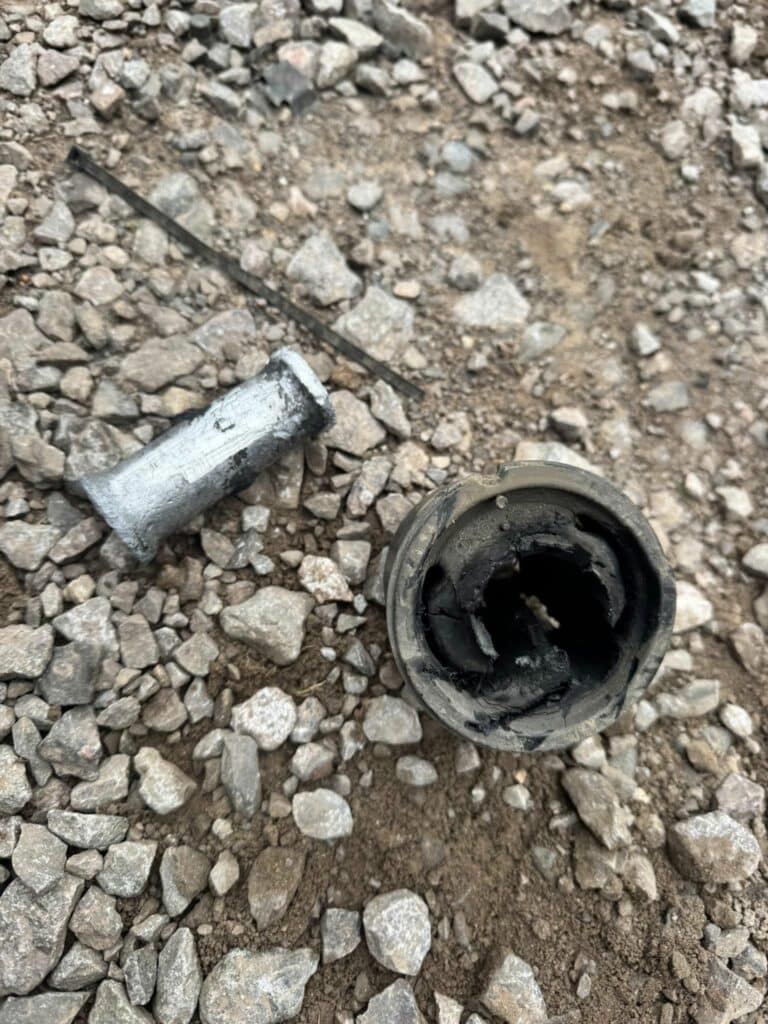
The most common issue is compression set, where the rubber permanently deforms under load.
Once this happens:
The bush loses its original shape and height
The shock absorber eyelet becomes loosely located
Small movements develop at the mount under load
This is what produces the familiar rear knocking noise over bumps.
2. Rubber fatigue and ageing
Over time, rubber naturally degrades due to:
Heat cycles from suspension movement
Exposure to moisture, road salt and contaminants
General ageing and hardening
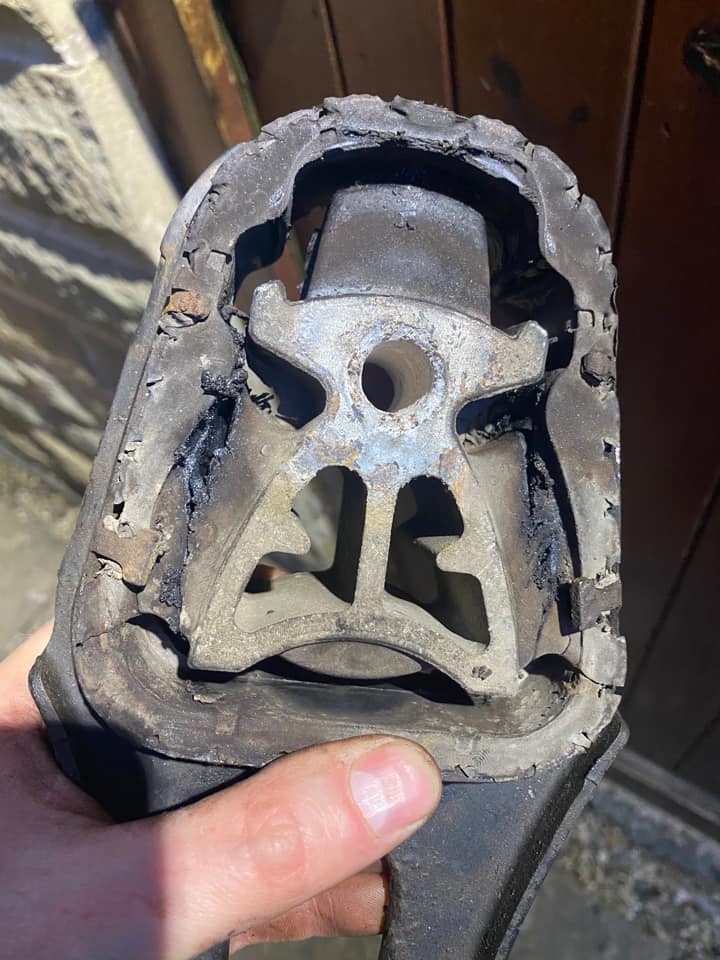
As the rubber hardens, it loses its ability to absorb vibration, cracks begin to form, and the structural integrity is reduced. This is what turns a flexible and comfort-driven bushing into an unconstrained failing bushing.
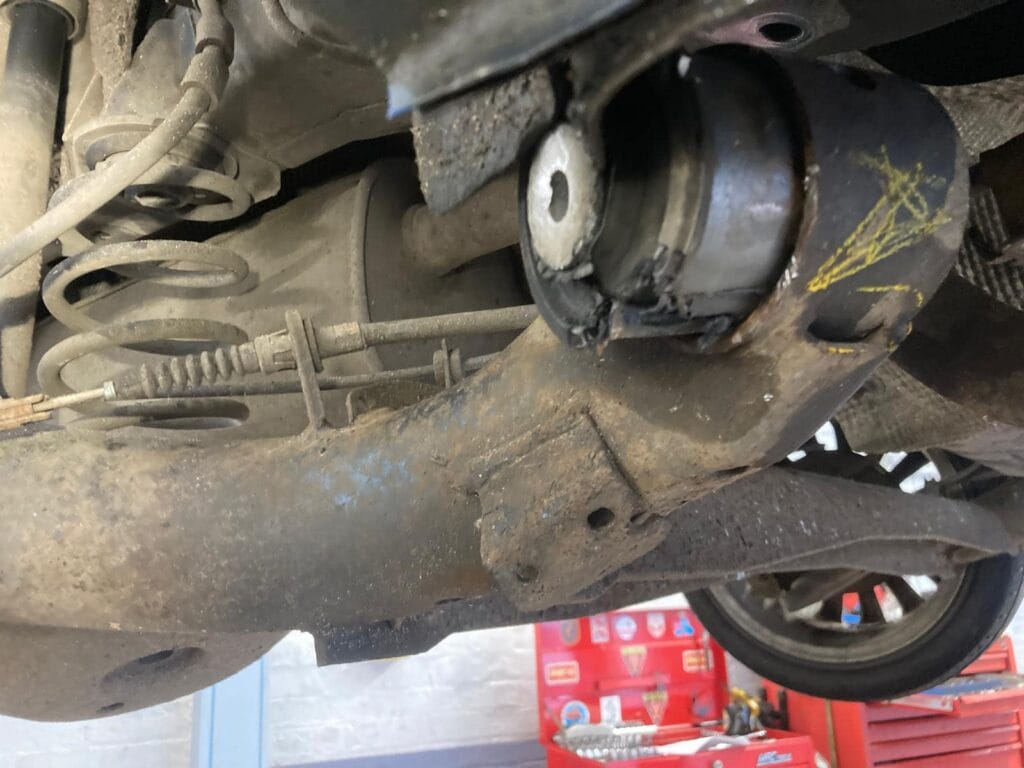
The Fiat 500 platform may be small, but it is exposed to significant suspension loads due to its short wheelbase, potholes and speed bumps in urban driving and aggressive compression and rebound cycles from the state of the roads in the UK and Europe – Combined with ‘enthusiastic’ driving found in Abarth models, these repeated shock loads cause internal tearing of the rubber, leading to splitting around the inner sleeve, separation from the outer housing, & knocking from the rear of the vehicle.
3. Progressive failure that’s easy to miss
One of the biggest issues is that failure is gradual:
First signs: occasional light knock
Progression: more frequent rear-end thudding
Final stage: constant knocking and instability over bumps
By the time the noise is obvious, the bush is often already significantly compromised.
Symptoms of worn rear upper shock bushes
Common driver complaints include:
Rear-end knocking over bumps
Dull thud from the rear axle area
Reduced rear-end stability
Harshness over uneven roads
A feeling of looseness at the back of the vehicle
These symptoms are often misdiagnosed as shock absorber failure, when in reality the damper is usually fine — it’s the mounting bush that has collapsed.
Why replacement rubber often fails again
Standard replacement rubber bushes typically replicate OEM design characteristics:
Soft compliance for comfort
Limited resistance to compression set
Similar material degradation over time
As a result, repeated failure is common on high-mileage or frequently driven vehicles.
How Polybush improves durability and control
Upgrading to polyurethane significantly changes how the suspension behaves under load.
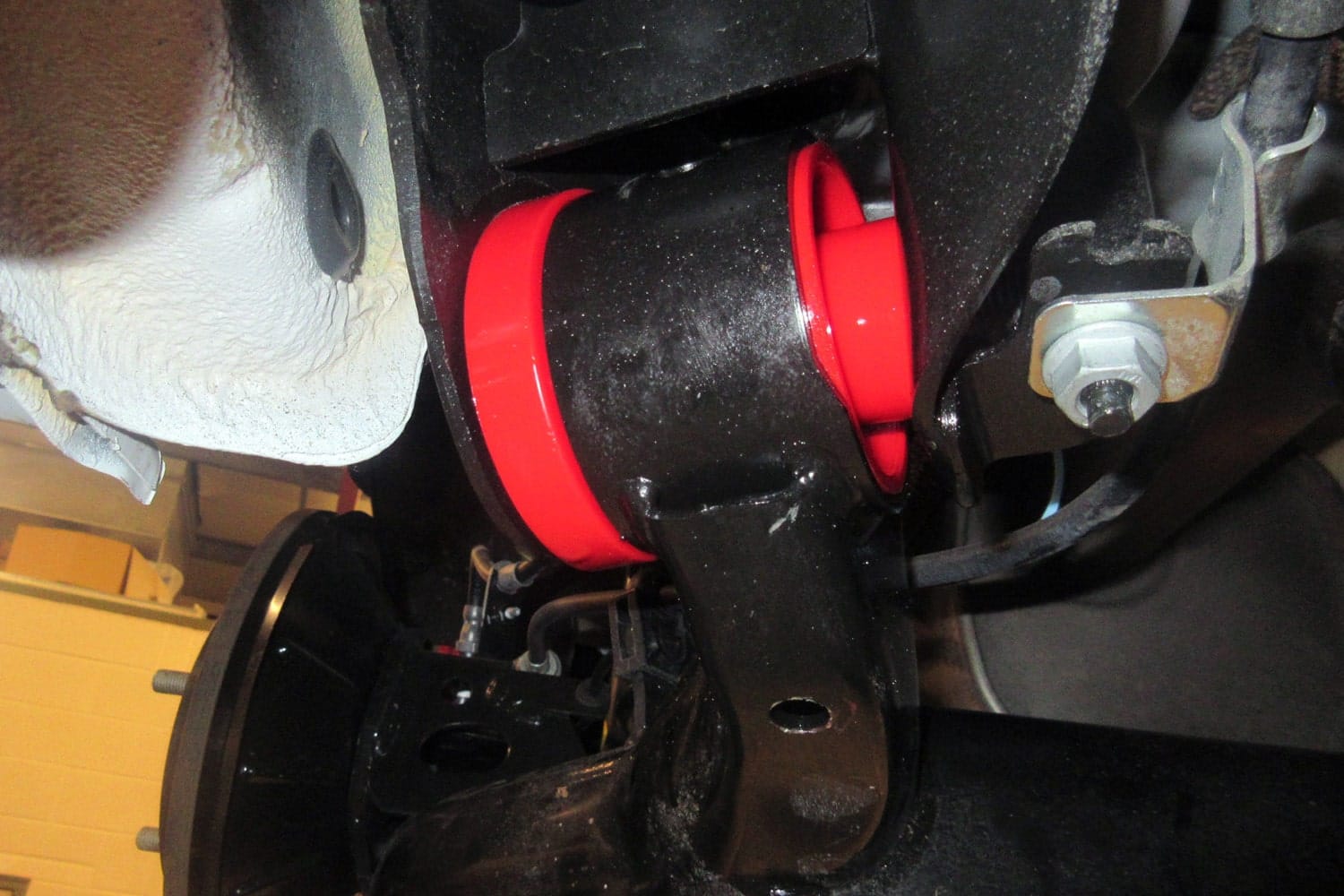
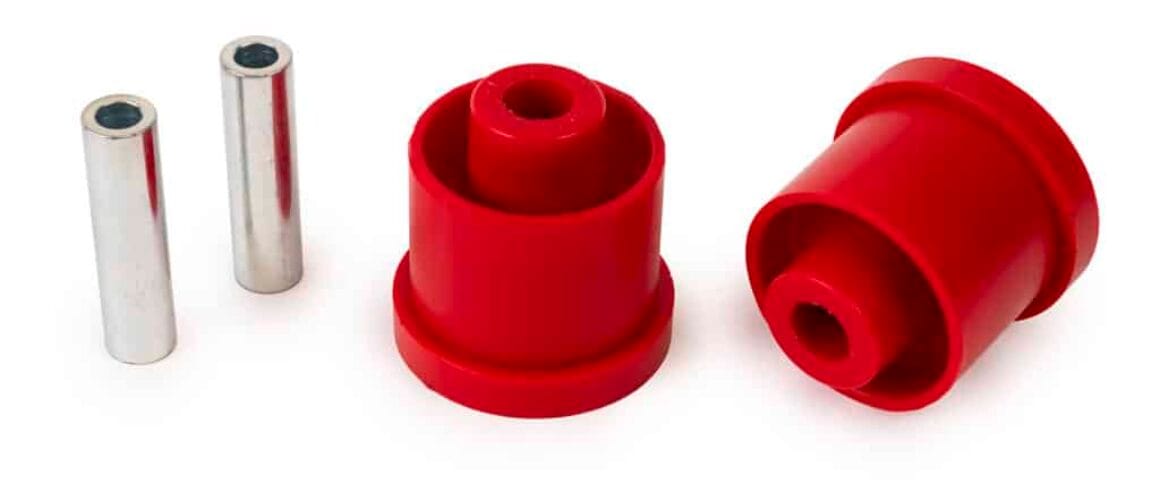
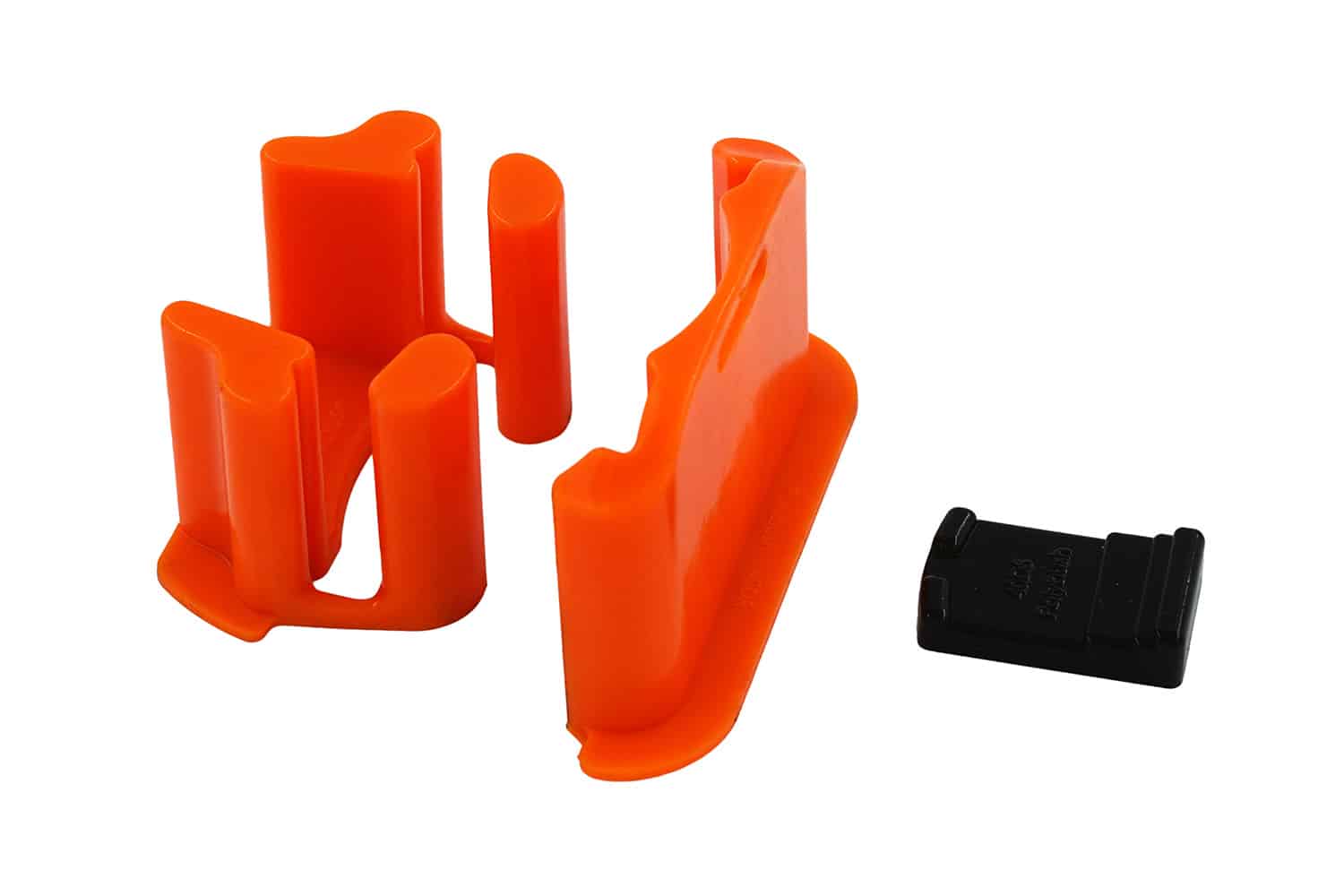
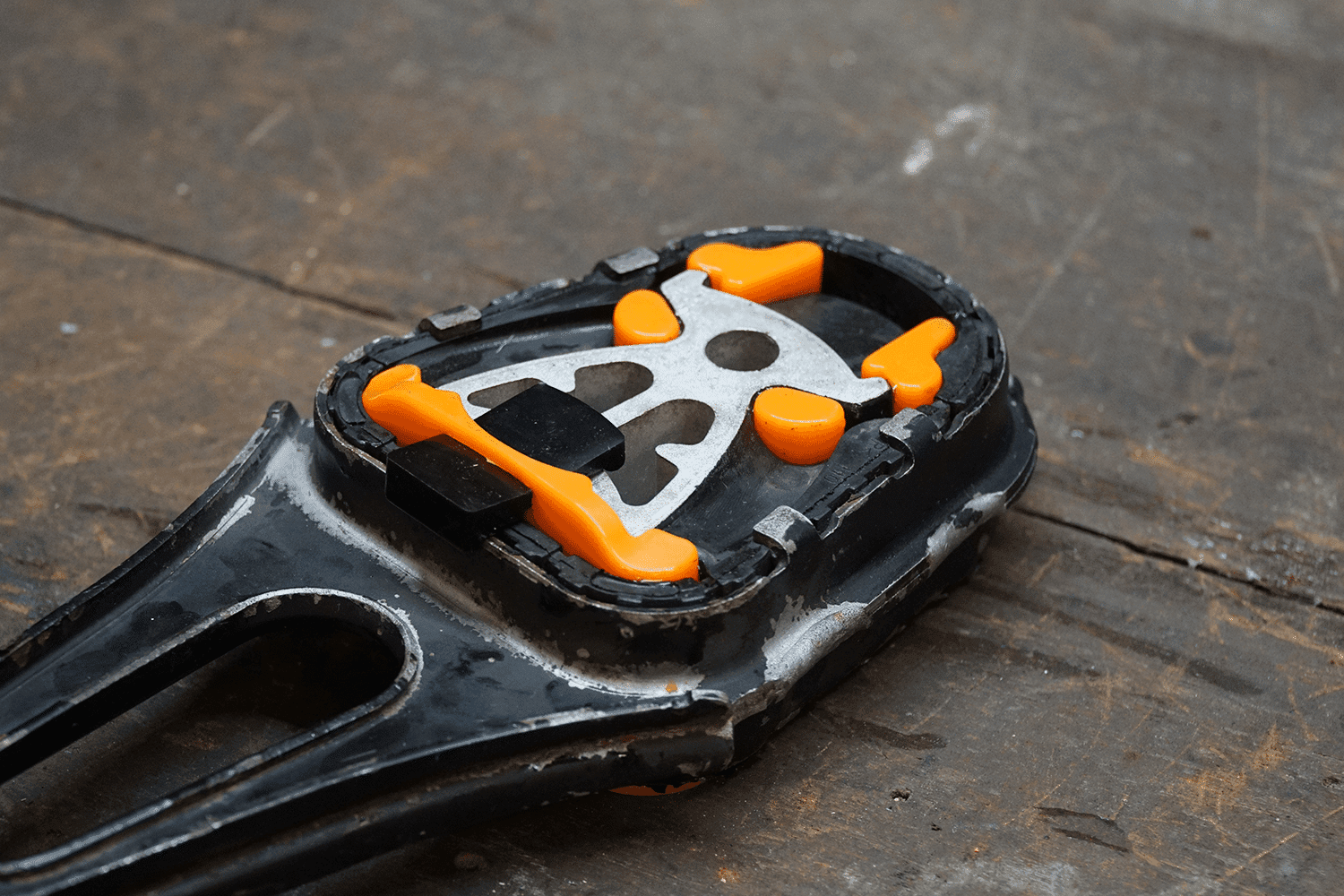
The 24Y Rear Shock Absorber Upper Bush is designed to address the core weaknesses of the OEM design by:
Maintaining shape under sustained load
Resisting compression set
Reducing unwanted shock movement at the mounting point
Improving consistency of rear suspension behaviour
Rather than degrading over time like rubber, polyurethane retains its structural stability, helping to maintain predictable handling and eliminate knocking caused by excessive bush movement.
Rear upper shock bushes on the Fiat 500 and Abarth 312 platform are a known weak point due to their size, material composition and constant exposure to shock loading. Failure typically begins with compression set and progresses into tearing and loss of location, resulting in rear-end knocking and reduced suspension control.
Addressing this component properly is key to restoring rear-end stability and eliminating persistent suspension noise.
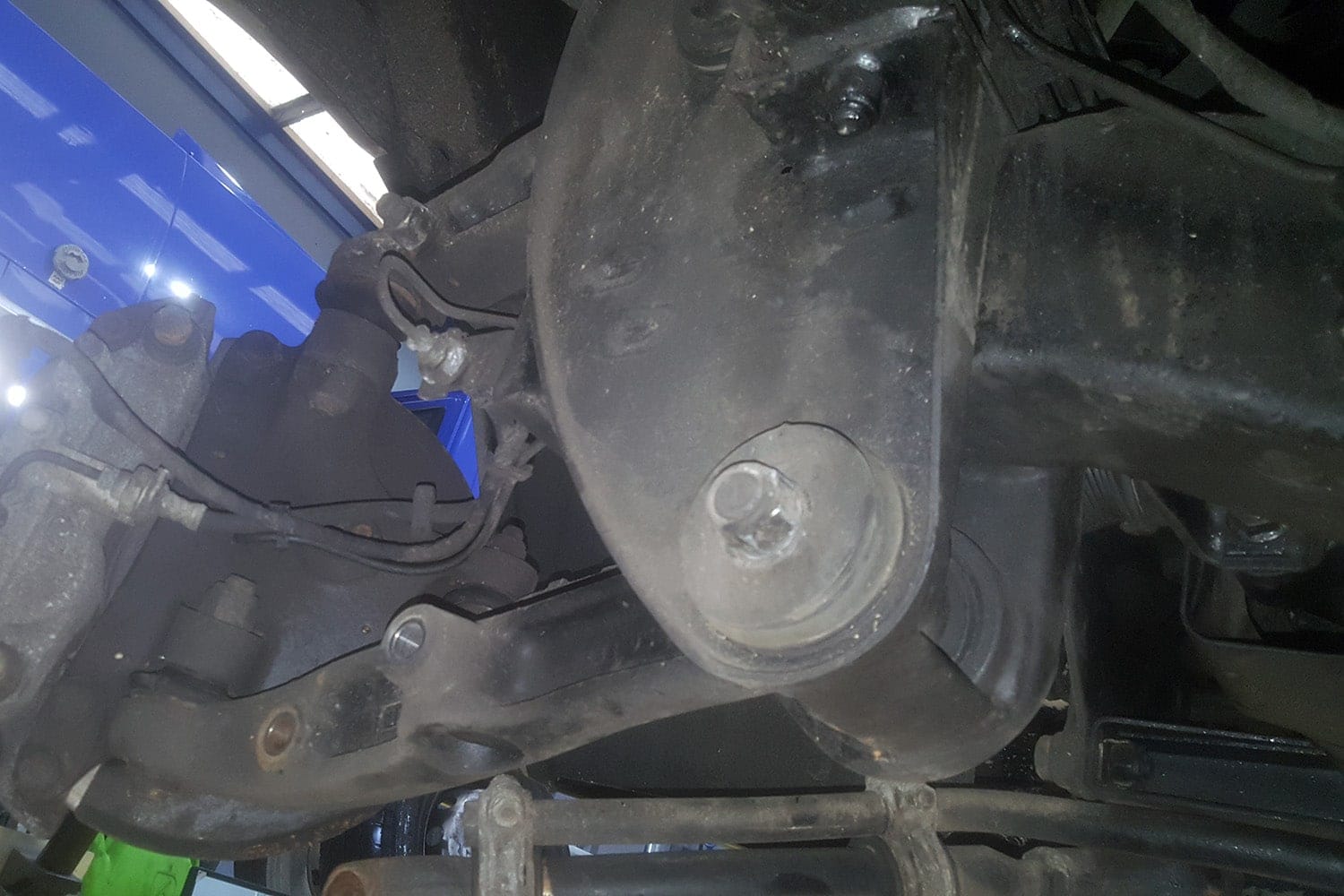
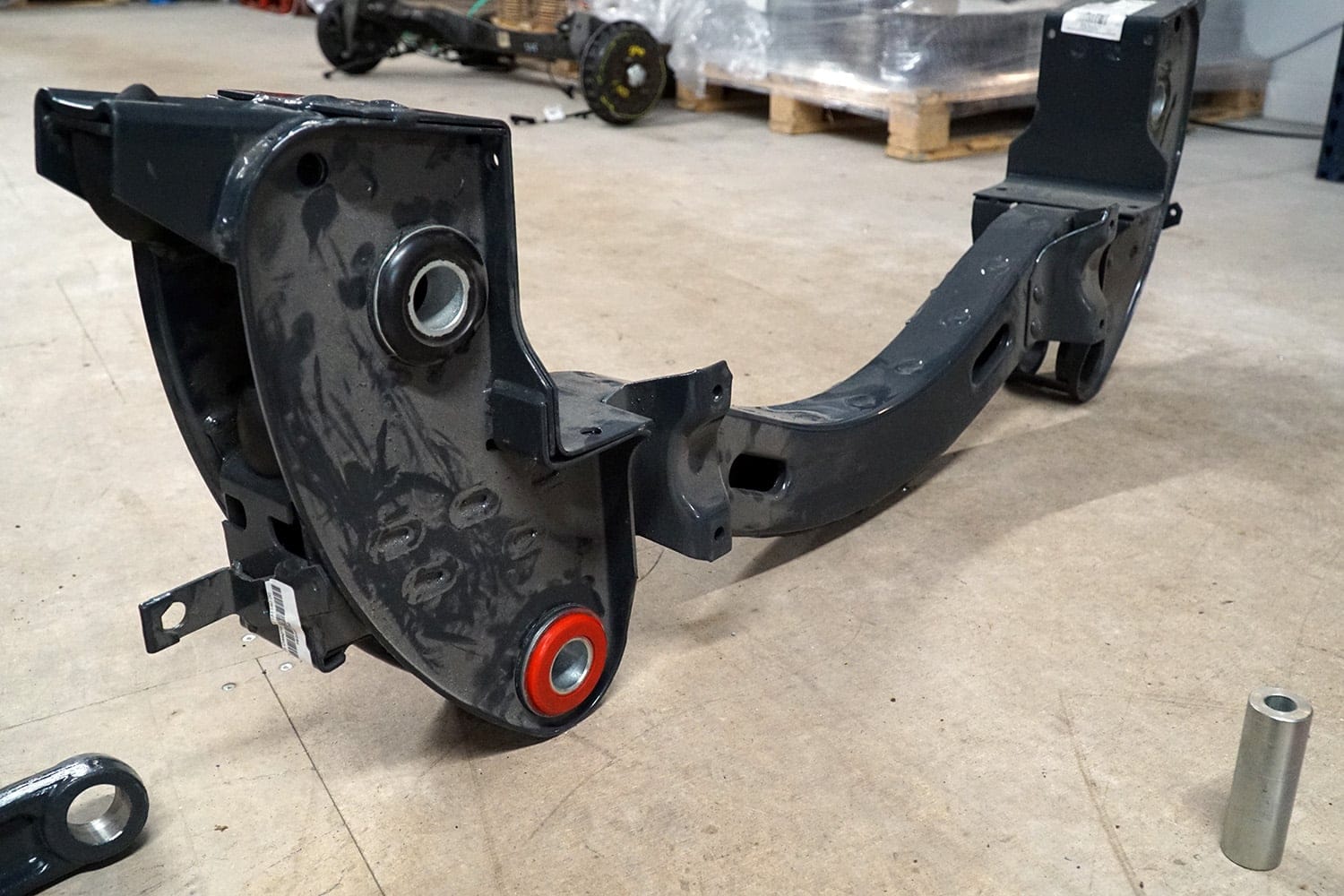
If you’ve driven a Nissan Primastar, Renault Trafic, or Vauxhall Vivaro X83 for any length of time, you’ll know they’re solid, dependable vans… but they do start to feel tired at the rear axle once the original rubber bushes wear out. (we also make the front Subframe Bushes – Here)
It’s one of those jobs that creeps up gradually. A bit of rear-end movement here, a vague feeling on the motorway there, maybe even a knock over sharp bumps. Most owners don’t immediately suspect the rear axle bushes – but they’re often the culprit.
The rear axle bushes sit between the axle beam and the vehicle chassis. Their job is simple in theory: control movement while isolating vibration.
Over time, the factory rubber bushes degrade due to:
Road salt and grime
Constant load stress (especially on vans)
Oil contamination
Age-related cracking and softening
Once that happens, the axle can shift more than it should. That leads to:
Rear-end instability
Wandering at speed
Clunks or knocks under load changes
Uneven or vague handling
On a fully loaded commercial van or camper conversion, the symptoms can feel even more pronounced.
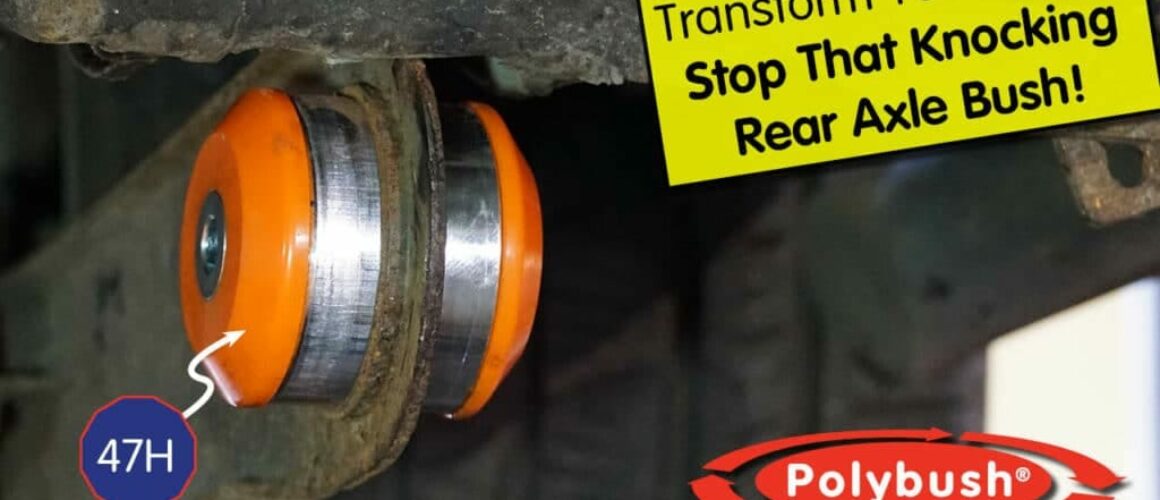
Why upgrade to Polybush 47H?
The Polybush 47H bush set replaces the original rubber bushes with a precision-engineered polyurethane alternative designed specifically for this X83 platform.
Unlike standard rubber, polyurethane is far more resistant to deformation under load, which means the axle stays better controlled without introducing harshness.
In the accompanying fitting video, we walk through the installation of the Polybush 47H rear axle bushes on the X83 platform.
The focus is on:
Removing the worn factory rubber bushes
Preparing the axle mounting points
Installing the polyurethane replacement bushes
Ensuring correct seating and alignment
Highlighting how the new bushes change axle control
Even if you’re not doing the job yourself, the video is useful for understanding what’s involved and what a proper installation should look like.
Who this upgrade is ideal for
This isn’t a “performance mod” – it’s a practical upgrade for real-world vehicles.
It’s especially relevant for:
High-mileage vans
Fleet vehicles
Camper conversions
Towing and heavy-load use
Drivers experiencing rear-end instability
If your van feels like it’s not quite as tight as it used to be, this is one of the first areas worth inspecting.
Final thoughts
Rear axle bushes are often overlooked, but they play a massive role in how stable and controlled a van feels on the road.
The Polybush 47H offers a long-term solution that restores control without sacrificing comfort – making it a smart upgrade for anyone running the X83 platform seriously, whether for work or travel.
If you want to improve handling, reduce rear-end movement, and avoid replacing worn rubber again in a few years, this is one of the most effective upgrades you can make.
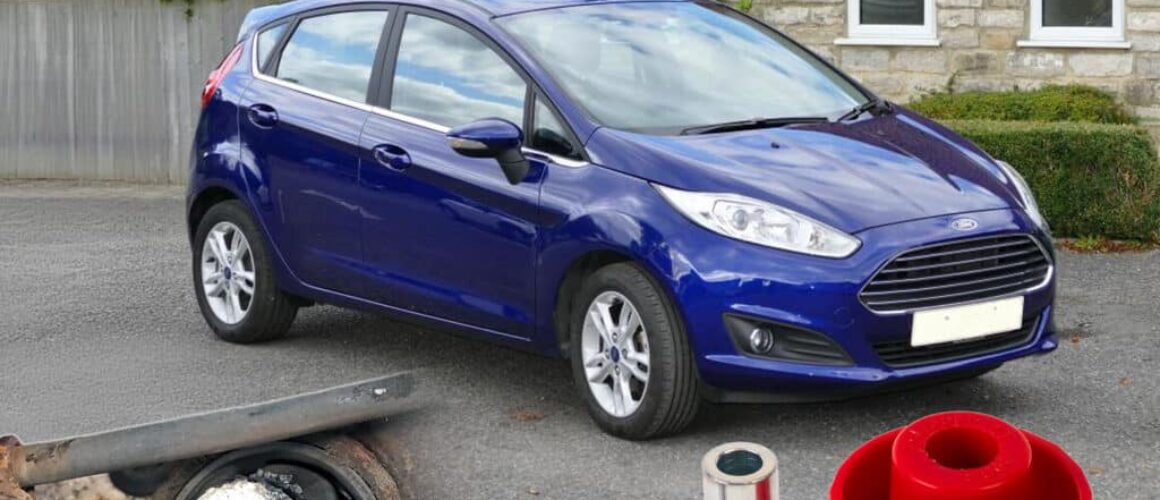
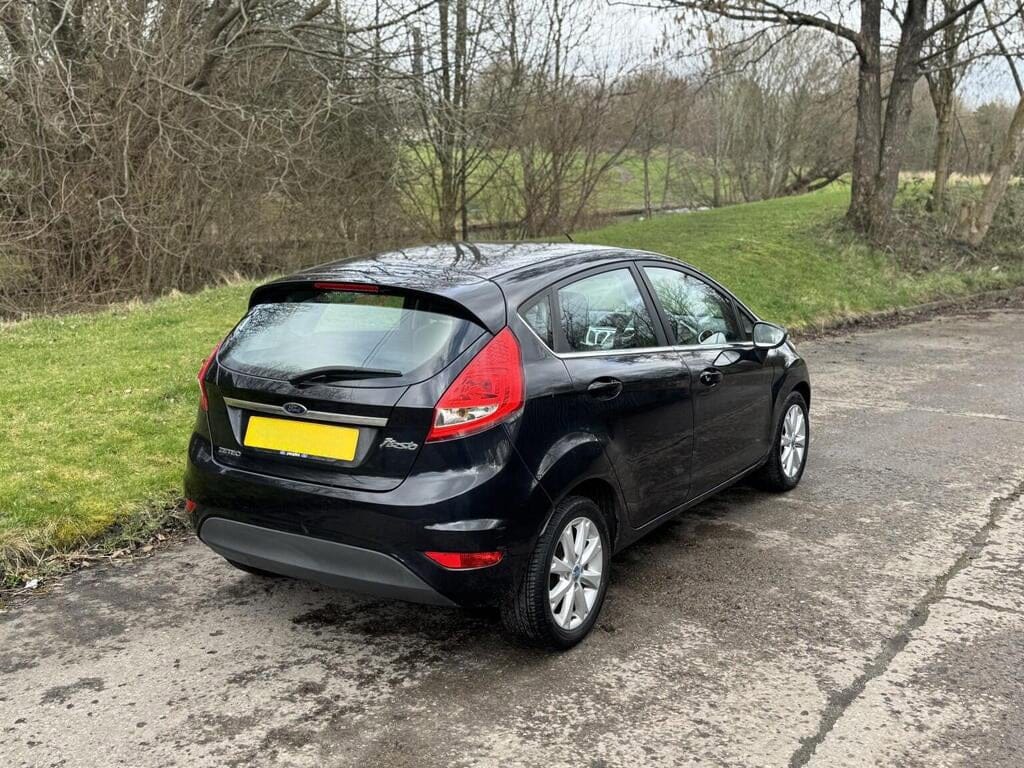
Rijd je in een Ford Fiesta uit 2008–2019 – of het nu een standaard model is of een ST (2013–2017) – dan is de kans groot dat je dit probleem kent: versleten achterasrubbers (rear axle / beam bushes). Het is een bekende zwakke plek. Bonkende geluiden, een “los” gevoel aan de achterkant en onrustig weggedrag zijn duidelijke signalen.
Goed nieuws: er is een blijvende oplossing.
Het probleem met de originele rubbers
De originele rubberen bussen in de achteras zijn ontworpen voor comfort, maar hebben één groot nadeel: ze slijten relatief snel. Zeker onder Nederlandse omstandigheden – denk aan drempels, korte ritten en wisselende temperaturen – verouderen ze, scheuren ze en verliezen ze hun stijfheid.
Gevolg:
Instabiel rijgedrag
Kloppen of tikken bij optrekken/remmen
Slechtere wieluitlijning achter
Uiteindelijk APK-afkeur
Veel garages zien dit probleem wekelijks terug bij de Fiesta.
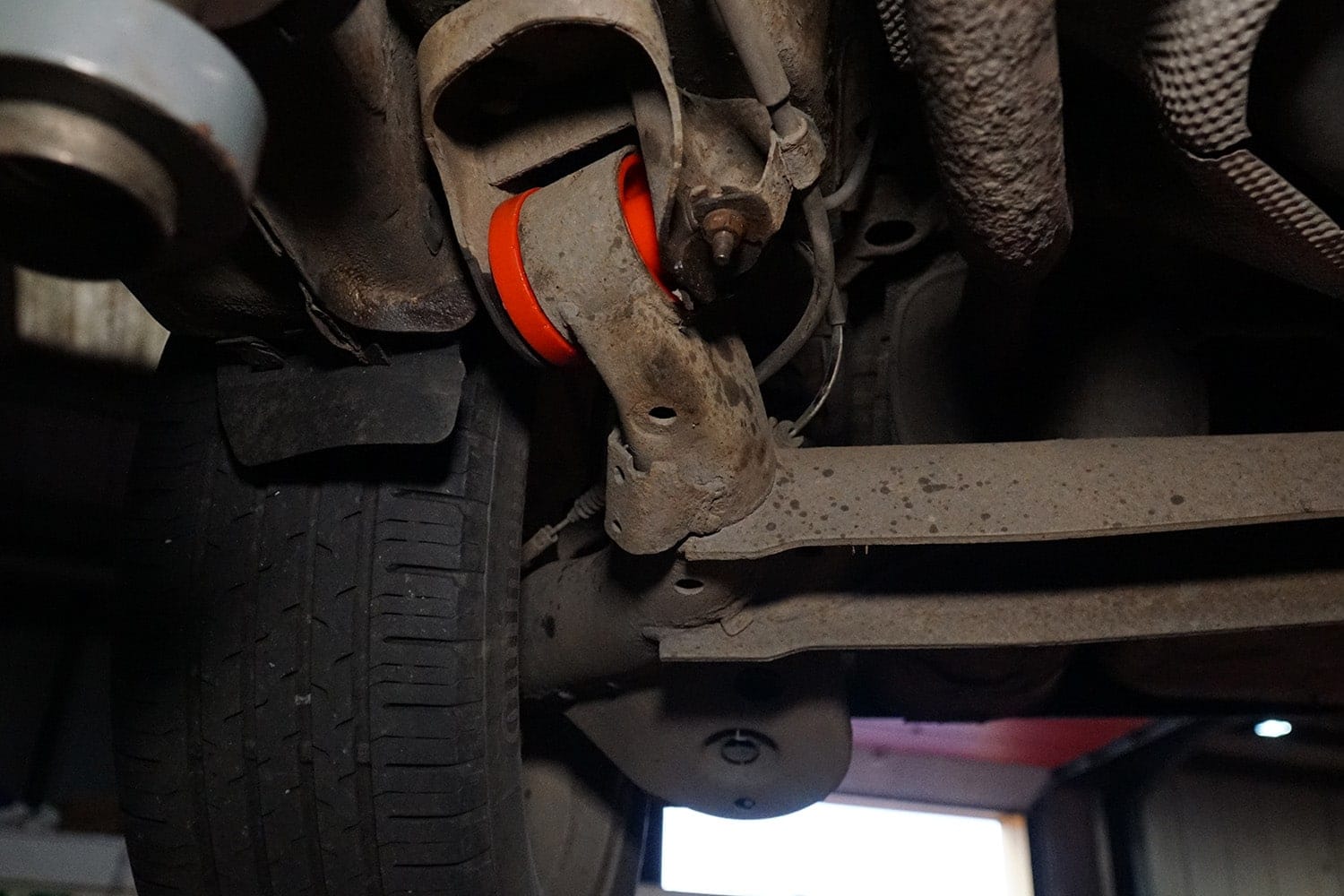
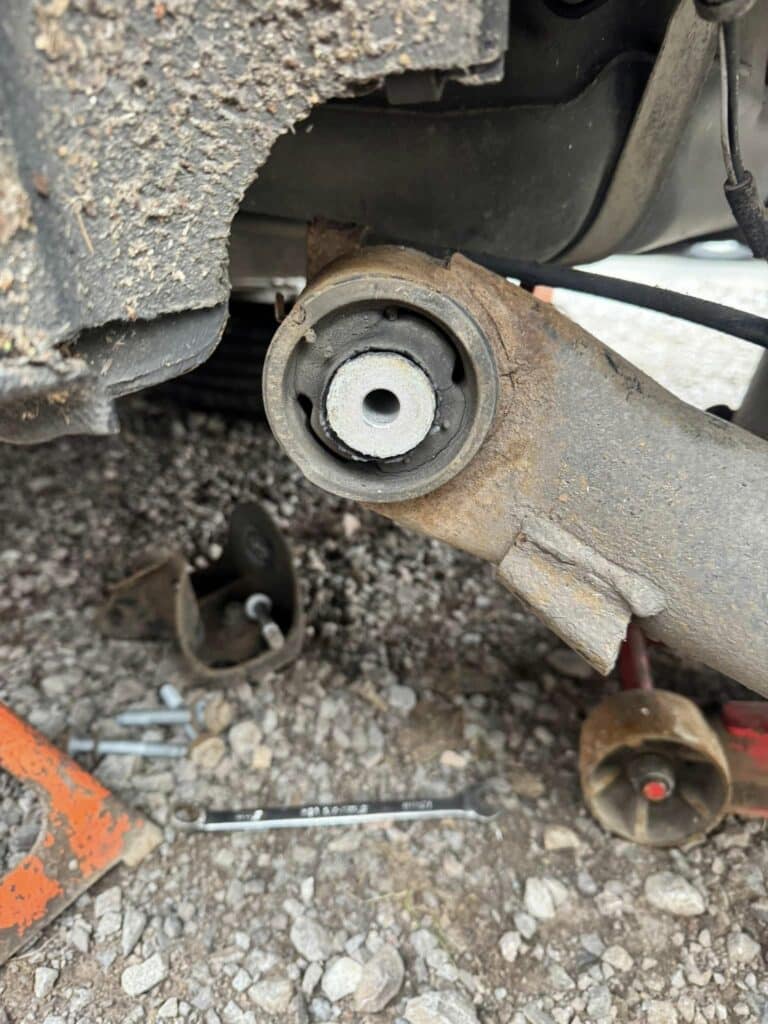
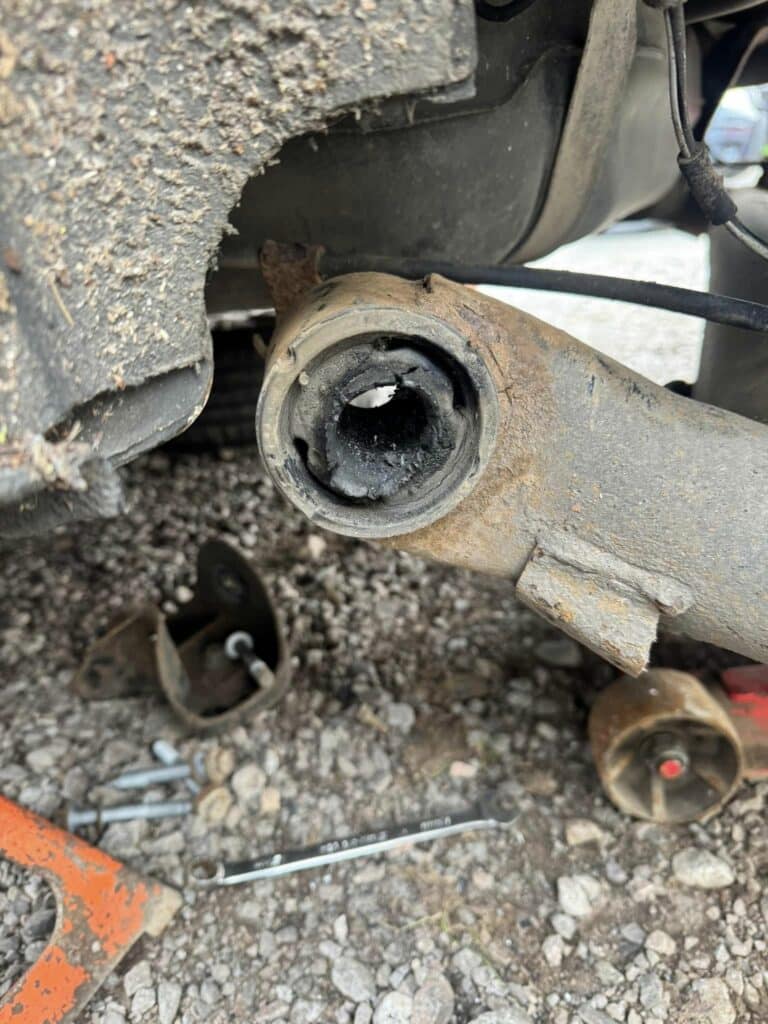
Fiesta – Axle Bush Failure
Fiesta – Axle Bush Debonded
Fiesta – Axle Bush Worn & Debonded
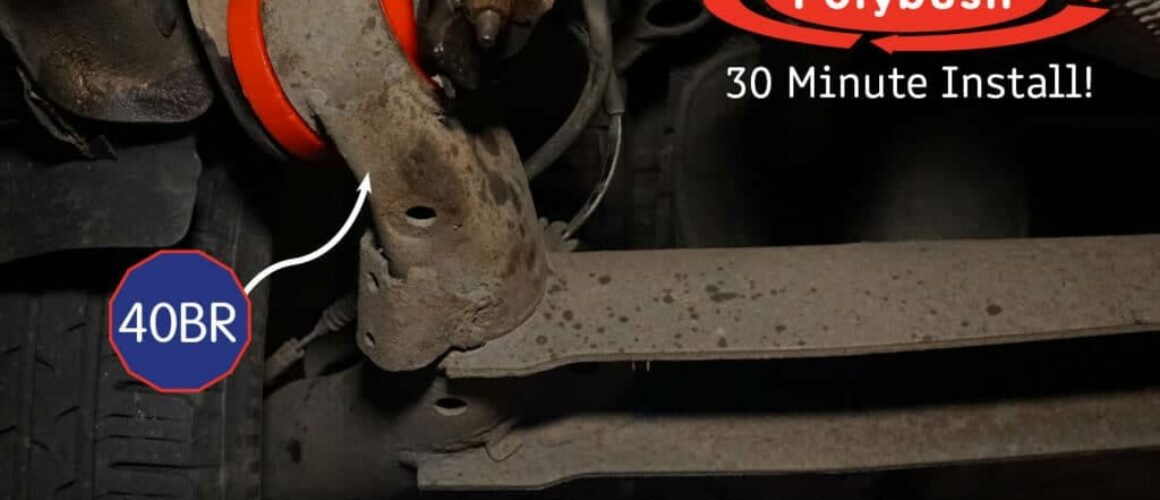
De oplossing: Polybush 40BR achterasbus
Onze Polybush 40BR Rear Axle (Beam) Bush is speciaal ontwikkeld als directe vervanger voor de originele onderdelen en lost dit probleem structureel op.
Polybush is al jaren marktleider in het VK op het gebied van polyurethane ophangingsbussen. Onze producten worden ontwikkeld met één doel: problemen oplossen waar OEM-onderdelen tekortschieten.
Wat je kunt verwachten:
Perfecte pasvorm
Praktisch ontworpen voor montage
Duurzame materialen
Getest in real-world omstandigheden
Ideaal voor Nederlandse Fiesta-rijders
De Ford Fiesta is enorm populair in Nederland – en daarmee ook dit probleem. Of je nu een dagelijkse rijder bent, een liefhebber van de ST, of een garage die klanten een betere oplossing wil bieden:
De Polybush 40BR is de upgrade die je één keer monteert en daarna niet meer hoeft te vervangen.
Retain Comfort By Fitting 40BR
Samengevat
Heb je last van versleten achterasrubbers op je Fiesta?
Dan is dit wat je wilt:
✔ Snelle montage (30–40 min)
✔ Geen demontage van de as
✔ Meer duurzaamheid dan rubber
✔ Comfort blijft behouden
✔ Structurele oplossing voor een bekend probleem
Als u een garagebedrijf of distributeur bent en de 40BR of een van onze andere producten wilt verkopen, neem dan contact met ons op!
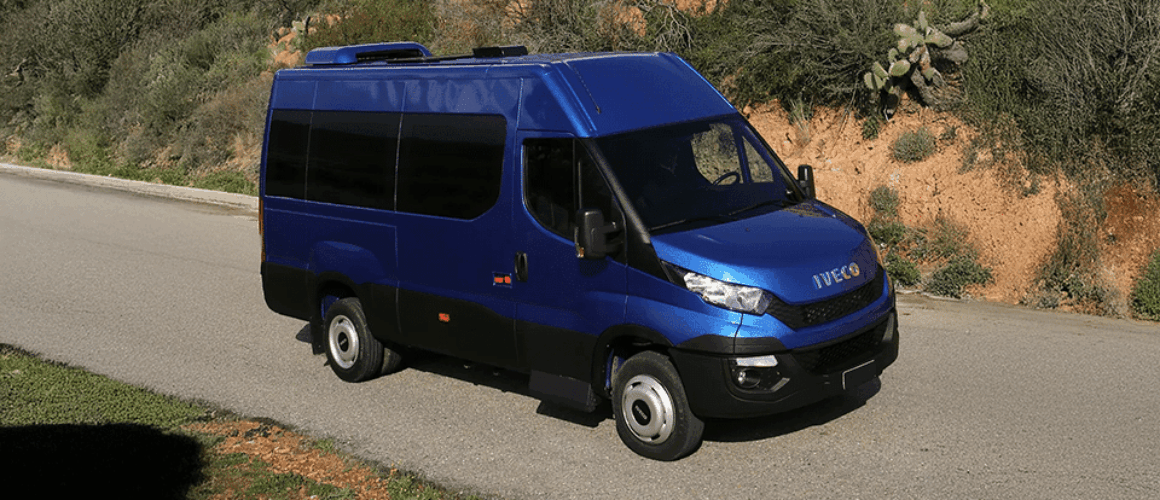
The Iveco Daily is one of the most widely used light commercial vehicles in Europe. Known for its strong ladder-frame chassis and high payload capacity, the Daily has become a trusted platform for minibus conversions, council fleets, community transport vehicles, delivery vans and specialist commercial applications.
Across multiple generations — from the MK2 through to the modern MK6 — Iveco Daily vehicles are designed to operate under demanding conditions. Many cover extremely high mileage while carrying heavy loads or transporting passengers on daily routes.
While the chassis and drivetrain are well regarded for durability, one component that frequently requires maintenance is the suspension bush system. Over time, the original rubber bushes fitted to the suspension can deteriorate, particularly in high-mileage fleet vehicles.
This guide explains:
• Common suspension bush problems on Iveco Daily vehicles
• Why rubber bushes often fail in fleet environments
• The benefits of upgrading to polyurethane suspension bushes
• The differences between Iveco Daily suspension systems across generations
• Why Polybush suspension bushes are widely used by fleet operators and workshops
What Do Suspension Bushes Do on the Iveco Daily?
Suspension bushes are small but critical components within the vehicle’s suspension system. They are typically made from rubber and are installed between metal suspension components to reduce vibration, absorb road shock and allow controlled movement.
On the Iveco Daily, bushes are commonly found in:
• Wishbones and suspension arms
• Anti-roll bar mounts
• Leaf spring mounts
• Torsion bar suspension components
• Subframe and chassis mounting points
Their job is to maintain correct suspension geometry while isolating vibration from the vehicle chassis.
When bushes wear or degrade, suspension components can move excessively, which leads to handling problems and increased wear on other components.
Why Suspension Bushes Fail on Iveco Daily Vehicles
While the Iveco Daily is designed for durability, the factory rubber bushes can struggle under heavy fleet use.
Vehicles used for:
• School transport
• Community minibuses
• Shuttle buses
• Delivery fleets
• Council transport vehicles
often operate under constant load and high daily mileage.
Several factors accelerate bush wear.
Heavy Vehicle Loads
Many Iveco Daily vehicles operate close to their maximum payload capacity. When transporting passengers or equipment, suspension components experience continuous load cycles.
Over time, rubber bushes can begin to compress and lose their structural integrity.
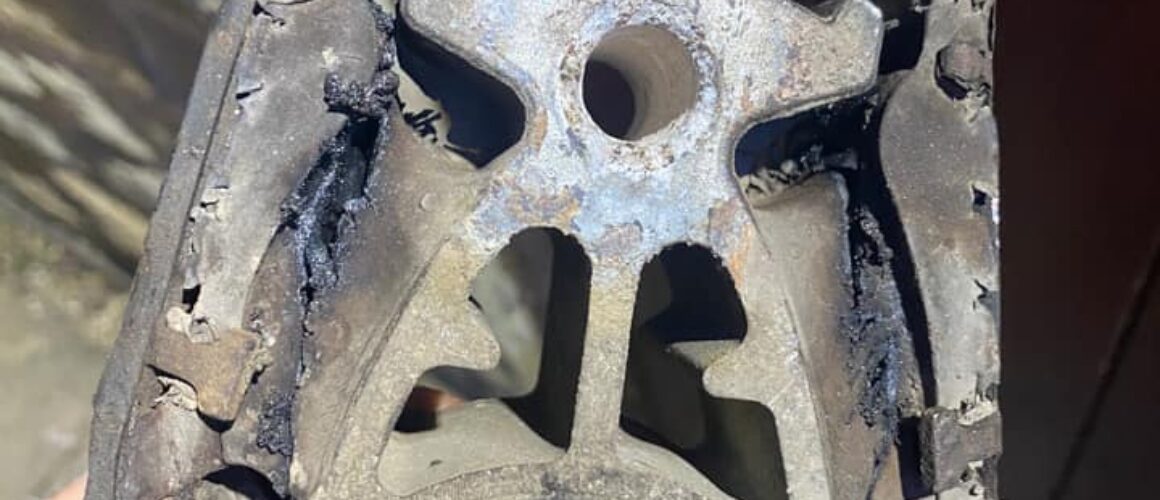
Iveco Daily Suspension Bushing Failure
Stop-Start Driving
Vehicles used for school runs or urban delivery routes often drive in stop-start conditions. Braking, accelerating and cornering repeatedly places additional stress on suspension components.
As the rubber degrades, suspension movement increases.
Common Symptoms of Worn Suspension Bushes
Fleet operators and workshops often notice several warning signs when suspension bushes begin to fail.
Typical symptoms include:
• Knocking or clunking noises from the suspension
• Steering instability or vague handling
• Excessive body roll
• Uneven tyre wear
• Increased vibration through the chassis
• Poor wheel alignment
These issues are particularly noticeable on minibus conversions and passenger transport vehicles, where ride comfort and stability are important.
Ignoring worn bushes can also lead to premature tyre wear and increased maintenance costs.
Torsion Bar vs Leaf Spring Suspension on Iveco Daily
Across its generations, the Iveco Daily has used different front suspension designs. Understanding these systems helps explain why certain bush failures occur.
Torsion Bar Front Suspension
Many Iveco Daily models use a torsion bar front suspension system.
This design uses a torsion bar acting as the spring, combined with suspension arms and bushes that allow controlled movement.
Advantages include:
• Strong load handling capability
• Compact suspension design
• Good durability for commercial vehicles
However, torsion bar systems rely heavily on suspension bushes to maintain correct geometry, which means worn bushes can quickly affect alignment and steering stability.
Transverse Leaf Spring Suspension
Some later Iveco Daily models use a transverse leaf spring front suspension system.
This design can improve ride quality and weight distribution, but it still relies on bushes to isolate vibration and maintain proper movement.
In both systems, bush wear is a common maintenance issue on high-mileage vehicles.
Camber Alignment Issues on Iveco Daily Torsion Bar Suspension
One common issue reported by workshops maintaining Iveco Daily vehicles is camber misalignment.
Over time, suspension bush wear and heavy loads can cause the front wheels to move out of their correct camber angle.
This allows bushes to maintain their performance for longer.
Improved Suspension Control
Because polyurethane bushes are more stable under load, they help maintain consistent suspension geometry, improving steering precision and handling.
Reduced Maintenance
Fleet operators often choose polyurethane bushes because they last significantly longer than standard rubber bushes, reducing the need for frequent replacements.
Iveco Daily Mk6 Torsion Bar Lower Bush Fitting – Polybush
Why Fleet Operators Choose Polybush
Polybush has developed a strong reputation for producing high-quality polyurethane suspension bushes for commercial vehicles.
Polybush products are engineered using advanced polyurethane materials and are designed specifically to replace factory rubber components.
• Long service life in demanding fleet environments
• Improved suspension performance under load
• Reduced vehicle downtime
• Reliable performance on high-mileage vehicles
Polybush suspension bushes are widely used by:
• fleet maintenance workshops
• minibus operators
• council transport departments
• commercial vehicle specialists
Iveco Daily Generations Supported by Polybush
Polybush manufactures suspension bushes for multiple generations of the Iveco Daily.
These include:
Iveco Daily MK2 (1989–1999)
Early torsion bar suspension models commonly used in specialist vehicles and older fleet applications.
Iveco Daily MK3 (1999–2006)
A popular platform for commercial vans and minibus conversions.
Iveco Daily MK4 (2006–2011)
Widely used in passenger transport fleets and commercial delivery operations.
Iveco Daily MK5 (2011–2014)
A common base for school transport vehicles and community minibuses.
Iveco Daily MK6 (2014-On)
Modern Daily models used extensively in fleet operations, available with torsion bar or transverse leaf spring suspension.
For each of these platforms, Polybush manufactures durable polyurethane suspension bushes designed to improve reliability and longevity.
Maintaining Suspension Performance on High-Mileage Iveco Daily Vehicles
Many Iveco Daily vehicles remain in service for hundreds of thousands of miles. Regular suspension maintenance is essential for ensuring safety, ride comfort and long-term reliability.
Replacing worn rubber bushes with polyurethane alternatives is one of the most effective ways to:
Each product is engineered to provide improved durability, reliable suspension performance and longer service life compared with standard rubber bushes.
For fleet operators, vehicle specialists and workshops maintaining Iveco Daily vans and minibuses, upgrading to Polybush suspension bushes helps ensure vehicles remain stable, reliable and cost-effective to maintain even in demanding service conditions.
Our 40BR Rear Beam Bush is engineered to replace OEM part numbers: 1535296, 1751679, 1805815, 1805866, 1871475, 8V51-5K653-AA, AY11-5K653-AA, D65128460, Delphi TD1629W, and Febi 34748. It’s designed for everyday driving while providing long-lasting stability.
Why OEM Rear Beam Bushes Fail
Rubber Deterioration Over Time
Original rubber bushes degrade with heat, moisture, road salt, and ozone exposure. Over time, they soften, crack, and detach from the sleeve, causing unwanted rear movement.
Ford Fiesta Mk7 Rubber Bushing Failure
Excessive Compliance
OEM bushes are soft to maximise comfort, but this leads to rear axle steer, unstable cornering, and increased tyre wear — especially noticeable in European driving conditions like winding Alpine roads or urban cobblestones.
Voided Design and Fatigue Points
Many OEM bushes are voided to allow flex. Once the rubber fatigues, these voids concentrate stress and accelerate failure.
Why Rubber Isn’t Ideal for Rear Axle Bushes
The rear beam must:
Support lateral forces
Control braking loads
Maintain rear toe alignment
Isolate vibrations
Rubber loses integrity under prolonged load, resulting in geometry shifts and unpredictable handling — something no European driver wants on highways, mountain passes, or city streets.
Why Polyurethane is the Smarter Choice
Simple, hassle-free installation that gets you back on the road quickly.
Resistant to Environmental Factors
Polyurethane resists oil, salt, ozone, and heat. It maintains performance for years, unlike rubber.
Controlled Compliance for Comfort
The 40BR bush is engineered to allow exactly the right movement — stabilising the rear axle without making the ride harsh.
Everyday European Driving
From German Autobahns to French country roads, Italian autostrade to Spanish urban streets, the 40BR bush delivers predictable, safe handling without sacrificing comfort.
Comfort Meets Everyday Driving
City and Highway Benefits
Reduced rear-end “thud” over bumps
Improved straight-line stability
Sharper, more predictable cornering
Noise and Vibration Reduction
Our polyurethane bush minimises vibrations and noise, keeping your daily commute comfortable while your rear axle remains perfectly aligned.
Easy Installation
DIY or Workshop-Friendly
The 40BR bush is a direct replacement, fitting without modification. Suitable for professional mechanics and knowledgeable DIYers alike.
When to Upgrade
During suspension overhauls
Rear brake replacement
Technical inspections or MOT advisories
Proven Across Europe
Relevant in Germany, France, Italy, Spain, and Scandinavia
European drivers face the same rear beam bush issues as UK drivers, often worsened by winter road salt and rough surfaces. Polyurethane is perfectly suited to these conditions.
Long-Term Solution for EU Roads
The 40BR bush stabilises your rear axle, reduces repeat repairs, and maintains geometry for safer, more predictable handling.
Bottom Line – Why Upgrade to 40BR
Direct replacement for OEM 1535296, TD1629W, Febi 34748
Improves rear axle stability for everyday European driving
Polyurethane ensures durability and comfort over standard rubber
Available for shipping across Europe — Germany, France, Italy, Spain, Scandinavia
For Range Rover Classic (1970–1994) & Discovery 1 (1989–1998)
Restoration shops working on Range Rover Classic and Discovery 1builds know that body removal is one of the most labour-intensive stages of any project. Replacing chassis outriggers, repairing mounts, and refinishing components represents a significant investment in time and customer budget.
Refitting low-cost rubber body mount bushes at this stage introduces avoidable risk.
Polybush 1ET is a direct OEM replacement for ANR1504 and 572295, engineered specifically for:
Why Polybush 1ET Is the Correct Choice for Restoration Projects
Polybush 1ET Body Mount Bushes for Range Rover Classic & Discovery 1
1. No Compression Set Unlike modern rubber, Polybush material will not permanently deform under sustained load. This prevents body sag, misalignment, and premature deterioration.
2. OEM Ride Quality Compound tuning ensures compliance similar to the original 1970s rubber bushes. No increase in vibration or harshness.
3. Long-Term Stability Resistant to oil contamination, environmental degradation and material breakdown common in modern rubber alternatives.
4. Reduced Warranty Risk Avoid customer returns for premature bush failure by installing a lifetime solution during initial assembly.
Protect the Investment
Restorations often exceed tens of thousands of pounds in parts and labour. Using short-life rubber body mounts undermines the longevity of the entire project.
Polybush 1ET body mount bushes allow restoration specialists to deliver:
Factory-correct comfort
Improved long-term durability
Reduced repeat labour
Greater customer satisfaction
When the body is already removed, it makes commercial and technical sense to install a solution that will not require replacement in a few years.
For restoration workshops committed to doing the job once—and doing it properly, Polybush body mounts are the professional choice.
The anti-roll bar bush (ARB bush) is a small but essential component of your vehicle’s suspension system. It secures the anti roll bar to the chassis while allowing controlled movement during cornering and uneven road surfaces. When these bushes wear out, they can affect handling, ride comfort and overall vehicle stability.
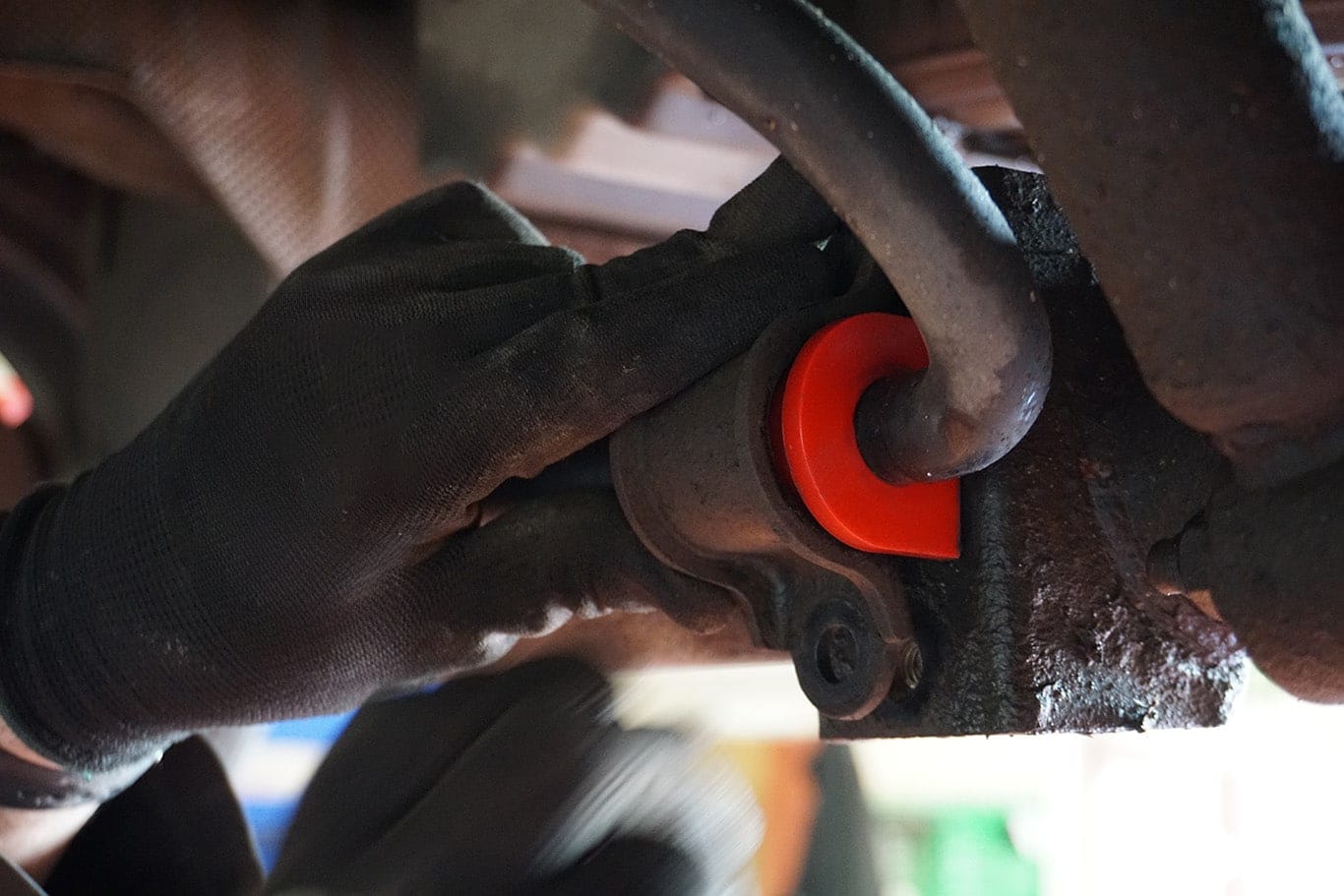
Installing Polybush Anti-Roll Bar Bushes To A VW Caddy
Although often overlooked, replacing worn anti roll bar bushes can dramatically improve your vehicle’s handling and driving confidence.
What Does an Anti Roll Bar Bush Do?
The anti-roll bar works to reduce body roll when a vehicle corners. The bushes sit between the anti-roll bar and the vehicle frame, acting as a cushion that:
Keeps the anti-roll bar securely mounted
Absorbs vibration and road shock
Allows controlled suspension movement
Without properly functioning bushes, the anti-roll bar cannot perform effectively, which can lead to increased body roll and reduced stability.
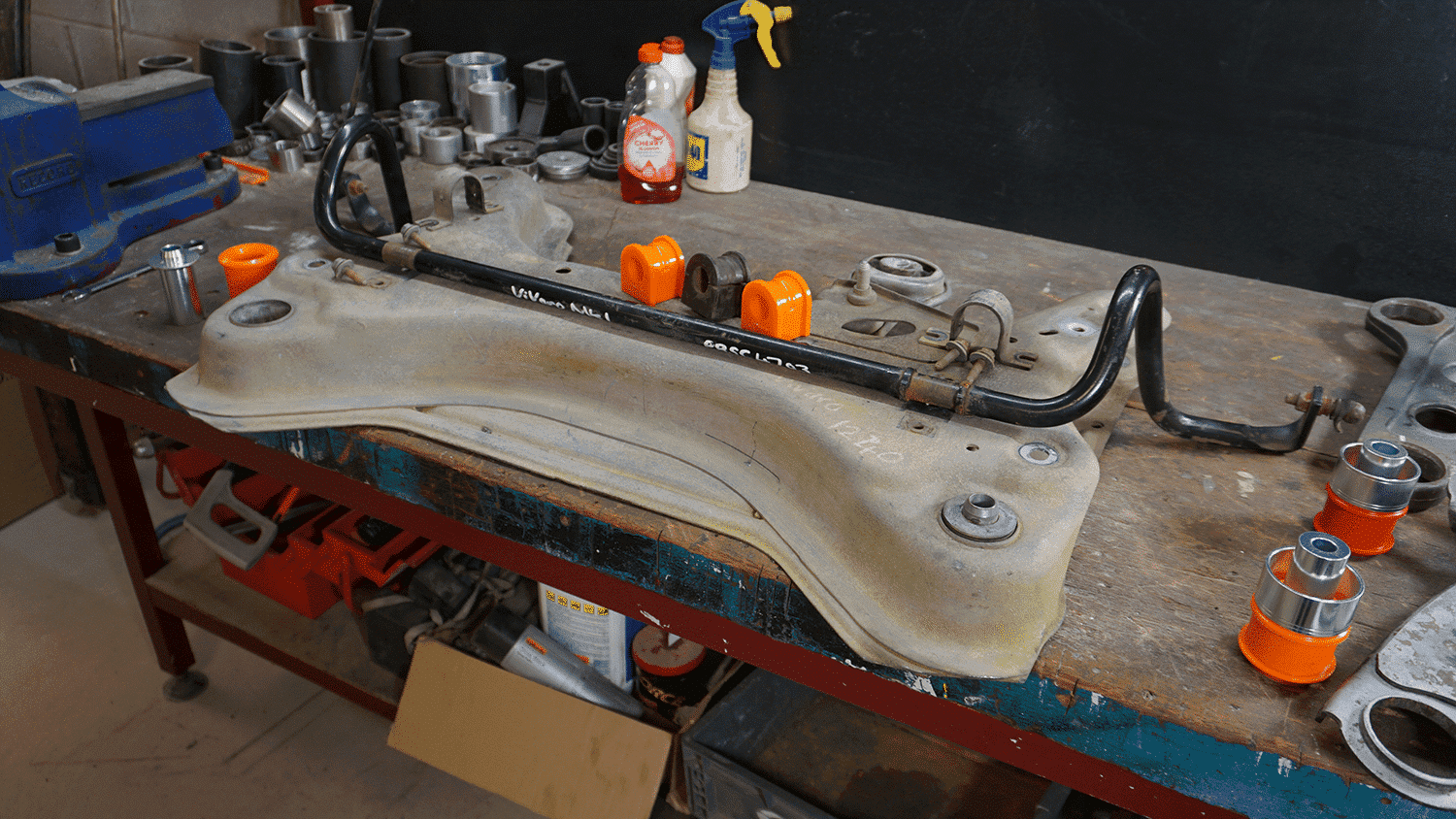
Vivaro Subframe With Replacment 47E Polybush’s and Anti-Roll Bar Bushes
Signs Your Anti Roll Bar Bushes Need Replacing
Over time, standard rubber bushes degrade due to road contaminants, heat and constant movement. If your bushes are worn or damaged, you may notice several symptoms.
Common signs include:
Rattling or squeaking noises from the suspension
A harsher ride over bumps or rough roads
Excessive body roll when cornering
Visible cracks or deterioration during inspection
If any of these issues occur, the anti-roll bar bushes should be inspected and replaced according to the manufacturer’s recommended procedure.
Why Upgrade to Polyurethane Anti Roll Bar Bushes?
Traditional rubber bushes are prone to cracking, compression and degradation. Polyurethane bushes, such as those manufactured by Polybush, offer a more durable alternative designed to withstand the demands of modern driving.
Key advantages of Polybush anti roll bar bushes
Longer lifespan – up to 4–5 times longer than rubber bushes
Improved handling – better control of suspension movement
Excellent noise damping for a smoother drive
Resistant to oil, fuel and road contaminants
Fit-and-forget reliability with minimal maintenance
Polyurethane bushes maintain their shape and performance over time, making them ideal for both daily drivers and performance vehicles.
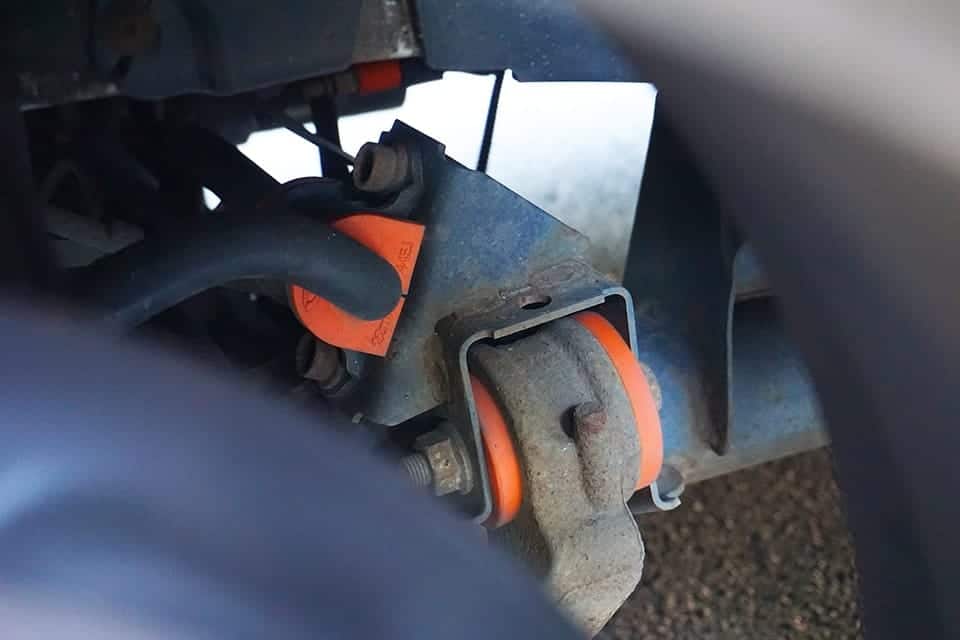
VW T5 ‘Bulli’ Anti-Roll Bar Bushes
Choosing the Right Anti Roll Bar Bush
Polybush anti-roll bar bushes are available in different performance grades to suit your vehicle and driving style. Whether you’re restoring a classic car, maintaining a daily driver, or upgrading suspension performance, selecting the correct bush ensures optimal handling and longevity.
Improve Your Suspension Performance with Polybush
Upgrading worn anti-roll bar bushes is a simple yet effective way to restore suspension performance and driving comfort.
Polybush polyurethane suspension bushes are engineered to deliver:
Better control and handling
Increased durability
Long-term reliability
Need Help Choosing the Right Bush?
If you’d like help finding the correct anti-roll bar bush for your vehicle, our team is here to help.
Are you sick of the dreaded Transit dogbone mount failing on your Ford Transit & Tourneo Custom V362/V363 (2013–2023)? You’re not alone. At Polybush, we’ve been listening to Transit owners, van converters, tradespeople and fleet mechanics who keep seeing the same issue crop up again and again — the lower torque mount (often called the dogbone mount) simply doesn’t last when left in standard rubber form. That’s exactly why we developed the 40DQ Lower Torque Mount Insert.
40DQ – Ford Transit Custom Mk8 Lower Torque Mount
This isn’t just another “replacement part” — it’s a genuine performance and durability upgrade for a known weak point on these vans.
What This Fits (OEM Part Numbers)
Our 40DQ Lower Torque Mount Insert is engineered to be installed into the original mount housings for the following OEM part numbers:
Let’s break it down in simple terms: the lower torque mount (dogbone) is there to control engine and transmission movement under load — especially on acceleration, deceleration and gear changes. In a Transit carrying heavy payloads or towing regularly, that mount sees a lot of abuse.
The trouble is, the factory uses rubber in these mounts. While rubber is quiet and cheap, it has some critical weaknesses:
Rubber Weaknesses
Age hardening: Rubber hardens over time, especially when exposed to heat and engine bay oils.
Creep & distortion: Under constant torque loads, it stretches and deforms.
Water/oil contamination: Oil and road grime degrade rubber faster than you expect.
Loose feel: As it deteriorates, the engine moves more — leading to clunks, vibrations and stress elsewhere.
Search forums like TransitCenter or social groups on Facebook, and you’ll find countless owners complaining “dogbone mount snapped again”, “engine shifting under acceleration”, or “harsh vibration when pulling loads”. This is exactly the failure mode that cheap-as-chips rubber replacements can’t fix — because they’re the same material Ford originally used.
Maintains torque control without letting the engine flop about
Reduces harsh vibration without making it uncomfortable
Greatly extends life compared with OEM rubber
This isn’t “rock hard” street racer stiffness — it’s engineered to strike the right balance for a working van.
40DQ Installed in OEM Arm
Polyurethane vs Rubber — Why It Matters
Let’s chat materials for a moment — because this is where people either get it… or don’t.
Polyurethane Benefits
Feature
Polyurethane
Rubber
Load Bearing
Excellent
Moderate
Fatigue Resistance
Very high
Moderate
Oil/Contaminant Resistance
Very high
Poor
Hardness Stability
Stable over temperature
Softens/hardens with age
Noise/Vibration
Tunable
Tunable but degrades
Put simply: polyurethane does the job rubber was supposed to do — but better and for longer. It doesn’t sag or deform under load, it’s far more resistant to oil and heat, and it won’t turn into a brittle lump after a few years on the road.
So while rubber is comfortable when new, it’s a known failure point on high-stress parts like the Transit dogbone mount. Polyurethane keeps its shape, keeps your engine centred and keeps the van feeling tighter over more miles.
What This Means for You
Whether you’re a fleet manager tired of repeat failures, a van lifer prepping your Transit for a round-Europe tour, or a tradesperson relying on your van every day, the 40DQ Lower Torque Mount Insert is an upgrade that makes practical sense:
Less downtime
Reduced vibration/noise
Improved drivetrain control
Longer service life
No need for expensive aftermarket “heavy duty” rubber parts
Final Word
The Transit dogbone mount might be easy to overlook — until it fails. And when it does, you feel every gear change and hard acceleration. Our 40DQ insert isn’t about making your van feel “racey” — it’s about giving you confidence that the mount won’t be the next thing to let you down.
If you’re after a reliable, durable, engineered solution rather than a stop-gap rubber replacement, this is it.
The Iveco Daily has long been one of the most widely used commercial vehicles across Europe. From school minibuses and council transport fleets to shuttle buses, delivery vans and specialist conversions, the Daily platform is trusted for its strength, reliability and heavy-duty ladder chassis design.
However, one area that consistently causes maintenance issues across multiple generations of the vehicle is suspension bush wear.
For operators running high-mileage vehicles carrying heavy passenger loads, the original rubber suspension bushes fitted by the manufacturer often deteriorate faster than expected. This can lead to handling issues, suspension noise, uneven tyre wear and increased maintenance costs.
This guide explains the most common suspension bush problems across the Iveco Daily range and why Polybush polyurethane suspension bushes have become the trusted upgrade for fleet operators, councils and minibus specialists.
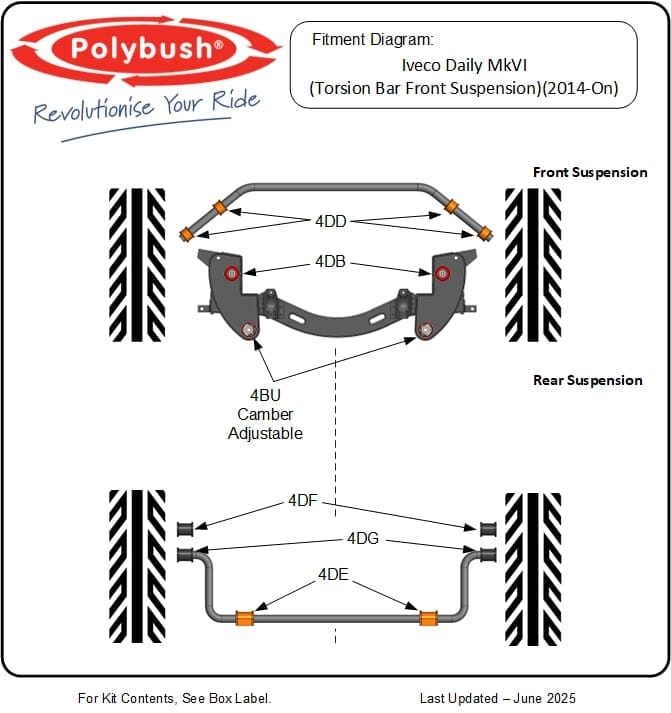
Polybush Your Iveco Daily MkVI (Torsion Bar Front Suspension) (2014-On)
Why Suspension Bushes Wear on Iveco Daily Vehicles
The Iveco Daily is designed to handle heavy loads and demanding driving conditions. Vehicles used for school transport, community minibuses and commercial fleets often operate in stop-start environments with constant passenger loading and unloading.
Over time, these conditions place significant strain on the rubber suspension bushes, which are responsible for isolating vibration and maintaining suspension alignment.
Common symptoms of worn bushes include:
• Knocking or clunking noises from the suspension
• Steering instability or vague handling
• Excessive body roll
• Uneven tyre wear
• Increased vibration through the chassis
These problems are particularly common on high-mileage minibus fleets, where vehicles may cover thousands of miles every month.
Iveco Daily Suspension Bushing Failure
Why Polybush Suspension Bushes Are the Preferred Upgrade
Standard rubber bushes can degrade due to heat, oil contamination, road salt and repeated load cycles. Once the rubber begins to soften or crack, suspension components start to move beyond their designed tolerances.
Polybush polyurethane suspension bushes are engineered to eliminate these weaknesses.
Key advantages include:
• Significantly longer service life than rubber bushes
• Improved resistance to compression and deformation
• Better control of suspension geometry under load
• Reduced maintenance frequency for fleet vehicles
• Improved steering stability and handling
Because of these benefits, Polybush bushes are widely used by fleet workshops, vehicle converters and transport operators who need durable suspension solutions.
Iveco Daily Models Covered by Polybush Suspension Bush Kits
Polybush manufactures suspension bushes for multiple generations of the Iveco Daily, covering vehicles commonly used in minibus transport, commercial fleets and specialist vehicles.
One of the earliest Daily platforms still in service today, particularly in specialist vehicles and camper conversions. Many high-mileage examples suffer from worn torsion bar suspension bushes and degraded rubber components.
A popular platform for minibus conversions and commercial transport, the MK3 Daily is known for its durability but can develop suspension movement as rubber bushes age.
Widely used by fleet operators and passenger transport services, MK4 models often exhibit bush wear in the front suspension arms and anti-roll bars, particularly on high-mileage vehicles.
The MK5 Daily became a popular base for school minibuses, welfare vehicles and community transport fleets. Suspension bush wear can affect steering precision and tyre life.
One of the most widely used platforms for modern minibus fleets, the MK6 Daily is available with torsion bar or transverse leaf spring front suspension. These vehicles frequently operate under heavy passenger loads, accelerating bush wear.
Camber Alignment Problems on Iveco Daily Torsion Bar Suspension
Many Iveco Daily models use a torsion bar front suspension setup, which can develop camber alignment issues over time. This is particularly common on vehicles used as minibuses or heavy passenger transport, where suspension components are under constant load.
When camber moves out of specification, operators may notice:
• Uneven tyre wear
• Reduced steering stability
• Poor handling when fully loaded
To address this issue, Polybush developed specialised Camber Correction Bushes, allowing technicians to adjust camber alignment and restore proper suspension geometry.
This innovation has become particularly valuable for fleet maintenance teams and minibus operators, helping extend tyre life and improve vehicle stability.
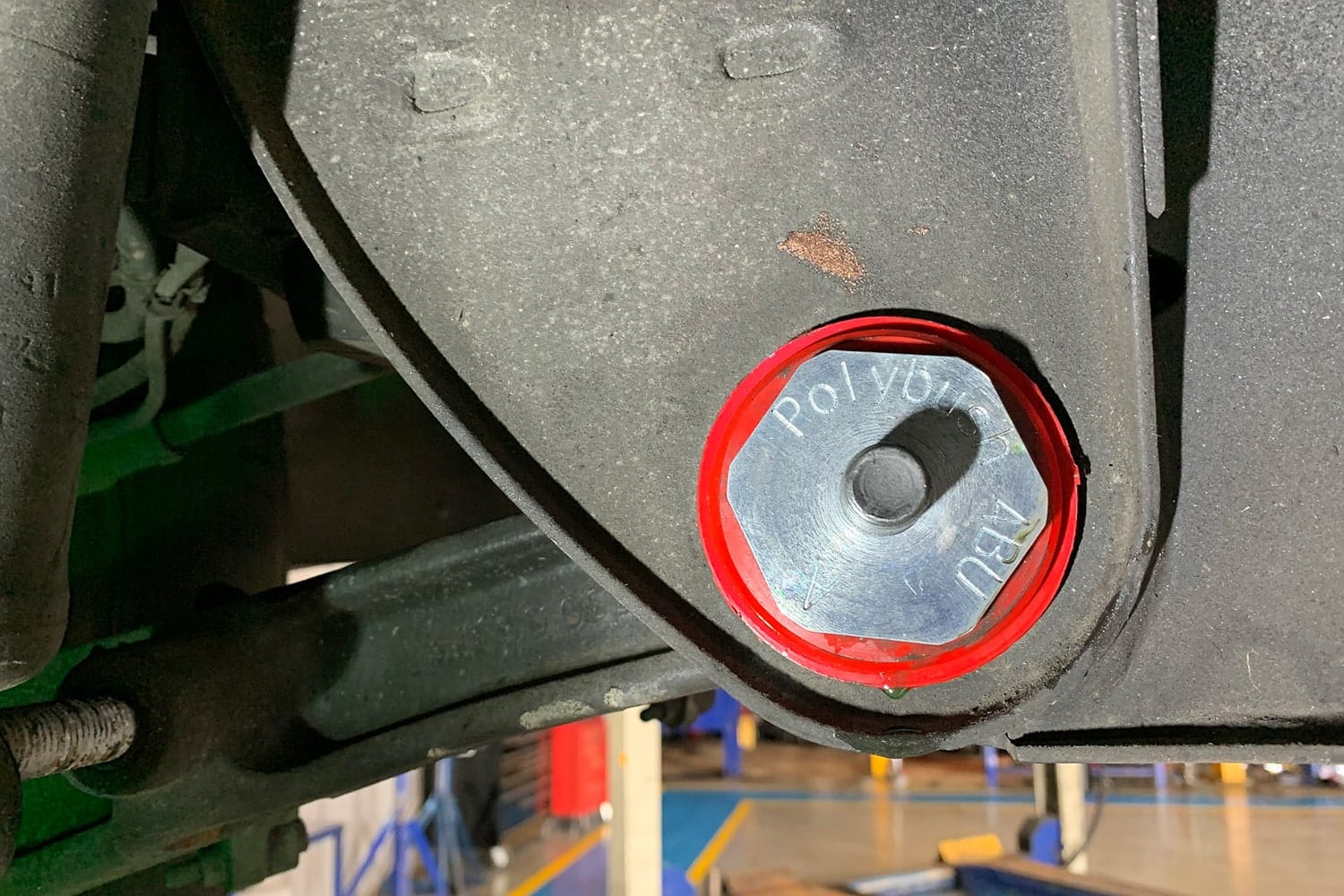
Polybush 4BU Lower Arm Camber Correction Bush – Fitted to Iveco Daily MK6 Torsion Bar
Why Fleet Operators Choose Polybush
Across the UK and Europe, Polybush has become a leading supplier of polyurethane suspension bushes for commercial vehicles.
Fleet operators choose Polybush because the products are:
• Designed and manufactured using advanced polyurethane materials
• Engineered specifically to replace factory rubber bushes
• Proven in high-mileage fleet environments
• Trusted by transport operators, workshops and vehicle specialists
For vehicles used in school transport, council fleets, airport shuttles and community transport services, upgrading to Polybush suspension bushes can significantly improve long-term reliability.
Maintaining Suspension Performance on High-Mileage Iveco Daily Vehicles
Many Iveco Daily vehicles remain in service for hundreds of thousands of miles, particularly when used in commercial transport roles. Replacing worn suspension bushes with durable alternatives is one of the most effective ways to maintain vehicle performance and reduce ongoing maintenance costs.
For fleet managers and workshops responsible for maintaining Iveco Daily minibuses, vans and passenger vehicles, Polybush polyurethane bushes provide a trusted, long-lasting suspension solution designed to handle the demands of heavy-duty transport applications.
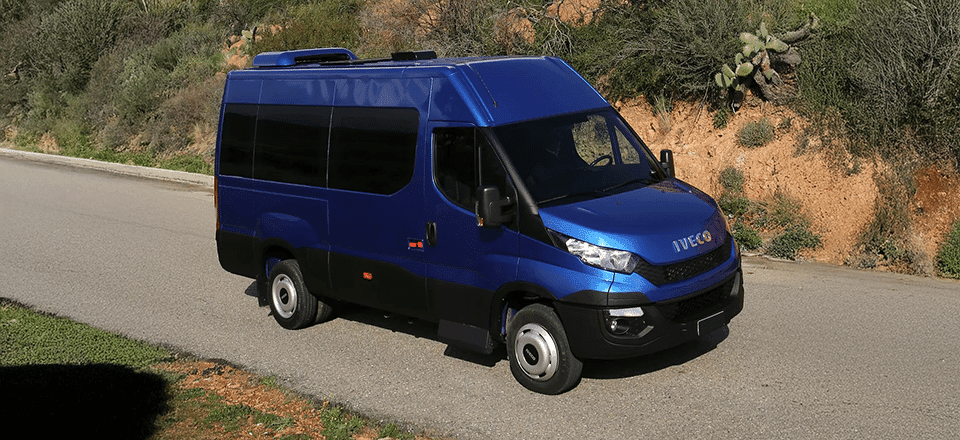
Iveco School Bus – Fitted With Polybush Suspension Bushes
Find the Right Polybush Suspension Bushes for Your Iveco Daily
Polybush manufactures suspension bushes for the following Iveco Daily models:
Each product is engineered to provide improved durability, better suspension control and longer service life compared with standard rubber bushes.
If you maintain or operate Iveco Daily fleet vehicles, minibuses or commercial vans, upgrading to Polybush bushes helps ensure consistent suspension performance and reduced maintenance downtime.